Domestic Animals in English for Kids
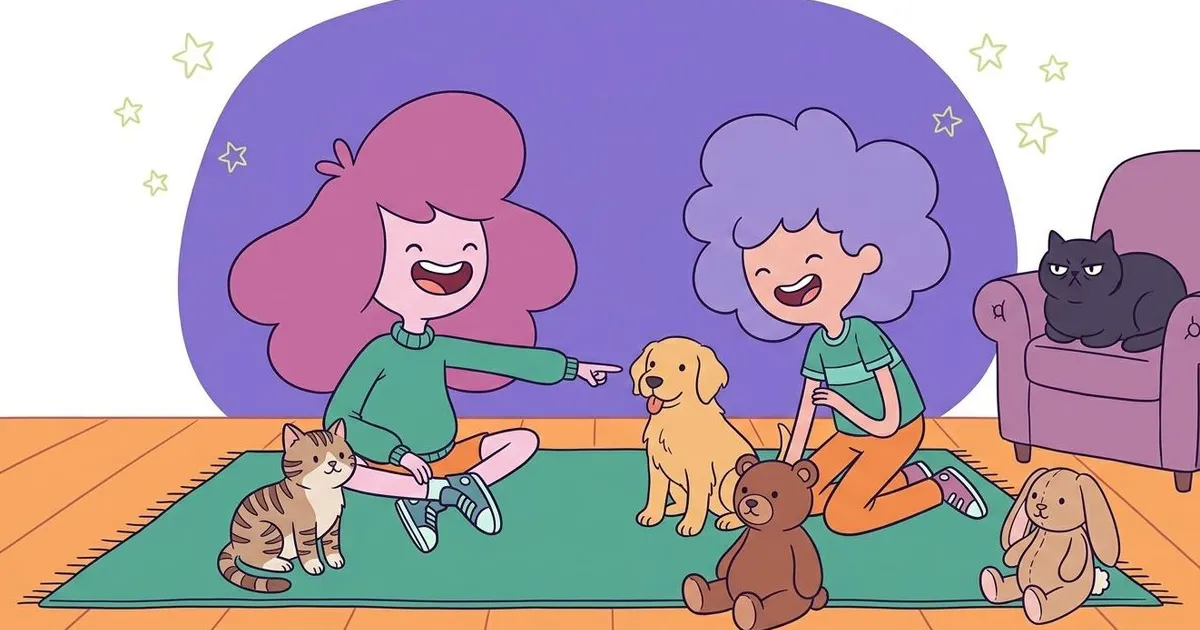
Domestic animals live close to people, on farms or in homes, and domestic animals in english for kids starts with words such as dog, cat, cow, horse, sheep, goat, pig, chicken, duck, and rabbit. For ages 4 to 15, these words appear in stories, songs, school tasks, travel, cartoons, and family life. The aim is not a long list in one sitting. Children learn animal words when they hear the sound, see the animal, say a short sentence, and use the word in a game or task.
📥 Domestic Animals Word Cards
A printable practice set for learning animal names, sounds, and simple sentences.
Leave your email — we'll send the PDF to your inbox.No spam — the PDF plus one short reminder. Unsubscribe anytime.
Core Animal Words to Teach First
Start with these core words and short examples before adding more specific vocabulary.
The dog runs in the park.
The cat sleeps on the chair.
The rabbit eats a carrot.
The bird sings in the tree.
The fish swims fast.
The horse lives on a farm.
The cow eats grass.
The duck walks near the pond.
Start with animals your child can picture: dog, cat, rabbit, hamster, bird, and fish. Farm animals come next: cow, horse, sheep, goat, pig, chicken, duck, donkey, and turkey. These words build a base for domestic animals in english for kids because they appear in picture books and early classroom topics.
Teach each word with a noun phrase, not a bare label. A child can say “a brown dog,” “a white sheep,” “a small rabbit,” or “a noisy chicken.” This builds vocabulary and grammar together. Older children can add place and action: “The goat is in the field,” “The ducks are near the pond,” or “The horse eats grass.”
Do not worry if your child knows animal names in another language first. Bilingual children may sort words by context: “cat” during an English lesson, another word at home with grandparents. Keep the English word steady and linked to a picture or action.
Useful Phrases and Sound Words
Animal sounds help younger children speak without feeling tested. A dog says “woof,” a cat says “meow,” a cow says “moo,” a sheep says “baa,” a pig says “oink,” and a duck says “quack.” Sound words differ by language, so children may laugh. That lowers pressure and helps memory.
Add short question-and-answer phrases. Use “What is it?” “It is a cow.” “What color is it?” “It is black and white.” “What can it do?” “It can run.” For a stronger child, use “What does a cow give us?” “Milk.” Keep answers factual and skip long farming explanations until the child is ready.
Across LearnLink lessons, tutors use speaking frames before free answers. “I can see a ___” helps a shy 6-year-old speak. A 10-year-old may use “The ___ lives on a farm and eats ___.” A teenager can compare: “A donkey is smaller than a horse, but it can carry heavy things.”
Examples in Context
Children need animal words inside sentences. Lists help, but sentences show how English works. For domestic animals in english for kids, begin with present simple and “can” sentences: “A dog runs.” “A cat sleeps.” “A cow eats grass.” “A chicken lays eggs.” “A horse can jump.” These lines fit young learners and older beginners.
Then move to description. “The rabbit has long ears.” “The goat has small horns.” “The duck has a yellow beak.” “The sheep has soft wool.” These examples teach body words with animal names. If your child is 8 or older, ask them to change one detail: “The rabbit has short ears” sounds silly, which helps the correction stick.
For children who already speak English well, use contrast sentences. “A pet lives in a home, but a farm animal lives outside.” “A chick is a baby chicken.” “A kitten is a baby cat.” “A puppy is a baby dog.” These links move children from single words to word families.
Activities by Age
For ages 4 to 6, use movement and sound. Put five animal pictures on the floor. Say “Touch the duck,” “Jump like a rabbit,” or “Walk like a horse.” Keep the set small and repeat it over several days. Young children learn through rhythm, not long correction.
For ages 7 to 10, use sorting games. Make two groups: pets and farm animals. Then make new groups: animals with four legs, animals with wings, animals that give food, animals that live in a house. Children see that one word can belong to more than one group, a core vocabulary skill.
For ages 11 to 15, use speaking tasks. Ask your child to choose one animal and give three facts: where it lives, what it eats, and how people care for it. Older learners can discuss kindness to animals, farm life in different countries, or the difference between a pet and a working animal.
Quick Practice: Guess the Animal
Say three clues and let your child answer in a full sentence. For example: “It is small. It has long ears. It can jump.” Your child says, “It is a rabbit.” Then switch roles and let your child make the clues.
Practice Ideas for Home and Online Lessons
A practice plan should be short, repeated, and active. Choose six words for the week. On Monday, name the animals. On Tuesday, add colors. On Wednesday, add sounds. On Thursday, use “can.” On Friday, ask for a mini poster or one-minute talk. This suits domestic animals in english for kids because the same words return in new tasks.
Use real life when possible. At a park, your child may see a dog, a bird, or a horse. In a shop, they may see milk, eggs, wool, or pet food. Ask one question in English: “What animal gives us eggs?” or “Can you see a dog?” A real question beats a long worksheet with no interest.
In LearnLink online lessons, animal words can support reading, speaking, listening, and grammar. A beginner may match “cow” to a picture. A stronger child may read a short farm text. A confident speaker may compare pets in different homes and cultures.
Common Mistakes to Watch For
One mistake is using “it” and “he” or “she” at random. In English, we often use “it” for an animal when we do not know its sex: “The rabbit is white. It has long ears.” For a loved pet, families often use “he” or “she”: “Our dog is old. She sleeps a lot.” Both patterns can be correct, but children need the reason.
Another mistake is plural forms. Children may say “sheeps” because English plurals often take “s.” Teach “one sheep, two sheep” as a fixed pair. Teach “one fish, two fish” when you include pets. For regular forms, show the pattern: dog, dogs; cat, cats; rabbit, rabbits; duck, ducks.
A third mistake is mixing wild and domestic animals. Lions, tigers, bears, and elephants are wild animals, not domestic animals. A firm split helps children build tidy word groups. Domestic animals in english for kids should stay focused on pets and farm animals before zoo or jungle words.
- Practice five animal names daily with preschoolers using toy farm animals.
- Use one picture book to name animals and sounds together.
- Try sorting ten animal cards into pets and farm animals.
- Repeat each word aloud three times during playtime or walks.
- Ask your child to describe two animals in simple English.
When a word has several meanings or pronunciations, Cambridge Dictionary is a useful check before turning it into child-friendly examples.
Frequently Asked Questions

How Many Domestic Animal Words Should a Child Learn First?
For a young beginner, six to ten words are enough: dog, cat, rabbit, cow, horse, sheep, pig, chicken, duck, and goat. Older children can learn faster, but they still need sentences, not only labels. A strong goal is to name the animal, describe it, and say one action: “The duck is yellow. It can swim.”
What Is the Best Way to Teach Domestic Animals in English for Kids at Home?
The method is a small cycle: picture, word, sound, sentence, game. Show a cow, say “cow,” add “moo,” then say “The cow eats grass.” After that, ask your child to point, act, or answer. Keep practice to five or ten minutes. Daily short practice works better than one long weekend session.
Should Children Learn PET Animals or Farm Animals First?
Start with the animals your child knows best. If your family has a dog, cat, bird, or fish, begin with pets. If your child loves farm books or has visited a farm, begin with cow, horse, sheep, pig, and chicken. Familiar words give children confidence, and confidence makes new words easier to add.
How Can Older Children Practise Animal Vocabulary Without Babyish Tasks?
Give older children richer tasks. They can compare two animals, write a short pet care guide, explain what farm animals give people, or discuss how animals are treated in different places. Keep the language age-appropriate: “A goat gives milk on some farms” sounds more respectful than repeating only sounds and flashcards.
If your child needs steady speaking practice, start small — choose a trial lesson.
Stay updated on our latest tips and resources by following us on Instagram LearnLink.