English Phrasal Verbs with Turn for Kids
English phrasal verbs with “turn” for kids are verb-and-particle combinations such as “turn on,” “turn down,” and “turn into.” Their meaning may follow an action or differ from “turn” alone. Children learn them through commands, objects, stories, and routines. Start with phrases your child can act out, then introduce abstract meanings. The goal is to hear each phrase, understand its context, and use it in a full sentence.
📥 Turn Phrasal Verbs in Everyday English
Learn how one familiar verb expresses actions, changes, choices, and results
Leave your email — we'll send the PDF to your inbox.No spam — the PDF plus one short reminder. Unsubscribe anytime.
How “Turn” Changes Meaning in a Sentence
A phrasal verb joins a verb with an adverb or preposition. In “turn off the light,” “off” changes the meaning of “turn.” The phrase means to stop a light or device from working. Teach “turn off” as one unit.
Children can demonstrate “turn around,” “turn a card over,” or “turn the music down.” Other combinations are less literal. “The game ended well” describes a good final result. Teaching English phrasal verbs with “turn” for kids should progress from visible actions to abstract meanings.
Word order matters with objects. We can say “turn on the lamp” or “turn the lamp on.” A pronoun goes in the middle: “turn it on,” not “turn on it.” When it means “become,” “turn into” stays together: “The caterpillar changed into a butterfly.”
A Useful Starter Set
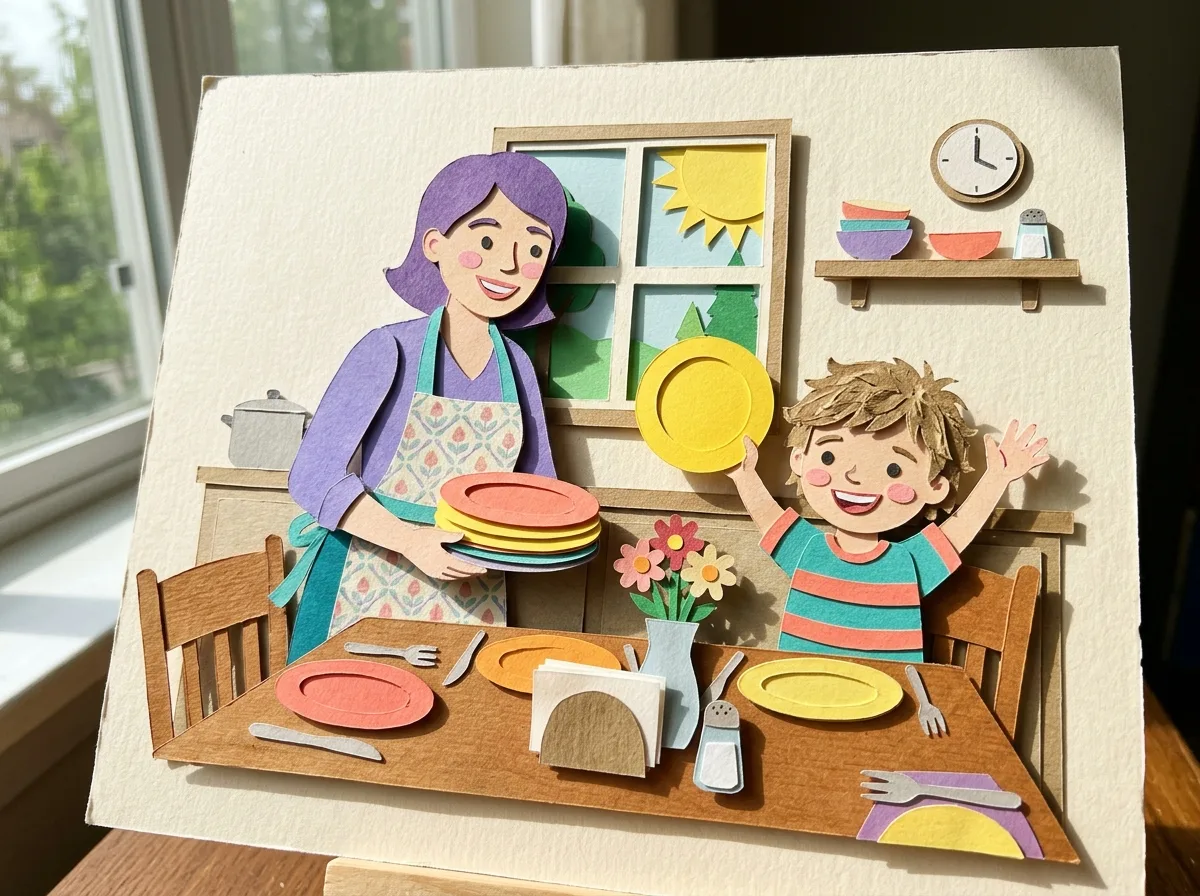
Begin with phrases from family life, classroom tasks, play, and stories. Connect English phrasal verbs with “turn” for kids to a specific scene. A switch, book, road, screen, or song gives each phrase context and supports recall.
Introduce one meaning at a time. “Turn up” may mean “arrive,” as in “He arrived late,” while “turn in” may mean “go to bed.” Add secondary meanings after your child uses the first without translating each word.
Examples by Age
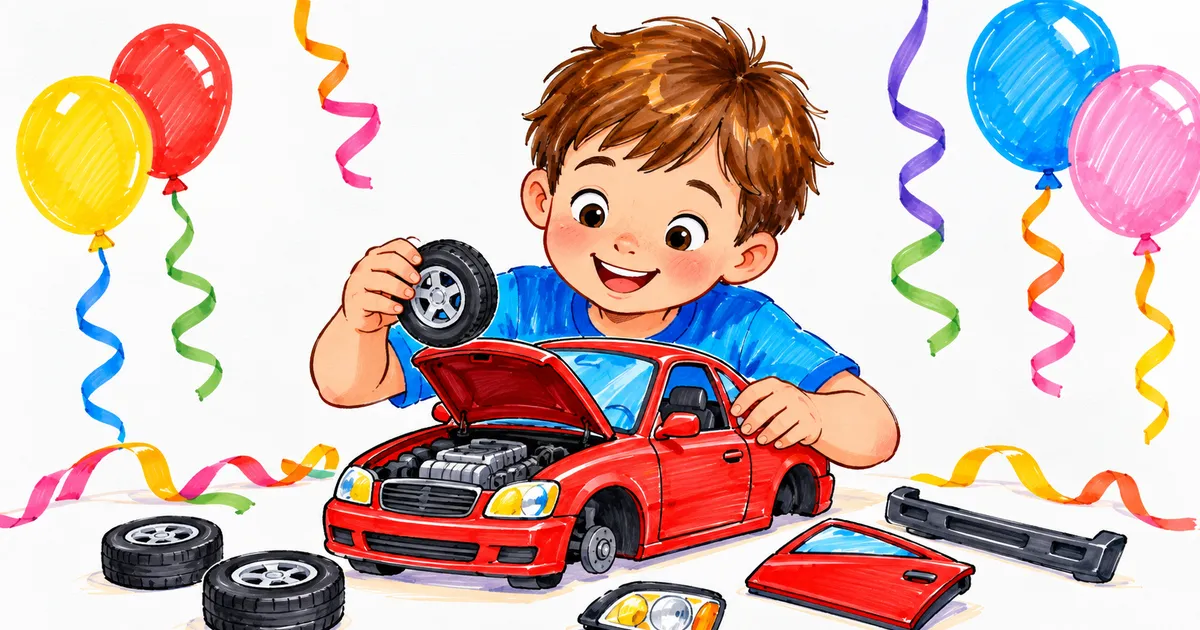
For school-age kids, choose actions they can see and copy: “Turn around,” “Turn the light on,” and “Turn the card over.” Say each phrase during the action, then let the child give the command. Pictures and toys can support understanding, but movement should lead the lesson.
For school-age kids, English phrasal verbs with “turn” for kids can appear in choices and explanations. Ask, “Is the music too loud? Should we turn it up or turn it down?” During a story, pause at a change: “The snow melted into water. What happened?” These questions connect meaning with cause and result.
For school-age kids, introduce phrases with multiple meanings. Compare “turn up the heat” with “turn up at the party,” or “turn down the radio” with “turn down an invitation.” Older learners can sort examples, rewrite formal sentences in everyday English, and use surrounding words to resolve ambiguity.
A Simple Way to Teach Them at Home
When teaching English phrasal verbs with “turn” for kids, practise two or three phrases per session. Model each phrase in a real sentence. Let your child respond with an action or object. Then switch roles so the child produces the phrase.
Try a three-step exchange: “Please turn the light off.” Your child performs the action. Ask, “What did you do?” The answer, “I switched the light off,” moves from a command to past tense and builds grammar without a separate lecture.
Review phrases on different days and in different rooms. Flashcard-only learning may bind a phrase to one image. Using that phrase with a lamp, oven, television, or toy develops flexible language. LearnLink tutors place new language in questions, instructions, and conversations, exposing children to multiple forms.
Practice That Feels Like Real Life
Play an action game with safe household objects. Give commands such as “Turn the book over” or “Turn the sound down.” Add one command that conflicts with the setting and ask your child to correct it. Correction tests meaning beyond imitation.
For story practice, choose a change or problem. A path becomes muddy, so the family turns back. A seed turns into a plant. The meal turns out well. Older children can write a four-sentence scene with two phrasal verbs, then replace nouns with pronouns: “Turn the radio off” becomes “Turn it off.”
Choose the Correct Particle
Complete each sentence with around, off, into, or down.
1. Turn _____ and look at the map behind you.
2. Please turn the kitchen light _____.
3. In the tale, the pumpkin turned _____ a coach.
4. The music is too loud. Turn it _____.
Answers: 1. around; 2. off; 3. into; 4. down.
For the rule wording, Wikipedia — English Grammar is a useful reference while the practice examples here stay adapted for children.
Frequently Asked Questions
How Many Phrasal Verbs Should My Child Learn at Once?
Beginners need two or three phrases per practice period. A child who reads and speaks English confidently may handle four or five. Revisit English phrasal verbs with “turn” for kids in later conversations. Add phrases when your child understands the current set in fresh sentences and uses part of it without prompting.
Why Can the Object Move in Some Sentences?
Certain “turn” phrasal verbs are separable. Both “turn off the computer” and “turn the computer off” are correct. A pronoun goes between the verb and particle: “turn it off.” Teach the pattern through paired examples. Ask your child to replace “the computer” with “it” and notice the new word order.
What Should We Do If Literal Translation Causes Confusion?
Demonstrate the complete phrase instead of translating each word. For “turn down the music,” lower the volume while speaking. For “the plan turned out well,” explain the result and provide another example. Multilingual children may compare languages, but English meaning and word order require separate examples.
How Can We Tell Whether a Child Knows a Phrasal Verb?
Recognition is only the first sign. Check whether your child follows a new instruction, selects the right phrase for a picture, and uses it with another object or event. Mistakes provide evidence. If your child says “turn off it,” model “turn it off,” continue the exchange, and revisit the pattern later.
Want to see how these ideas work in a real lesson — try a free LearnLink lesson.
Stay updated on our latest tips and resources by following us on Instagram LearnLink.