How to Motivate a Child to Learn English
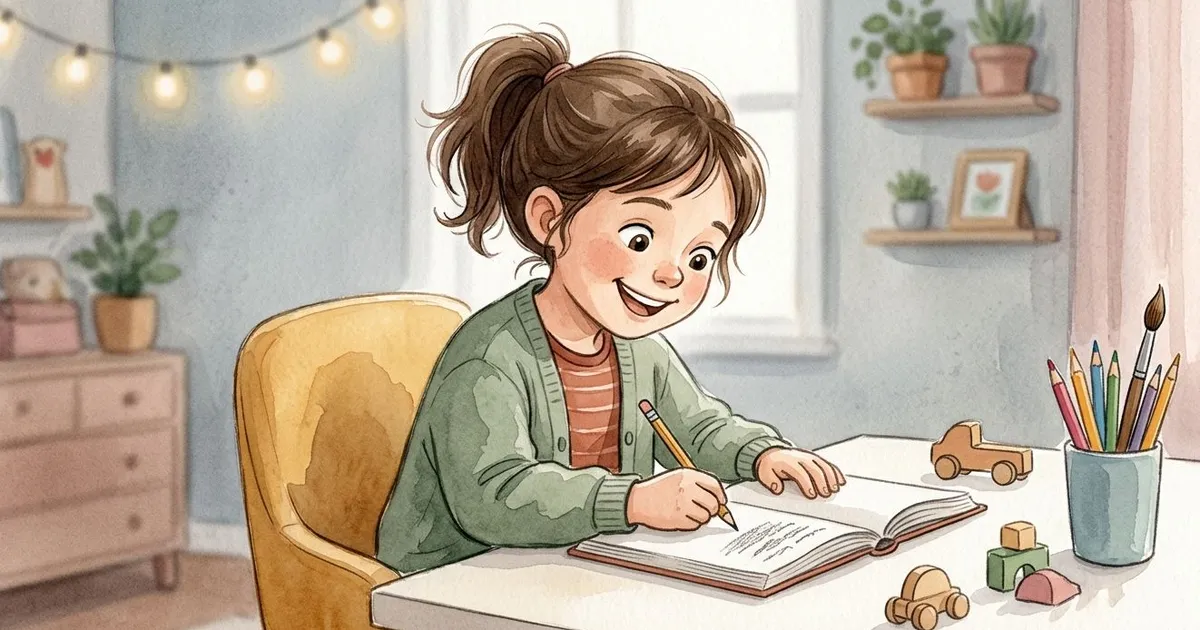
How to motivate a child to learn English starts with one rule: link English to a purpose your child can feel this week, not a distant promise about the future. For a 6-year-old, that may mean naming animals in a favorite game. For a 10-year-old, it may mean understanding a song line or chatting during an online lesson without help. Motivation grows when English feels safe, useful, and small enough to try. Families do not need native accents, expensive tools, or long study blocks. They need steady routines, kind feedback, and age-matched tasks.
📥 Motivation That Grows With Your Child
A practical family workbook for building a trusted English routine
Leave your email — we'll send the PDF to your inbox.No spam — the PDF plus one short reminder. Unsubscribe anytime.
What Families Need to Know
Children are not motivated by English in the abstract. They respond to play, choice, honest praise, and the feeling that they can take one more step than yesterday. A child who says “I hate English” may mean “I feel slow,” “I am afraid to speak,” or “this work is too dull.”
The first family job is to lower pressure. English should not become a daily test at the kitchen table. Use short practice, warm correction, and visible wins: “You remembered five food words,” “You asked a full question,” or “You watched two minutes without subtitles.”
Build a Routine Your Child Can Trust
How to motivate a child to learn English is less stressful when the child knows what will happen and when it will end. Ten calm minutes after snack can beat one long Sunday session. Tie the routine to a family moment: breakfast words, bedtime story lines, or a car game with colors and numbers.
Use a steady pattern: begin with known material, add one new piece, then finish with success. For example, a 7-year-old names three animals, learns “fur” and “tail,” then draws a funny animal and labels it. The child leaves thinking, “I can do this.”
Match Motivation to Age
Young children, school-age kids, need movement, pictures, songs, puppets, and fast turns. Do not ask them to “study harder.” Ask them to jump to the red card, feed the toy bear three apples, or say “I’m happy” with a face. Their attention grows through action.
Children can handle rule-based games, mini goals, and light reading. They often like charts if the chart measures effort, not worth. Teenagers need respect and choice. A 13-year-old may work harder for English linked to coding, sport, fashion, travel, books, or friends than for an adult-chosen worksheet.
Use Choice Without Giving up Structure
A child may not choose whether English matters, but they can choose how to start. Offer two useful options: “Do you want animal cards or a comic?” “Shall we practise speaking first or listening first?” Choice gives control, and control lowers resistance.
Data current as of July 2026.
At LearnLink, our tutors use this balance in 1-on-1 lessons for children ages 4-15: a lesson aim, then tasks shaped around the child’s interests and level. As of August 2026, LearnLink works with families around the world, experienced tutors, and learners in many countries, so teaching must fit family cultures, school systems, and home languages.
Make Progress Visible

How to motivate a child to learn English often means showing progress before the child sees it alone. Keep an “English wins” page on the fridge or in a notebook. Write concrete wins: “read ten sight words,” “asked Where is it?,” “watched a cartoon scene and named three actions.”
Avoid reward systems that make English feel like a chore to survive. Stickers and points can help younger children, but the reward should return to learning: choosing the next story, leading the next game, or recording a short message for a grandparent.
Practice: The Two-choice Start
Before the next English moment, offer two choices: “Do you want to practise with pictures or with a song?” Set a timer for 8-10 minutes. At the end, ask your child to name one thing that felt manageable and one thing to try again tomorrow.
Turn Mistakes into Useful Information
Children stop trying when every answer becomes a correction. During speaking, listen for meaning first. If your child says, “She go school,” answer naturally: “Yes, she goes to school. What does she take in her bag?” The child hears the correct form without losing the thought.
Choose one focus at a time. One week may be “I like…” sentences. Another week may be past-tense story words. When families correct pronunciation, grammar, spelling, and handwriting together, children often learn that English is a place where they are always wrong.
Practice: Warm Correction
Ask your child three questions: “What do you like?”, “What can you see?”, and “What are you doing?” If there is a mistake, repeat the answer correctly once, then keep talking. Do not ask the child to repeat every corrected sentence unless they seem relaxed.
Use English in Everyday Family Life
How to motivate a child to learn English becomes less mysterious when English leaves the workbook. Put English into family jobs: “Find your shoes,” “Choose a green apple,” “Tell me the weather,” or “Write milk on the shopping list.” Real use makes words stick.
For multilingual families, do not treat the home language as a problem. A child who speaks two or three languages already has strong language tools. Compare gently: “In English we say I am hungry. How do we say it in Spanish, Hebrew, French, Arabic, or your home language?” Pride replaces confusion.
Practical Activities for the Week
Try a five-day plan with one task each day. Monday: label five objects in the bedroom. Tuesday: sing one action song and act it out. Wednesday: play “I spy” with colors. Thursday: watch a short clip and name three things. Friday: let your child teach you five words.
For older children, use a project instead of a drill. They can make a football player profile, a recipe card, a pet-care poster, or a three-slide presentation about a game. The aim is not flawless English. The aim is using English to say something they care about.
Practice: The Friday Mini-project
Ask your child to choose one topic: food, animals, sport, music, or games. They write or say five English words, one sentence, and one question about it. Keep the project short enough to finish in one sitting.
- Practice five animal words during breakfast using pictures and quick gestures.
- Read one Oxford Owl level-two story aloud with your seven-year-old tonight.
- Try a two-minute role-play shop game with three favorite toys.
- Use sticker rewards to motivate your child to learn English for ten minutes.
- Celebrate one clear effort with specific praise before correcting mistakes.
When a word has several meanings or pronunciations, Cambridge Dictionary is a useful check before turning it into child-friendly examples.
Frequently Asked Questions
What If My Child Refuses to Speak English?
Start with listening and low-pressure answers. Your child can point, choose a card, act, draw, or answer with one word before using full sentences. Speaking grows when the child feels safe. Do not force public performance for relatives or friends. Build a private routine first, then invite short speech when the child is ready.
How Long Should English Practice Be at Home?
For children, 5-15 minutes is enough for home practice, especially after school. Younger children need shorter bursts with movement. Older children can work longer if the task has a purpose, such as making a poster or preparing questions for a lesson. Stop before the child is worn out.
Should Parents Correct Every Grammar Mistake?
No. Correct the mistake that blocks meaning or matches the current learning goal. If the focus is “I like” sentences, correct “I likes” gently, but ignore a small article error for now. Too much correction can make careful children silent. Limited feedback helps them keep trying.
How to Motivate a Child to Learn English If They Only Like Games?
Use games as the doorway, then add language rules inside the game. A child can earn a turn by asking “Can I have the red card?” or describe a move with “I am jumping.” For older children, use quizzes, role-play, or project challenges. The game should carry English, not replace it.
Do Online Lessons Help Shy Children?
They can, if the lesson is calm, personal, and paced well. Some shy children speak more from home because the setting feels known. A 1-on-1 format gives the tutor time to wait, model, and adapt. The key is not the screen itself, but the quality of the interaction.
Start your child's English journey today — book a trial lesson with LearnLink.
Stay updated on our latest tips and resources by following us on Instagram LearnLink.