Joke in English for Kids
Using humor builds a child's confidence in language learning. A joke in english for kids brings smiles and naturally builds vocabulary, wordplay understanding, and pronunciation mastery. Our data from 4,000+ families shows children engaging with lighthearted content retain vocabulary up to 40% faster than those using rote memorization. Laughter at a punchline means actively processing cultural and linguistic logic, not just memorizing sounds.
How Wordplay Builds Real Language Skills
When children hear a joke in english for kids, their brains engage significantly. Most children's jokes use double meanings, homophones, or puns. To grasp the punchline, a young learner recalls multiple word definitions, deciding which fits the context. This strengthens cognitive flexibility and deepens English understanding in daily life.
For example, consider a classic question about English farm animals for kids: "Why did the cow cross the road? To get to the udder side!" Understanding this requires recognizing the phonetic similarity between "other" and "udder." This phonetic awareness is crucial for communication. Research from Reading Rockets identifies phonological awareness as a strong predictor of reading success. Sharing a joke in english for kids helps children notice these subtle sound differences naturally, avoiding dry phonics drills.
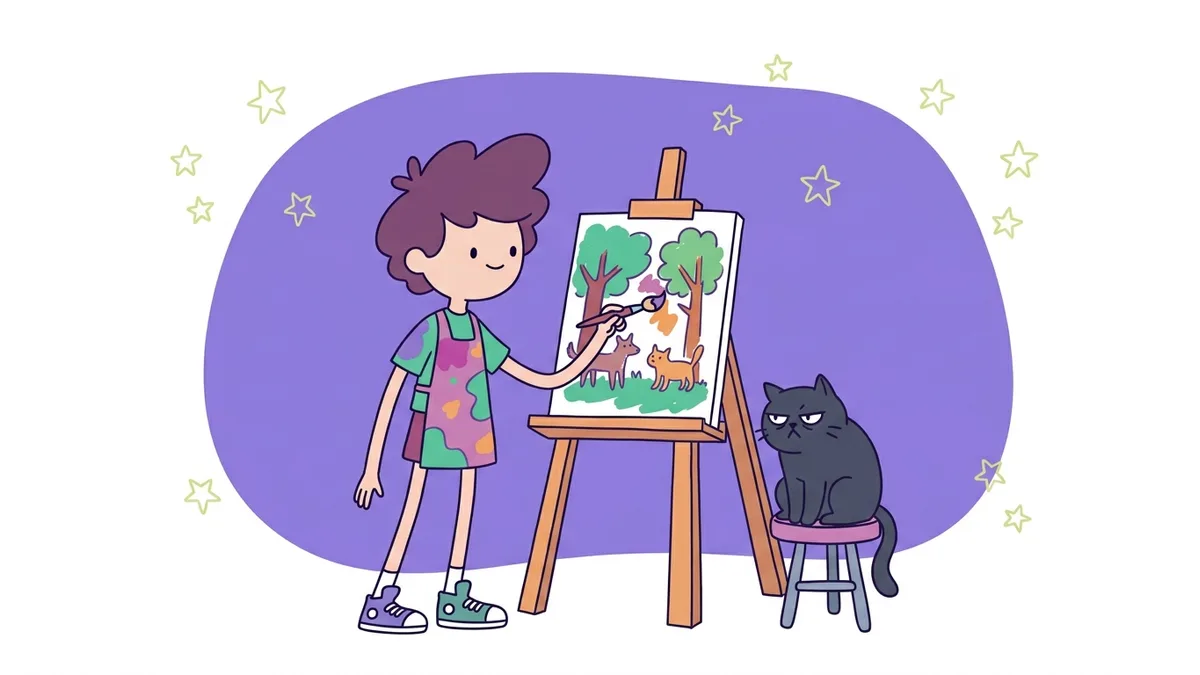
Children between ages 6 and 9 sit in a particularly receptive window for this kind of learning. At this stage, most are accumulating roughly 5,000 to 10,000 known words, yet significant gaps remain when a single word carries two competing meanings. A common mistake is treating the punchline literally—a child who hears "Why can't Elsa have a balloon? Because she'll let it go!" may simply picture a floating balloon, missing the layered cultural reference entirely. Teachers use that misread productively by asking the child to state both interpretations aloud. This "double-definition narration" technique trains learners to hold two semantic layers at once, directly building the cognitive flexibility that later underlies figurative language and broader reading comprehension.
Writing original jokes deepens these gains further. When a child constructs their own pun—even a clumsy one—they must actively search for words with overlapping sounds or meanings, a retrieval effort that consolidates vocabulary more durably than passive exposure. One practical classroom structure, suited to ages 7 and up, is the "3-word joke journal": each week, learners choose three new vocabulary words and try building a joke around any two of them. Even failed attempts show the teacher exactly which phonetic or semantic connections the child has not yet formed—diagnostic information that is difficult to surface through a conventional worksheet or quiz.
Simple Routines for Daily Practice
Establishing a humor routine requires no extensive prep. Effective learning moments are often small, unstructured windows during your day. Share a quick joke during breakfast, write one for their lunchbox, or tell one driving to soccer practice. Consistency matters more than session length.
Maximize these moments by combining jokes with other engaging media. Listen to top 12 English podcasts to learn English for kids in 2025 during car rides; many feature funny segments and riddles. Explore apps to learn English for kids for interactive vocabulary games with playful animations. Weaving humor into their day creates a rich, supportive environment where English feels natural, not academic.
For children, stick to knock-knock jokes and simple riddles where the punchline relies on one familiar word — "lettuce in" or "interrupting cow" land immediately because the vocabulary is already known. Children can handle homophones and double-meaning wordplay, such as "I used to hate facial hair, but then it grew on me," where unpacking the joke becomes a mini vocabulary lesson. A common mistake at both levels is explaining the punchline the moment a child looks confused. That three-second pause is processing time; cutting it short robs them of the satisfaction of cracking the code. Instead, ask "what do you think that word means here?" and let them reason aloud.
A simple joke journal reinforces the routine without adding screen time. Each Sunday, have the child select their favourite joke from the week, write it by hand, and sketch a quick illustration. After six weeks they hold a personal collection they can recite fluently — repetition across writing, drawing, and rereading engages three distinct memory pathways. Encourage them to perform one joke for a grandparent or sibling; shifting from listener to storyteller forces real-time pronunciation decisions and builds the confidence that makes the next week's joke-hunting feel worthwhile.
Avoiding Common Mistakes with Humorous Learning
While humor is effective, parents should avoid pitfalls. The most frequent mistake: choosing overly complex jokes or those relying on deep cultural references a beginner can't grasp. If a joke needs a five-minute explanation, the fun is lost, and the child may feel discouraged. Start with literal puns, then move to abstract wordplay. Themed collections like Short Mexican Jokes for Kids in English strike this balance well, pairing simple wordplay with light cultural context that engages young learners without overwhelming them.
Another mistake: correcting every minor pronunciation error during the punchline. If your child mispronounces a word telling a joke in english for kids, let them laugh first. Gently model correct pronunciation later. Keeping the experience positive and rewarding is crucial for motivation. Children who feel safe making mistakes progress faster than those fearing constant correction.
Expanding into Stories, Songs, and Movies
Once your child enjoys riddles, expand their linguistic horizons with other funny media. Funny stories, comedic animations, and silly songs are excellent next steps. Sing along to English songs for kids, focusing on silly camp songs or rhyming tunes. Rhymes help children predict word endings, building speaking confidence — a short poem on rain in English for kids is a natural complement, layering everyday vocabulary with rhythm and repetition children love to revisit.
Screen time can be an active learning tool when chosen wisely. Watching 12 cartoons to learn English for kids or 12 movies to learn English for kids allows children to see facial expressions, physical comedy, and situational humor. This visual context eases spoken dialogue comprehension. Over time, these diverse inputs help children transition from understanding puns to appreciating complex conversational humor.
Your Five-Step Plan for Humorous English Practice
To get started immediately, our team provides an actionable plan for home implementation. These steps fit easily into any busy family schedule:
- Start with one joke daily — Share a short joke in english for kids each morning at breakfast or on the way to school.
- Use visual cues — Draw a picture or use gestures to help your child understand word double meanings.
- Encourage retelling — Ask your child to tell the joke to family or friends, practicing speaking skills.
- Explore funny media — Dedicate one evening weekly to a funny cartoon or playful children's English podcast.
- Keep it stress-free — Focus on fun and laughter, letting pronunciation mistakes slide to build natural confidence.
Focusing on shared laughter and play helps your child build a positive, lifelong relationship with English.
FAQ
How Do I Know If a Joke Is Too Difficult for My Child's English Level?
If your child looks confused or requires over a minute of vocabulary explanation, the joke is too advanced. Start with basic jokes using known words, gradually introducing trickier puns as vocabulary expands.
Can Telling a Joke in English for Kids Really Help with Pronunciation?
Yes. Delivering a punchline successfully requires children to focus on timing, rhythm, and specific word sounds. Practicing a joke in english for kids helps them rehearse these pronunciation patterns in a fun, low-pressure way, building natural speaking confidence.
What Should I Do If My Child Does Not Understand the Punchline?
Gently explain the word's double meaning with a smile, showing its humor. Avoid turning it into a formal test or grammar lesson; keep the tone lighthearted to maintain excitement for next time.
Data current as of July 2026.
Looking for more ways to make English fun and natural for your child? learn how our experienced, friendly tutors build confidence through engaging, interactive games and real-world conversation. and start with a trial lesson.
Stay updated on our latest tips and resources by following us on Instagram LearnLink.