Kitchen Utensils in English for Kids
Kitchen Utensils in English for Kids: Words and Activities starts with a simple pedagogical fact: children absorb around fifteen new words a week when they can touch, hold, and name each object themselves. A spoon, fork, bowl, and pan become vocabulary the moment your child helps with dinner, no flashcards required. This guide gives you a ready word set, simple sentences, and games sorted by age, so practice fits into real cooking instead of a worksheet. All you need is the drawer you already own and a few spare minutes while the food cooks — starting with the core list below.
Core Words and Phrases
Start with tools your child already sees every day. Naming a real object in your hand sticks far better than naming a picture, so hold up each item as you say the word. The set in this Kitchen Utensils in English for Kids: Words and Activities lesson covers eating tools, cooking tools, and a few helpers for mixing and draining.
The table below gives each word, its job, and a short sentence your child can say out loud. Read the sentence together, then let your child repeat it while holding the real utensil.
Fourteen words is plenty for one topic. Once your child owns these, you can add softer vocabulary like ladle, peeler, or rolling pin. Keep the knife paired with a safety line every time, so the word and the rule arrive together.
Examples in Context
Single words fade fast; words inside a short action stay. Turn each utensil into a tiny command while you cook, and your child hears the word used for a real reason. "Get the bowl." "Bring me a spoon." "Where is the pan?" These are the same sentence shapes a child needs for the dinner table in any English-speaking home.
You can also build a two-line swap. You say, "I want to stir the soup. What do I need?" Your child answers, "A spoon." This flips the child from listener to speaker and checks understanding without a quiz. Keep your questions short and concrete, and name one object at a time.
Activities by Age
The same word set works from age four to the early teens, but the game changes. Younger children need the object in hand; older ones can describe and sort. The activities in this Kitchen Utensils in English for Kids: Words and Activities plan are grouped so you can pick the right level in a few seconds.
School-age kids: Play "fetch it." Lay four utensils on the counter and ask your child to bring you one by name. Swap the items, add a fifth, and repeat. Toddlers love the movement, and the word attaches to the real weight and shape of the tool.
School-age kids: Try sorting. Ask your child to put all the "eating tools" in one pile and all the "cooking tools" in another, saying each word aloud. Then let them give you one command — "Flip the egg with the spatula" — and actually do it.
School-age kids: Move to describing. Cover a utensil and give three clues: "It is metal, it has holes, and it drains water." Your child guesses "colander." Older learners can also write a three-step recipe using five utensil words, which ties vocabulary to full sentences.
Practice Ideas
Short, frequent practice beats one long session. Five minutes while the water boils is enough. Rotate three ideas across the week so the words stay fresh without feeling like homework. The practice routine in this Kitchen Utensils in English for Kids: Words and Activities set needs nothing you do not already have in the kitchen.
Kitchen Detective
Pick one utensil and hide it behind your back. Give your child three clues in English — material, shape, and job — one clue at a time. Your child guesses after each clue and earns a point for guessing early. Then switch roles: your child hides a tool and gives you the clues. This drills both listening and speaking, and it turns the whole drawer into a quiet game.
A second idea is the "cooking narration." While you make a simple snack, say every step out loud and let your child name each tool as you reach for it. Across LearnLink lessons, tutors use this same narrate-and-name method because it keeps a child speaking in full sentences. As of October 2026, kitchen vocabulary is still one of the first everyday sets our tutors give to families around the world, since the objects are universal.
Common Mistakes
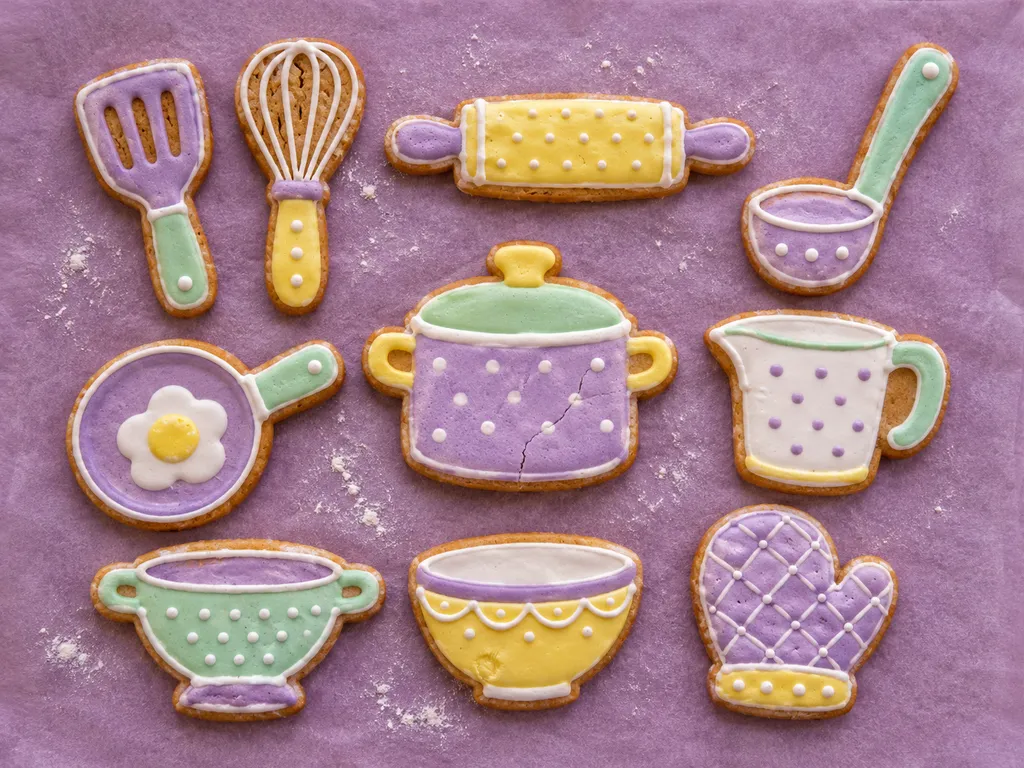
The most frequent slip is mixing "cup" and "glass." A cup usually has a handle and holds a hot drink; a glass is clear and holds a cold one. Show both side by side and let your child feel the difference. Another common mix-up is "pan" and "pot" — flat and wide for frying versus tall and deep for boiling.
Children also drop the article, saying "pass fork" instead of "pass the fork." Gently model the full phrase back rather than correcting directly: your child says "pass spoon," you answer "sure, here is the spoon." The correct form arrives without a lecture, and the child hears it in a real exchange.
- Point to a spatula or whisk and ask your child to name it in English right now.
- Label five kitchen drawers with English words like "fork," "spoon," and "pot" today.
- Play a 5-minute matching game pairing utensil pictures with English names before dinner.
- Read one picture book featuring kitchen vocabulary aloud with your child tonight.
- Practice three new utensil words daily while setting the table together this week.
When a word has several meanings or pronunciations, Cambridge Dictionary is a useful check before turning it into child-friendly examples.
Frequently Asked Questions
At What Age Can My Child Start Learning Kitchen Words?
Children as young as four can name everyday tools like spoon, bowl, and cup, because they already use these objects daily. Keep it to four or five words at first and always hold the real item. Older children, from seven up, can handle the full set and describe what each tool does. The key is matching the task to the age: fetch-and-name for the youngest, describe-and-sort for the oldest.
Do I Need to Speak Perfect English to Teach These Words?
No. You only need the single words and a few short commands, all of which appear in this Kitchen Utensils in English for Kids: Words and Activities guide. Your child learns the object-plus-word link from you holding the tool, not from your accent. If you are unsure of a word, say it together from the table above, and let your child repeat it. Shared practice works better than a perfect model.
How Is the Knife Handled Safely?
The knife stays in an adult's hand. Teach the word and the rule together: "This is a knife. A knife is sharp, so only a grown-up uses it." Your child can still name it, point to it, and say what it does without ever holding it. For cutting games, give a child-safe tool or a spoon instead, and keep the real knife on the cutting board under your watch.
How Long Until My Child Remembers All the Words?
Most children hold around fourteen kitchen words within one to two weeks if they practise for a few minutes most days. Real objects and daily use speed this up a lot, which is why cooking together beats flashcards. Rotate the fetch, sort, and describe games so the same words return in different shapes, and review the trickier pairs like pan and pot a little more often.
If your child needs steady speaking practice, start small — choose a trial lesson.
Stay updated on our latest tips and resources by following us on Instagram LearnLink.