English Food Vocabulary for Kids
English food vocabulary for kids starts with about twenty short, everyday words — apple, milk, bread, egg, and water — that a child can see, touch, and name at the table. At the very first level, a young learner is not reading menus or writing recipes; they are pointing at what is on the plate and asking for more. Food works so well because every child eats every day, so real practice happens at breakfast, snack time, and dinner without a single worksheet. This guide gives you a teachable word set grouped by food family, ready-made sentences, simple games by age, and the mistakes to expect along the way.
📥 Food Words Practice Pack
Learn and practice basic English food words by group.
Leave your email — we'll send the PDF to your inbox.No spam — the PDF plus one short reminder. Unsubscribe anytime.
Common English Words for Fruits
Fruits are a friendly place to begin because their bright colours make them easy to picture and remember. Pick the ones your family actually buys, so the word links to something real in the bowl on the counter.
Data current as of July 2026.
Say the word, point to the fruit, and let your child repeat it. These six carry most of what a young learner needs at first, and they double as colour practice while you learn basic English words together.
Common English Words for Vegetables
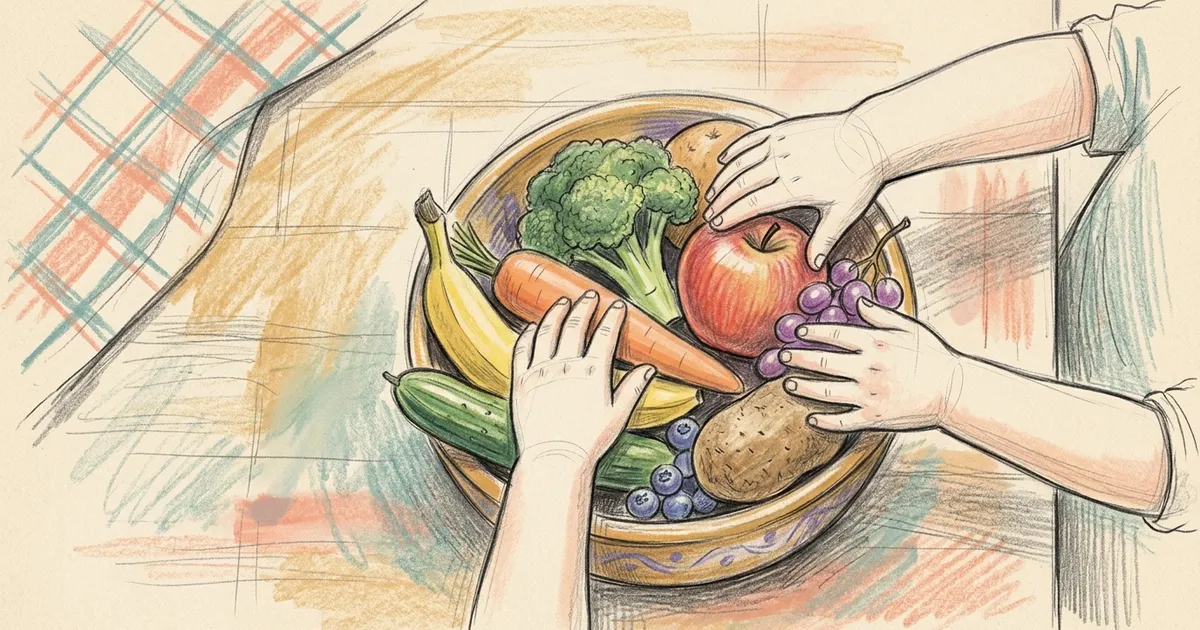
Vegetables give you edible leaves, roots, and stems, and sorting them by colour helps a child learn a broad range in a fun way. Green broccoli looks like little trees; an orange carrot is good for your eyes — these small hooks make the word stick.
Keep the list of english food vocabulary for kids short at each sitting: teach three vegetables today, three more next week, and revisit the earlier ones so nothing is forgotten.
Grains, Proteins, and Dairy
Once fruits and vegetables feel easy, add the everyday foods that fill a plate: grains for energy, proteins for growing muscles, and dairy for strong bones. These words show up at every meal, so a child hears them constantly.
Teach one row a day and use the example sentence out loud. The three tables below cover bread and rice, meat and eggs, and milk and cheese.
Food Words in Real Sentences
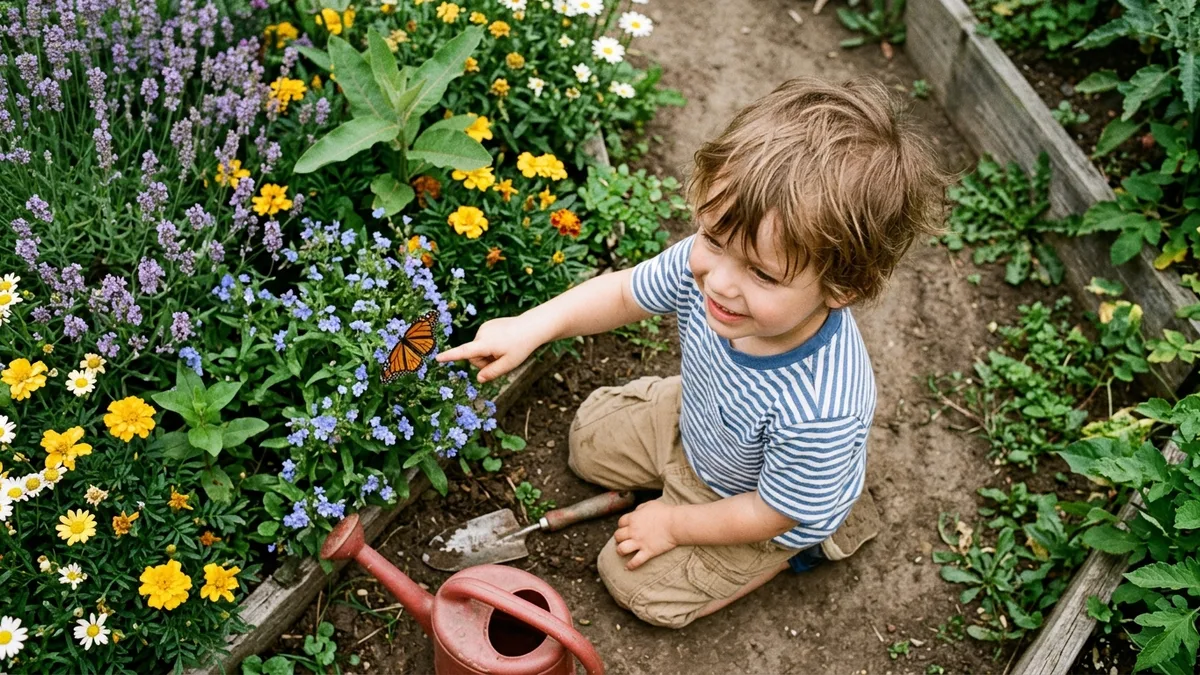
Single words are a start, but a child sounds far more confident once the words sit inside a few fixed phrases. Keep the frames simple and reuse them until they feel automatic — the goal is a child who can ask for what they want at the table, not perfect grammar.
Swap one food word in and out each day. Same frame, new word: that small repetition turns twenty nouns into dozens of usable sentences.
• I like / I don't like + food. (e.g., I like bananas. I don't like fish.)
• I want + food, please. (e.g., I want milk, please.)
• Can I have some + food? (e.g., Can I have some bread?)
• What's for + meal? (e.g., What's for dinner?)
• My favourite food is + food. (e.g., My favourite food is pasta.)
• This + food + tastes + adjective. (e.g., This apple tastes sweet.)
Flashcards to Remember the Vocabulary
Turn a handful of words into picture clues. Read the hint, guess the food, then flip to check — a quick, low-pressure way to build recall. You can also describe flavours with adjectives like sweet and sour as you play.
This round fruit is often red or green.
This orange vegetable is good for your eyes.
You can make sandwiches with slices of this.
Drink this white liquid for strong bones.
This bird's meat is a popular protein.
It is important to drink this clear liquid every day.
This is the last meal of the day, usually in the evening.
A small, red, sweet fruit with tiny seeds.
Activities by Age
The words stay the same across ages; what changes is how you present them. A five-year-old learns through movement and pictures, while a ten-year-old can read labels and sort words into groups. Matching english food vocabulary for kids to the right activity is the part parents most often get wrong — a game that thrills a four-year-old bores an older child in seconds.
The youngest group never has to speak first: they show they understand by pointing, and speaking follows once they have heard a word many times. Do not rush a shy four-year-old into full sentences.
Simple Practice Ideas for Home
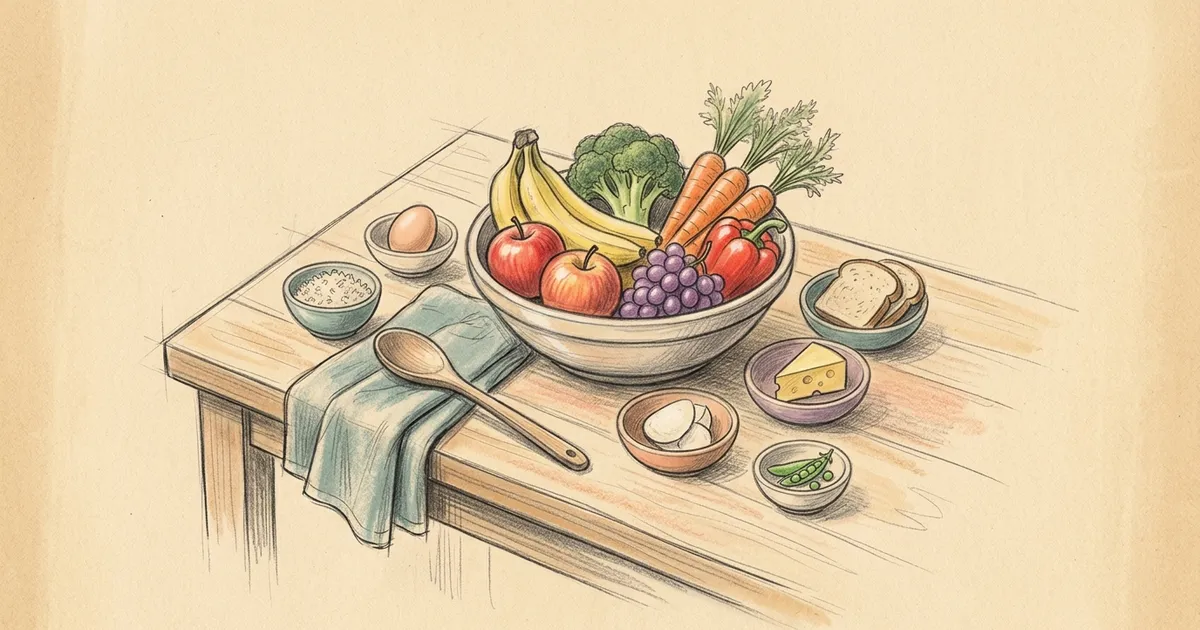
The best practice is folded into the day, not added on top of it. You do not need flashcards to make english food vocabulary for kids stick — the kitchen already holds everything you need. Aim for short, frequent bursts: five minutes at breakfast beats forty minutes on a Sunday.
More than 4,000 families in over 100 countries now learn with us, and in 2026 our tutors still open with food for young beginners, because it is the fastest vocabulary to make real.
Four Everyday Games
Fridge tour: open the door and name three foods together. Shopping helper: your child finds and names one item on each aisle. Plate check: before eating, the child names what is on the plate. Colour and food: "Find something red." — tomato, apple, strawberry. Then switch roles and let your child give the instruction while you point, sometimes to the wrong food on purpose. The giggle when they correct you is a sign the word is truly learned.
Common Mistakes to Expect
Small errors at this level are normal and usually fix themselves with time. Do not correct every slip, or a young child may stop trying. Instead, repeat the word back correctly and move on, so they hear the right form without feeling caught out.
Because many of our families raise children in two or three languages, a little mixing between them is a healthy stage, not a problem to solve. The table below shows the fixes that matter most in english food vocabulary for kids.
When a word has several meanings or pronunciations, Cambridge Dictionary is a useful check before turning it into child-friendly examples.
- Review one "Common Mistake" today and repeat the correct word 3 times with your child.
- Practice 5 new food words for 10 minutes before dinner using flashcards.
- Label 5 real fruits or vegetables at home with sticky notes tonight.
- Read one short English food-themed picture book together this evening.
- Ask your child to name 3 foods in English during tomorrow's breakfast.
Frequently Asked Questions
How Many Food Words Should My Child Learn First?
Start with about twenty, drawn from foods your family eats often, and add more only once those feel easy. A short list you revisit daily beats a long list you cover once. Depth of repetition matters far more than the number of words on the page, so keep the english food vocabulary for kids small and say it often.
My Child Understands the Words but Won't Say Them. Is That Normal?
Yes, and it is common at this stage. Understanding always comes before speaking, sometimes by weeks or months. Keep offering chances to respond by pointing or nodding, and let speaking arrive on its own. Pressuring a quiet child usually slows things down, while calm, repeated exposure at mealtimes gently builds the confidence to say the words out loud.
We Speak Two Languages at Home. Will English Food Words Confuse My Child?
No. Young children handle several languages well and simply file English food words alongside the ones they already know. You may hear them mix words in one sentence for a while — this is a normal step, not a sign of trouble. Keep each language linked to real moments, such as English at snack time, and the sorting happens naturally.
How Often Should We Practise?
Little and often works best. Five focused minutes at breakfast, lunch, or a snack, most days of the week, will do more than one long weekend session. Because food appears several times a day, you get many small, natural chances to name it. Tie the practice to something that already happens, and it becomes a habit rather than an extra task.
Stay updated on our latest tips and resources by following us on Instagram LearnLink.
A short one-to-one lesson can show what level and pace fit your child — book a trial English lesson.
Stay updated on our latest tips and resources by following us on Instagram LearnLink.