Comparatives and Superlatives for Kids
English compares two ways. Comparatives (taller, faster, better) weigh two items. Superlatives (tallest, fastest, best) crown one winner from three or more. Short words add -er and -est. Longer words borrow "more" and "most." This kids' guide to comparatives and superlatives delivers plain rules, real examples, and three practice tasks.
📥 Comparatives and Superlatives Practice Pack
A kid-friendly printable worksheet for comparing people, animals, places, and things.
Leave your email — we'll send the PDF to your inbox.No spam — the PDF plus one short reminder. Unsubscribe anytime.
What Comparatives and Superlatives Mean
Comparatives weigh two things. "My bag is heavier than yours" separates two bags. Superlatives crown one inside a group. "This bag is the heaviest in class" beats every rival.
Signal words expose each form. Comparatives travel with "than." Superlatives travel with "the." Master that pairing and you master half the grammar. A quick gut check helps too: picture how many things sit in the comparison. Exactly two points toward a comparative. A crowd of three or more points toward a superlative.
Three Building Blocks
Every comparison needs three parts: a describing word (big, happy, fast), a change (-er, -est, more, most), and a link word (than, the). British Council's comparatives practice for kids drills exactly this trio. Teaching possessive adjectives and pronouns follows one rhythm: name, change, use.
Spelling Rules for Comparatives and Superlatives
Word length decides spelling. Short words swallow endings. Long words grab helper words. Four patterns cover early lessons.
Doubling trick: short words ending in one vowel plus one consonant double that consonant. Big becomes bigger, biggest. Hot becomes hotter, hottest. Doubling guards the short vowel sound, mirroring irregular verb spelling shifts.
Irregular Forms to Memorise
Five pairs ignore every rule. Kids hear them daily, so rote memory wins:
- good, better, best
- bad, worse, worst
- far, farther, farthest
- little, less, least
- many or much, more, most
Those five power most conversation. A child who owns "good, better, best" already builds dozens of sentences. Like special forms of the verb to be, irregulars keep unique shapes. Practise them through games rather than lists: race to shout "worse, worst" or "less, least" before a timer beeps, and the odd spellings lock in through fun, not drudgery.
Common Mistakes with Describing Words
Four errors haunt homework. One golden rule defeats them all: never marry an ending to a helper word.
Teaching Comparatives and Superlatives in Four Steps
A four-step routine breeds a habit. Our tutors run this sequence across 100+ countries because it lifts a child from spotting a pattern to speaking it.
Step 1: Compare Real Objects
Drop two pencils on a table. Ask, "Which is longer?" Add a third pencil. Ask, "Which is the longest?" Physical objects expose the two-versus-three idea, and young ears catch "than" and "the" naturally.
Step 2: Sort and Rank
Line up siblings by height. Sort toy cars by size. Ranking demands a comparative for each pair plus a superlative for the champion. Pair this with telling the time in English, another skill grown through tiny daily moments.
Step 3: Ask Comparison Questions
Fire open questions. "Which fruit tastes sweeter?" "Is summer hotter than winter?" Blending comparisons into English question types for kids sparks real talk, never robotic drills.
Step 4: Write Three Sentences
End each session writing. Two comparative sentences plus one superlative sentence per day suffices. Short daily bursts crush rare marathons. LearnLink lessons run 25 or 50 minutes precisely because tight sessions hold young focus. Older learners can stretch into modal verbs and trickier grammar afterward.
▶️ Your turn: Build the comparative plus superlative of each word.
1. small, __________, __________
2. happy, __________, __________
3. good, __________, __________
4. expensive, __________, __________
Hint: count syllables first, then choose -er or "more".
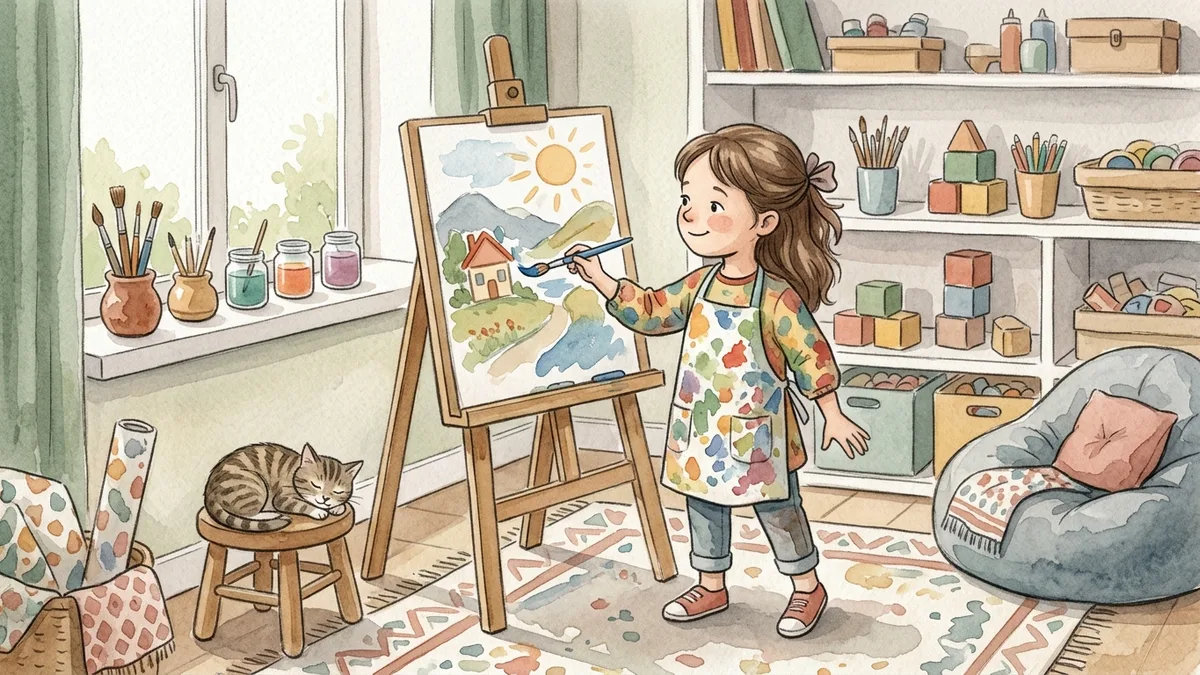
💬 Speak now: Study the image above. Compare what appears.
1. Pick two items. Say which looks bigger, taller, or faster.
2. Pick three items. Crown the biggest or fastest.
3. Slip "than" into one sentence, "the" into another.
▶️ Now you: Invent real comparisons.
1. Compare two foods from today inside one comparative sentence.
2. Crown a favourite thing "the best" of its group.
3. Stretch one sentence across a comparative plus a superlative.
When a word has several meanings or pronunciations, Cambridge Dictionary is a useful check before turning it into child-friendly examples.
Frequently Asked Questions
At what age can children learn the -er and -est endings?
Most children handle simple comparisons around ages 6 to 8, once single describing words come easily. Younger learners aged 4 to 5 start small: "big" grows into "bigger" through favourite toys. Older kids stretch toward "more" and "most" forms, and many enjoy ranking everything in sight. LearnLink teaches English to children aged 4 to 15, and tutors match grammar depth to each age. Comparisons expand as vocabulary expands, so a steady flow of new describing words keeps the rule fresh.
What is the difference between the two forms?
A comparative weighs two things, ends in -er or borrows "more," and pairs with "than": faster than, more careful than. A superlative weighs one thing against three or more, ends in -est or borrows "most," and pairs with "the": the fastest, the most careful. The shortcut is counting. Two items demand a comparative. Three or more demand a superlative.
When do you choose "more" instead of adding "-er"?
Choose "more" and "most" for words carrying two or more syllables: careful, modern, beautiful, important. One-syllable words swallow -er and -est instead: fast, tall, small. Words ending in -y shift the y to i, so happy becomes happier and happiest. Never stack "more taller." One comparison fires one signal, not two.
Practising Comparatives and Superlatives at Home
Weave the rule into ordinary moments. A few focused minutes daily beat one weekend marathon, and patterns settle faster beside things kids already love. Tie comparisons to a routine your child repeats, and the grammar travels with them all week.
- Compare two real objects aloud at breakfast.
- Rank three things, then crown the leader with a superlative.
- Smuggle comparisons into vocabulary games and activities so practice feels like play.
- Mix in adverbs of frequency for kids to say how often one thing beats another, such as "always faster" or "usually warmer".
- Write two comparative sentences plus one superlative sentence before bed.
Keep corrections gentle. Cheer every accurate "than" and "the." Through steady practice, comparatives and superlatives for kids ripen into instinct. Trusted by 4,000+ families, LearnLink links each child to a tutor who turns rules into lively conversation.
Stay updated on our latest tips and resources by following us on Instagram LearnLink.
Data current as of July 2026.
A short one-to-one lesson can show what level and pace fit your child. Book a free English lesson.