English Comparatives and Superlatives for Kids
A comparative compares two things, and a superlative compares three or more: taller means one child is taller than another, while tallest means one child is taller than everyone in the group. English Comparatives and Superlatives for Kids: A Practical Guide for Children helps families turn that rule into speech, reading, and writing. Children use these forms early in real life: bigger blocks, colder water, the funniest joke, the fastest runner. The grammar is small, but spelling, word length, and irregular words need practice.
📥 Comparatives and Superlatives Practice Pack
A printable grammar activity set for children learning how to compare people, animals, places, and things in English.
Leave your email — we'll send the PDF to your inbox.No spam — the PDF plus one short reminder. Unsubscribe anytime.
What Children Need to Understand First
Children do not need grammar labels before they understand the idea. Start with meaning: a comparative answers “Which one is more?” and a superlative answers “Which one is the most in a group?” Use visible objects: “This pencil is longer than that pencil.” “This is the longest pencil on the table.”
For younger children, repeated hearing builds the pattern. For older children, focus on when to add -er, when to add -est, and when to use more or most. English Comparatives and Superlatives for Kids: A Practical Guide for Children should feel practical at home: compare toys, snacks, books, drawings, sports scores, or daily routines.
How Comparatives Work
A comparative form compares two people, animals, places, or things. The main pattern is adjective + -er + than: “My bag is heavier than your bag.” The word than shows the second item in the comparison.
Short adjectives often use -er: small becomes smaller, fast becomes faster, and tall becomes taller. Longer adjectives often use more: more careful, more interesting, more expensive. Children learn faster from steady groups than from long rule lists.
How Superlatives Work
A superlative form compares one person or thing with a whole group. The main pattern is the + adjective + -est: “Lina is the tallest child in the class.” The word the points to one winner in that group.
Longer adjectives often use the most: the most careful, the most interesting, the most expensive. In lessons across LearnLink, our tutors build this through spoken examples first, then short written tasks. English Comparatives and Superlatives for Kids: A Practical Guide for Children works when children say the forms aloud before they explain the rule.
Rules and Examples Children Can Use
Children learn faster when each spelling rule has an example. Keep the table nearby during practice, but do not ask a young child to recite it. Ask for real sentences from one row at a time.
Start with: tall, short, fast, slow, big, small, happy, easy, good, bad. When your child can use them in speech, add richer words such as careful, useful, exciting, comfortable, and difficult. English Comparatives and Superlatives for Kids: A Practical Guide for Children should grow from words children already know, not from a grammar-only list.
Common Mistakes and How to Fix Them
A frequent mistake is mixing both systems: “more bigger” or “most tallest.” Children make this error because both parts mean “more.” Give a short correction: “Use one form: bigger, not more bigger.” Then ask for a fresh sentence, such as “My tower is bigger than yours.”
Another mistake is dropping than in comparatives or the in superlatives. A child may say “This book is easier that one” or “She is fastest.” Model the full pattern: “This book is easier than that one.” “She is the fastest in the group.” For multilingual children, this is normal; other home languages may build comparison in another order.
Irregular forms need patient practice. Children often say “gooder” or “the baddest” because the regular pattern makes sense. Treat that as proof they understand the system, then teach the exception: good, better, the best; bad, worse, the worst; far, farther or further, the farthest or furthest.
Examples by Age
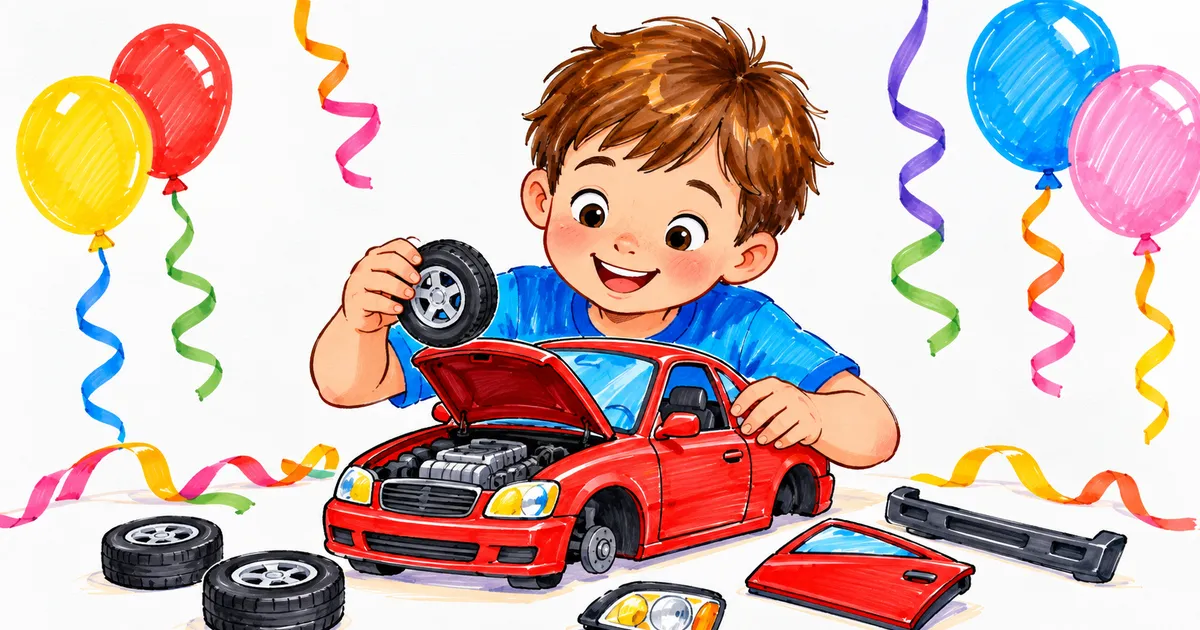
Preschool kids learn comparatives and superlatives through play, pictures, and choice. Try two toy cars: “Which car is faster?” Then three cars: “Which car is the fastest?” At this age, grammar talk can wait. Accurate speech matters more.
Children aged 7 to 10 can sort adjectives. Give cards with short words on one side and longer words on the other: fast, cold, neat, careful, beautiful, difficult. Ask your child to make two sentences from each card: one comparative and one superlative.
Older children and teens can use the forms in opinion writing. They can compare books, games, sports, films, or school subjects: “This book is more exciting than the first one, but the last chapter is the most surprising.” English Comparatives and Superlatives for Kids: A Practical Guide for Children can support spoken practice and mature writing.
Practice Activities
Short practice beats long worksheets, especially for first-time online learners. Five focused minutes can be enough when your child speaks, listens, and fixes one mistake at a time.
Fill in the Blank
Choose the correct form: 1. My dog is ______ than my cat. (big) 2. This is the ______ room in the house. (small) 3. Maths is ______ than art for me. (difficult) 4. That was the ______ story in the book. (funny) 5. This chair is ______ than that chair. (comfortable)
Suggested answers are: bigger, smallest, more difficult, funniest, more comfortable. If your child writes “more funny,” explain that many two-syllable words ending in -y change to -ier and -iest: funny, funnier, the funniest.
Change the Sentence
Turn each sentence into a superlative: 1. This puzzle is harder than that puzzle. 2. My sister is younger than my brother. 3. This lesson is more useful than yesterday’s lesson. 4. The red bike is faster than the blue bike.
Possible answers are: “This is the hardest puzzle,” “My sister is the youngest,” “This is the most useful lesson,” and “The red bike is the fastest.” A superlative needs a group. Add one if needed: “in the box,” “in my family,” “this week,” or “in the race.”
Family Comparison Game
Pick three safe objects at home, such as spoons, books, cups, or shoes. Say three sentences: one with a normal adjective, one comparative, and one superlative. Example: “This book is heavy. This book is heavier than that one. This is the heaviest book on the shelf.”
How to Practise Without Pressure
Use comparison during family talk. At breakfast, compare fruit: “Which apple is redder?” During reading, compare characters: “Who is kinder?” On a walk, compare buildings, trees, cars, or sounds. Children remember grammar when it helps them say something they want to say.
For children who speak more than one language, allow thinking time. They may know the idea of comparison, while English spelling and word order still feel new. English Comparatives and Superlatives for Kids: A Practical Guide for Children should not turn every answer into a test. A calm correction and a second try are enough.
- Start with three familiar toys and compare size, speed, or softness.
- Read one picture book together, spotting bigger, smaller, best, and funniest.
- Use snack time to ask five gentle “which is” comparison questions.
- Practice with ages six to nine using silly family ranking games.
- Praise effort first, then repeat one corrected sentence naturally and warmly.
When a word has several meanings or pronunciations, Cambridge Dictionary is a useful check before turning it into child-friendly examples.
Frequently Asked Questions
At What Age Should a Child Learn Comparatives and Superlatives?
Children can understand basic comparisons from the preschool years: bigger, smaller, faster, slower. Formal grammar can come later. A 5-year-old may learn through objects and pictures, while a 9-year-old can explain the rule. Teens can use comparatives and superlatives in essays, debates, and opinions.
Should My Child Learn -er and -est Before More and Most?
Yes, in most cases. Short words such as tall, fast, small, and cold are easy to show with objects and actions. After that, add more and most with longer adjectives such as careful, useful, difficult, and interesting. This order keeps the grammar concrete before it becomes abstract.
Why Does My Child Say “More Better”?
Your child is combining two comparison patterns. The idea is logical, but English uses only one form here. Say, “We use better, not more better,” then give a full sentence: “This answer is better than the first answer.” Irregular words need repetition because they do not follow the normal pattern.
How Can We Practise If My Child Dislikes Worksheets?
Use quick spoken tasks instead. Compare two snacks, three toys, two drawings, or family routines. Ask: “Which is easier?” “Which is the funniest?” “Which bag is heavier?” English Comparatives and Superlatives for Kids: A Practical Guide for Children can be practised through talk first, then written down when your child is ready.
What Is the Difference Between Comparative and Superlative in One Sentence?
A comparative compares two things: “This chair is softer than that chair.” A superlative compares one thing with a group: “This is the softest chair in the room.” Check the number: two things need a comparative; three or more need a superlative.
Start your child's English journey today — book a trial lesson with LearnLink.
Stay updated on our latest tips and resources by following us on Instagram LearnLink.