English Museum Vocabulary for Kids
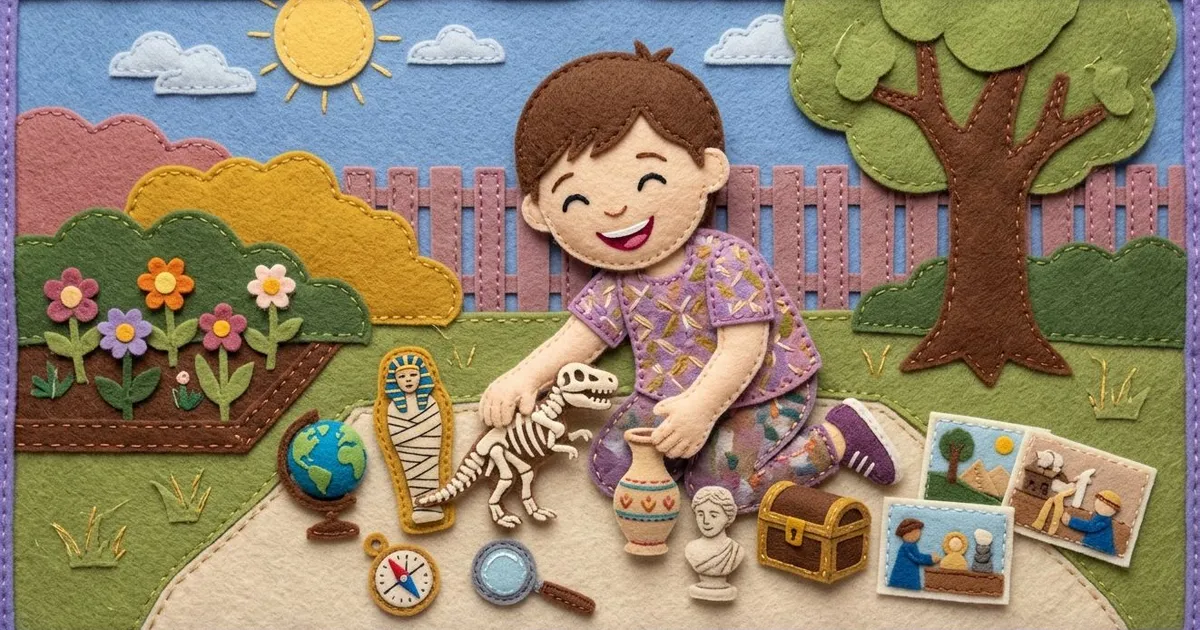
English Museum Vocabulary and Activities for Kids gives children words, phrases, and games for discussing museum objects, art, people, and rules. Start with nouns such as “exhibit,” “painting,” and “guide,” then add questions: “What is this?” and “When was it made?” Younger children can name what they see. Older children can compare displays, explain views, and request details. The goal is enough language to participate confidently, not memorising every term.
📥 English Museum Vocabulary for Kids
Learn useful words, practise museum manners, and prepare for a real visit.
Leave your email — we'll send the PDF to your inbox.No spam — the PDF plus one short reminder. Unsubscribe anytime.
Core Words for a Museum Visit
Teach words in small groups: places and people, then objects, descriptions, and actions. Knowing “old,” “statue,” and “look at” lets a child say, “Look at that old statue.”
An exhibit is an object or group shown to visitors; an exhibition is a planned public display, often for a set period. A gallery can be a museum room or a separate art venue. English Museum Vocabulary and Activities for Kids works well when words connect to visible photographs, maps, or objects.
Putting the Words into Context
Children need sentence frames alongside nouns. Use short patterns: “I can see a ___,” “It is ___,” and “I like it because ___.” For example: “I can see a gold necklace. It is small and shiny.” Accept one word, then model a full sentence without testing the child.
- “Where is the science gallery?”
- “What is this object made of?”
- “How old is the fossil?”
- “Who painted this picture?”
- “These two pots look similar, but this one is larger.”
- “I think the model shows how people lived.”
- “May we take photographs here?”
- “My favourite museum feature was the spacecraft because I could see inside it.”
Add evidence and opinion phrases: “The label says…,” “This may have been used for…,” and “I prefer this one because….” English Museum Vocabulary and Activities for Kids should develop observation, not label recitation. Request supporting detail: “What can you see that makes you think that?”
Activities That Fit Different Ages
Museums support several English levels. Match tasks to your child’s attention span, reading skill, and learning experience. Multilingual children may know a concept before its English name. Connect each English word to knowledge they already have.
Keep each challenge achievable. One room and six target words can prompt richer talk than a rushed building tour. Adapt English Museum Vocabulary and Activities for Kids to a virtual tour: pause at one object, predict its identity, read the description, and revise the prediction.
Practice Before, During, and After the Visit
Before visiting, explore the museum map or website together. Choose museum displays and group words under art, history, science, or nature. Practise the middle stress in “museum” and rehearse two questions for a guide. During LearnLink lessons, tutors can prepare children through pictures and role-play.
During the visit, follow a “notice, name, ask” routine: notice one detail, name it in English, and ask a question. Afterwards, record a voice note, draw a labelled picture, or order three photos. Older children can review a favourite museum highlight and support their choice with evidence.
The Mystery Exhibit
Choose an unnamed museum item. Give three clues with museum vocabulary: “It is ancient. It is made of stone. It shows an animal.” The other person guesses and asks a follow-up question. Swap roles, making each clue more precise.
Common Mistakes and Useful Corrections
Children may say “I am seeing a painting” about an object before them. “I can see a painting” or “I see a painting” sounds more natural. Use “look at” for deliberate action: “Look at the small figure in the corner.” Use “watch” for movement, including films and live demonstrations.
- “In the museum has dinosaurs.” Say: “There are dinosaur fossils in the museum.”
- “This statue is more old.” Say: “This statue is older.”
- “Who made this picture?” This is understandable; for art, also teach: “Who painted this picture?”
- “Can I touch?” Add the object for clarity: “May I touch this model?”
- “I liked more the space room.” Say: “I liked the space room more.”
Avoid correcting every error during a description. Choose one pattern, repeat the sentence naturally, and continue. If your child says, “This fossil more big,” respond, “Yes, this fossil is bigger.” The child hears the corrected form without restarting.
- Try correcting three museum words aloud with your six-year-old after each visit.
- Practice matching five artifact pictures to labels before reading a museum book.
- Use gentle recasts when your child says an incorrect object name.
- Choose one English Museum Vocabulary and Activities for Kids worksheet for review.
- Repeat corrected phrases twice, then ask your eight-year-old to describe one object.
When a word has several meanings or pronunciations, Cambridge Dictionary is a useful check before turning it into child-friendly examples.
Frequently Asked Questions
How Many Museum Words Should My Child Learn at Once?
For school-age children, begin with six to ten words linked to one room. A natural history room might use “fossil,” “skeleton,” “model,” “old,” “large,” and “display.” Reuse them in questions and descriptions before expanding the set. Older children can learn more, but repetition remains essential. Asking “What is this made of?” matters more than recognising isolated words.
Can We Practise Museum English Without Visiting a Museum?
Yes. Use a virtual tour, museum website, family object, or artwork picture. Let your child guide visitors through what they see. A kitchen tool, old photograph, coin, or handmade toy can become a home display. English Museum Vocabulary and Activities for Kids requires observation and conversation, not travel or a large museum.
Should I Translate Every Museum Word into My Child’s Other Language?
Translate for quick access to abstract meanings such as “collection” or “ancient,” then return to an English example, picture, or action. Translation is a bridge, not a test. If your child knows the concept in two languages, compare them: “What do we call this in our other languages?” This connects the English word to a real object.
What Should I Do If My Child Is Shy About Speaking to a Guide?
Rehearse one short question and let your child choose when to ask it. Say the opening words together, or practise near the exhibit first. Never force a public exchange. Speaking to a parent, sibling, or tutor still gives useful practice. Confidence grows through brief successes, especially when questions have a purpose.
If your child needs steady speaking practice, start small — choose a trial lesson.
Stay updated on our latest tips and resources by following us on Instagram LearnLink.