New Year Words in English for Kids
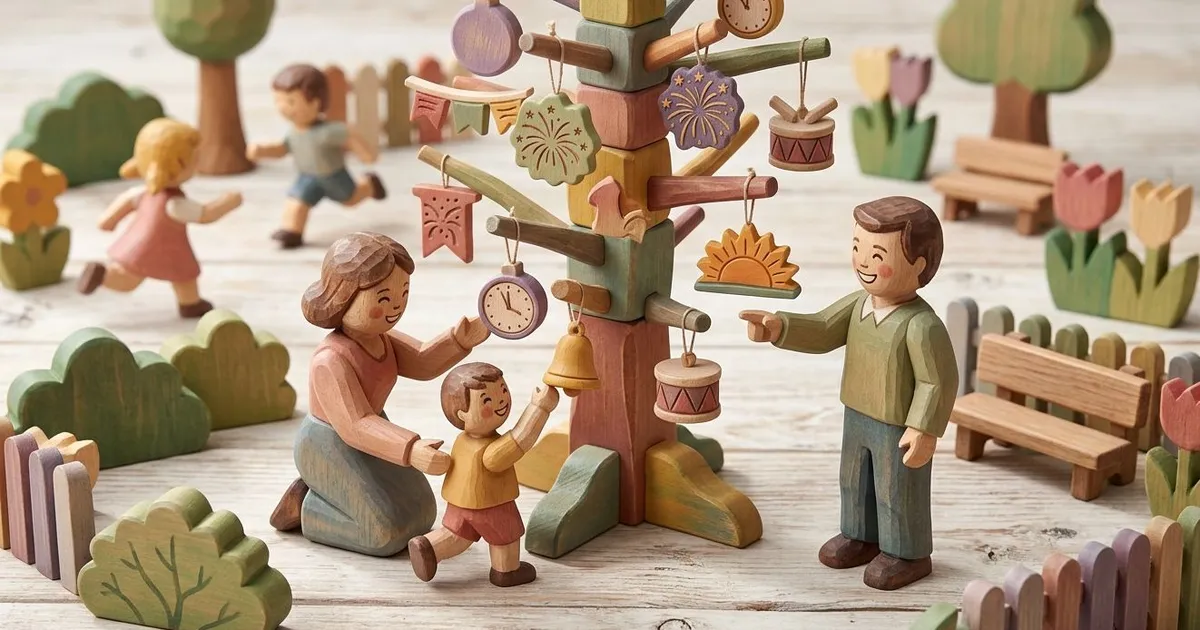
Five vocabulary groups help children discuss New Year: time, celebrations, actions, plans, and everyday phrases. New Year Words in English for Kids: Vocabulary and Activities starts with concrete words such as “clock,” “calendar,” and “party,” then adds phrases such as “Happy New Year!” and “My goal is…” Teach 5–8 items at a time through short games, sentence frames, and family talk. Match the set to the child’s English and present traditions without assuming every family celebrates alike.
📥 New Year Words in English for Kids
Read, match, correct, and use useful New Year vocabulary
Leave your email — we'll send the PDF to your inbox.No spam — the PDF plus one short reminder. Unsubscribe anytime.
Core Words and Phrases
Group words by meaning, not in one long list. Young learners can start with objects and actions; older children can add abstract ideas such as resolution, hope, or tradition. These groups offer a practical teaching menu.
Children need not learn every item at once. Choose words they can see, draw, act out, or discuss. Use New Year Words in English for Kids: Vocabulary and Activities as a menu: start with a small group and add more after the words become familiar.
Using the Words in Context
Words are easier to remember within a short scene. A beginner might say, “It is New Year’s Eve. We look at the clock. We count down. We say, ‘Happy New Year!’” A confident learner can add: “After the countdown, we share food and call our relatives.”
Mini-dialogues prompt listening and response. Ask, “What is your wish for the new year?” The child might answer, “I hope we visit my cousins.” Another exchange is, “Do you make resolutions?” followed by, “Yes. My goal is to practise the piano,” or, “No, but I make a wish.”
Teach words around each phrase: “on New Year’s Eve,” “on New Year’s Day,” “at midnight,” and “in the new year.” These chunks prevent word-by-word translation. New Year Words in English for Kids: Vocabulary and Activities develops usable speech, not memorised lists.
Activities for Different Ages
The theme can suit children from 4 to 15 when tasks match their age. Younger children need movement and pictures. Primary-age learners can sort, describe, and question. Teenagers can discuss opinions, plans, and cultural differences.
Keep cultural comparisons open; no custom is universal. Children might describe fireworks, a quiet meal, a public festival, a different calendar, or no celebration. New Year Words in English for Kids: Vocabulary and Activities helps children explain their experience and hear another perspective.
Simple Practice at Home
A short routine turns New Year Words in English for Kids: Vocabulary and Activities into active language. Show an object or picture, name it, use it in a sentence, and ask the child to change one detail: “We decorate the room.” The child replaces “room” with “door,” “table,” or “classroom.” Choice gives repetition a purpose.
Build a New Year Scene
Place a calendar, drawn clock, paper star, and family figures on a table. Take turns adding an object and sentence: “The clock shows midnight,” “The friends are dancing,” or “This is my wish.” Then remove an object and ask, “What is missing?” The child names it and recalls the sentence.
Review the words across days. First, match pictures and words. Next, hide labels and recall the words. Later, record a short story. During LearnLink lessons, our tutors adapt this cycle to the child’s speaking level while revisiting the same vocabulary.
Common Mistakes and How to Correct Them
A common mistake is teaching too many isolated words. A short set used in questions, drawings, and games beats a long page copied once. Translation can aid understanding in a multilingual home, but should not replace pictures, actions, and English sentence frames.
Some forms need care. “New Year’s Eve” and “New Year’s Day” contain the possessive “Year’s.” Say “at midnight,” not “in midnight.” “Celebrate” is a verb; “celebration” is a noun: “We celebrate together” and “It is a family celebration.” Fireworks often appears in the plural when it means a display.
Do not present a resolution as a firm promise requiring perfection. For children, “goal” is often kinder: “My goal is to read in English twice a week.” During conversation, model errors naturally and practise difficult sounds later. Confidence and meaning come before a flawless accent.
- Try five new New Year words with children aged six to eight today.
- Correct pronunciation gently by modeling each word twice before asking for repetition.
- Use picture cards to prevent spelling confusion during a ten-minute matching game.
- Practice singular and plural forms with three nouns from a familiar holiday book.
- Praise accurate attempts, then revisit one mistake through a playful sentence challenge.
When a word has several meanings or pronunciations, Cambridge Dictionary is a useful check before turning it into child-friendly examples.
Frequently Asked Questions
How Many New Year Words Should My Child Learn at Once?
A 4- to 6-year-old can start with concrete words and one greeting. Older children can learn a broader set through sentences. Watch recall, not page counts: when your child can recognise, say, and reuse most current words, add a few. If words disappear, review them through pictures, actions, and questions.
What If My Child Understands the Words but Will Not Say Them?
Understanding often develops before confident speech. Reduce pressure with choices: “Is it a clock or a calendar?” Then offer a frame such as “It is a…” Toys or puppets make speaking less exposed. Accept one word, model the longer version, and invite another response later.
Can a Multilingual Child Learn This Vocabulary Without Translation?
Yes. Teach concrete New Year words through objects, pictures, gestures, and situations. Translation can explain abstract words such as “resolution” or “tradition.” New Year Words in English for Kids: Vocabulary and Activities can accompany the child’s other languages. Compare each language’s greeting, then practise an English sentence with the same idea.
How Long Should We Continue Practising After New Year?
Keep transferable words in later conversations instead of dropping the set after the celebration. “Calendar,” “goal,” “invite,” “hope,” and “next year” work throughout the year. Review seasonal phrases after a week and when related events appear in books or lessons. Spaced review strengthens recall.
- Start with 5–8 concrete words the child can see, draw, or act out.
- Practise each word in a short sentence or mini-dialogue.
- Review the set after a day and again after a week.
- Add new vocabulary only when the child can reuse most of the current words.
If your child needs steady speaking practice, start small — choose a trial lesson.
Stay updated on our latest tips and resources by following us on Instagram LearnLink.