Online English Class Kids Age 4
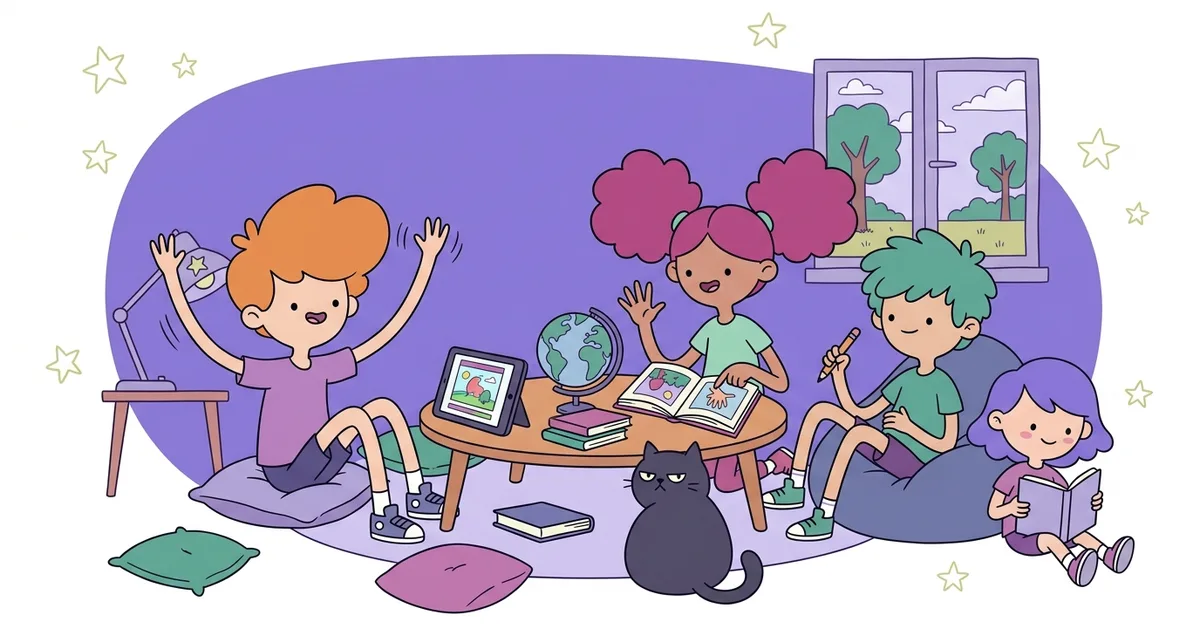
An online english class kids age 4 introduces young children to English sounds, rhythm, and intonation playfully. It builds foundational listening and speaking skills, not forcing accents. Early exposure forms neural pathways for language acquisition. A quality online english class kids age 4 uses games, songs, and interactive stories, making pronunciation practice fun.
📥 Tiny Tongues Pronunciation Cards
A playful home practice set for 4-year-olds learning key English sounds
Leave your email — we'll send the PDF to your inbox.No spam — the PDF plus one short reminder. Unsubscribe anytime.
Why Pronunciation Is a Priority at Age Four
At age four, a child's brain is highly receptive to new sounds. This is the prime time to introduce second language phonemes. Pronunciation builds a strong base for future English reading for kids and speaking confidence. Early instruction prevents fossilization of errors, which are harder to correct later. An online english class kids age 4 focuses on listening discrimination first—helping kids hear sound differences before producing them.
Pedagogical research indicates that the "critical period" for phonological acquisition begins to narrow after age seven, making the four-year-old window vital for mastering the 44 phonemes of the English language. At this developmental stage, the speech muscles are highly flexible, allowing children to mimic the subtle positioning of the tongue and lips required for difficult sounds like the dental fricative /θ/ (as in "three") or the liquid /r/. Without early intervention, learners often substitute these with familiar sounds from their native tongue—a common mistake known as phonemic substitution. By utilizing the "Listen and Repeat" technique paired with visual mouth modeling, instructors ensure that students develop muscle memory before these habits become ingrained. This physical training reduces the cognitive load required for speech production in later years.
Furthermore, focusing on prosody—the rhythm, stress, and intonation of English—at age four helps children internalize the musicality of the language. Since four-year-olds naturally learn through mimicry and play, they can easily adopt the "stress-timed" nature of English, which differs significantly from syllable-timed languages. Teachers use rhythmic chants and exaggerated intonation patterns to highlight how word stress changes meaning. This early exposure ensures that as the child’s vocabulary expands, their speech remains intelligible and natural-sounding. Prioritizing these phonetic nuances early on prevents the development of a heavy foreign accent and fosters a high level of communicative competence that serves as a permanent academic advantage.
Mastering Key English Sounds
Some English sounds are new for learners. Common areas include 'th' sounds and short vs. long vowels. Tutors focus on physical cues. For 'th' (e.g., 'three', 'this'), kids place their tongue tip lightly between teeth. For vowels, we contrast sounds like /ɪ/ in 'ship' and /iː/ in 'sheep'. Visuals are helpful.
Minimal pairs (words differing by one sound) are effective tools. We use them in games to train the ear. Success in an online english class kids age 4 often comes from these playful, targeted exercises.
British vs. American English: What Parents Should Know
Parents often ask about British versus American English. The core language is the same. Differences are accent and some vocabulary. For young learners, consistency is the primary factor. Exposure to one consistent model avoids confusion. Our curriculum allows families to choose. An online english class kids age 4 ensures the tutor uses one accent consistently, essential for learning. Explore more with top English podcasts for kids, which often feature one or the other.
Fun Pronunciation Practice at Home
Learning continues outside class. The goal: make practice feel like play. Repetition through songs, chants, and games is effective. Tongue twisters are a tool for isolating specific sounds. Regular, short bursts of practice are more beneficial than long, infrequent sessions. Activities from an online english class kids age 4 adapt easily for home use. Find resources like cartoons to learn English and English songs for kids.
Practice Corner: Tongue Twisters
Try saying these sentences three times, getting a little faster each time. Focus on making the target sound clear.
- For the 'sh' sound: She sells seashells by the seashore.
- For the 'th' sound: Three free throws. The thirty-three thieves thought that they thrilled the throne throughout Thursday.
- For the 'p' sound: Peter Piper picked a peck of pickled peppers.
Remember to keep it light and fun. Laughter is part of the process!
Your Role as a Parent (and Your Accent)
Non-native English-speaking parents worry their accent might confuse their child. This is not a concern. Your support and encouragement are the primary factors. A child’s brain differentiates language sources. They learn the home accent from you, and the target accent from their tutor and media. Providing access to native-speaker models is essential, a core benefit of structured kids English online courses. Your role is to celebrate their effort in kids English speaking practice, not to be a pronunciation model.
For children in the 4-to-6 age band, language acquisition relies on the brain’s plasticity and its ability to categorize phonemes from multiple sources simultaneously. A common mistake parents make is correcting a child’s pronunciation mid-sentence, which can trigger an affective filter—a psychological barrier that inhibits learning due to anxiety. Instead, focus on the "recasting" technique. If your child says "The cat is blue" with a non-native inflection, simply repeat the sentence back to them with natural intonation during a normal conversation. This provides a corrective model without the pressure of a formal lesson, allowing the child to absorb phonetic nuances subconsciously while maintaining their confidence in speaking.
Research indicates that children can distinguish between three or more distinct accents before they reach age five without experiencing cognitive overload. By exposing your child to a high-quality Online English Class Kids Age 4, you introduce a consistent native or near-native phonetic anchor. Your primary pedagogical contribution is creating a low-stress environment where English is associated with play rather than performance. Dedicate just 15 minutes a day to shared activities, such as labeling household objects or singing along to nursery rhymes. This reinforcement builds a bridge between the formal instruction of a tutor and the child’s daily reality, ensuring that the language becomes a functional tool for communication rather than just an academic subject.
Summary and Next Steps
To recap the main points for improving your child's English pronunciation:
- Focus on Listening First: Ensure your child can hear the difference between sounds before asking them to produce them.
- Keep Practice Playful: Use songs, games, and tongue twisters to make learning enjoyable and pressure-free.
- Choose One Accent Model: Stick with either a British or American English model for consistency, especially in the beginning.
- Provide Native Speaker Input: Use resources like tutors, cartoons, or audiobooks to expose your child to a consistent accent model.
These steps create a solid foundation for confident speaking. Exploring interactive English lessons for kids can reinforce these practices.
For the child-development context behind this advice, American Academy of Pediatrics gives a broader reference point for parents.
Frequently Asked Questions
How Long Does It Take to See Pronunciation Improvement?
For a 4-year-old, improved listening discrimination is often noticeable within weeks of starting lessons. Producing new sounds accurately typically takes several months of consistent, playful practice. An online english class kids age 4 provides the steady learning rhythm and regular exposure needed for long-term progress.
Should I Correct My Child's Every Mistake?
No, constant correction can lower a child's confidence and willingness to speak. Instead of direct correction, experts recommend "recasting" where you repeat the sentence back correctly. This technique reinforces the correct sound and grammar without creating anxiety for the learner.
What If My Child Already Speaks Two Languages?
This is a significant advantage as multilingual children often have a better-trained ear for new sounds. Their brains are already adept at switching between phonetic systems, which can help them pick up English pronunciation more naturally. It is beneficial to find a tutor experienced with multilingual learners to support this unique development.
Ready to build your child's confidence in speaking English? See how our tutors make pronunciation practice fun and effective for young learners — book a trial lesson with LearnLink and hear the difference for yourself.