Picnic Vocabulary for Kids
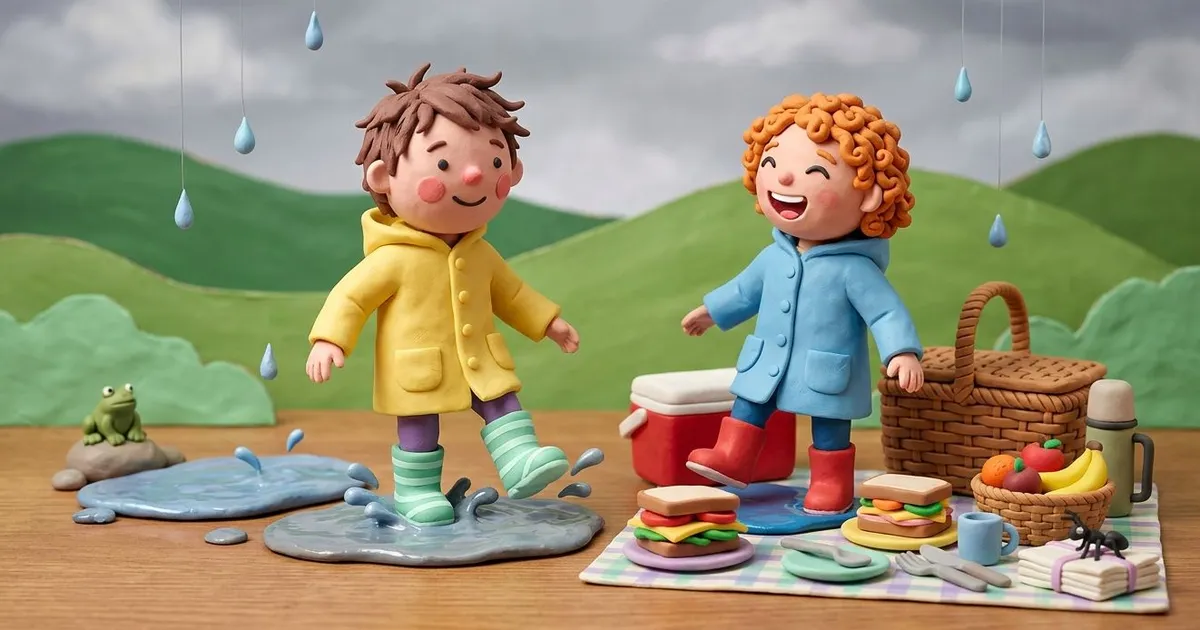
Picnic Vocabulary for Kids: Words and Activities covers food, object, action, place, and manners words for real or pretend picnics. Start with four familiar items: basket, blanket, sandwich, and juice. Then add phrases for packing, sharing, and tidying up. Children see each object, name it, and use it in a sentence. Practise in a park, garden, balcony, or around a picnic blanket indoors.
📥 Picnic Vocabulary Practice
Learn, use, and remember useful picnic words and phrases.
Leave your email — we'll send the PDF to your inbox.No spam — the PDF plus one short reminder. Unsubscribe anytime.
Core Picnic Words and Useful Phrases
Choose words matching your family’s food, setting, and objects. Keep the first set small. Beginners can learn nouns and actions; older learners can add descriptions, quantities, and polite requests.
- Food and drink: sandwich, bread, cheese, fruit, apple, banana, berries, salad, crackers, water, juice.
- Picnic equipment: basket, blanket, bag, bottle, cup, plate, bowl, napkin, cooler, recycling bag.
- Places and nature: park, grass, tree, shade, bench, path, lake, beach, garden.
- Actions: pack, carry, spread, share, pour, peel, open, eat, drink, tidy, recycle.
- Describing words: fresh, sweet, salty, cold, warm, full, empty, clean, reusable.
Picnic Word Flashcards
Pack the fruit in the basket.
Spread the blanket on the grass.
I packed a cheese sandwich.
The juice is cold.
Please pass me a napkin.
Let’s sit in the shade.
Pack two cups and a plate.
We can share the berries.
Pour water into the cup.
These apples are fresh.
This bottle is reusable.
Let’s tidy the picnic area.
Teach phrases as complete chunks: Let’s pack the basket, Spread the blanket here, Would you like an apple?, Can I have a glass of water, please?, Let’s sit in the shade, and We need to tidy up. These chunks move children from naming objects to joining a conversation.
Treat Picnic Vocabulary for Kids: Words and Activities as a flexible menu. Pick words your child can use today. Review older words during the next game or meal. Add flatbread, olives, dumplings, rice balls, or sliced vegetables to reflect your family’s table.
Using Picnic Words in Context
Words gain value in sentences. Model one short example, let your child change one part, then ask a question. Begin with I packed an apple; your child might say I packed a banana before answering What did you pack?
- The blanket is under the tree.
- Please put the cups beside the plates.
- We have some bread, but we do not have any cheese.
- This juice is cold and sweet.
- Would you like a sandwich or some salad?
- After the picnic, we will collect our rubbish.
For longer speech, ask children to explain choices: We chose the shady place because the sun is strong. They can compare items: The bottle is heavier than the cup. Accept either rubbish bag or trash bag; both are standard, with usage varying by location.
Activities for Different Ages
The object stays constant while the task grows. A five-year-old can name a cup, an eight-year-old can describe it, an eleven-year-old can include it in packing instructions, and a teenager can discuss it as a reusable choice.
Picnic Vocabulary for Kids: Words and Activities should grow through tasks, not longer lists. Younger children may point before speaking. Older children can negotiate: We need another bottle of water, but we already have enough cups. One activity can serve siblings at different stages.
Easy Ways to Practise at Home or Outdoors
To revisit Picnic Vocabulary for Kids: Words and Activities, practise across different days. Ask your child to find an object, give one packing instruction, or describe one food. In LearnLink lessons, our tutors can use the words in role-play, listening tasks, and age-appropriate conversation.
Pack the Mystery Basket
Put safe picnic objects in a bag. Without looking, your child feels one and says, “I think it is a cup.” After checking, request a full sentence: “We need the cup for juice.” Older children can describe the object without naming it while another player guesses.
Make a picture menu. Draw or cut out foods, then let your child order: I’d like bread, two strawberries, and a glass of water, please. At a real picnic, assign jobs such as placing napkins or checking the packing list. Adults should handle cutting, allergy decisions, and food safety.
Common Mistakes and How to Correct Them
Correct the part affecting meaning, then repeat the whole sentence naturally. If a child says two bread, answer, Yes, we have two slices of bread. This provides an accurate model without turning the picnic into a grammar lesson.
- Make a picnic: say have a picnic or go on a picnic.
- An bread: say some bread, a slice of bread, or a bread roll.
- I want juice: polite requests include I’d like some juice and Can I have some juice, please?
- In the picnic: use at the picnic for the event and on a picnic for the outing.
- Put blanket: add the article: Put the blanket on the grass.
Keep pronunciation practice brief. Clap the parts in pic-nic, bas-ket, and sand-wich, then resume the activity. For multilingual children, an accent is not a mistake. Aim for understandable speech supported by practical words and accurate sentence patterns.
- Try naming five picnic items aloud with children aged four to seven.
- Practice correcting one mispronounced word gently during today’s pretend picnic.
- Use picture cards to review eight picnic words before packing snacks.
- Read one picnic-themed book and repeat unfamiliar words together twice.
- Praise accurate usage, then model corrections without interrupting your child’s sentence.
When a word has several meanings or pronunciations, Cambridge Dictionary is a useful check before turning it into child-friendly examples.
Frequently Asked Questions
How Many Picnic Words Should My Child Learn at Once?
For beginners aged five to nine, choose a set for one activity: familiar food, two or three objects, and actions. Picnic Vocabulary for Kids: Words and Activities works best as a reusable bank, not a list memorised at once. Add words after your child recognises and uses most of the current set.
Can We Practise Picnic Vocabulary Without Going Outside?
Yes. Spread a towel or blanket on the floor and use toy food, safe kitchen items, or drawings. Your child can pack a bag, arrange plates, offer food, and tidy everything away. Pretend picnics support the same language indoors and let you pause, repeat a phrase, or switch tasks as attention fades.
What If My Child Already Speaks Two or More Languages?
Connect English words directly to objects or actions. Your child can compare languages, but translation is unnecessary every time. Ask for an English phrase such as Pass the napkin, please while the child performs the action. Knowing several languages may cause temporary word mixing; reply with the English model and continue.
Should I Correct Every Grammar or Pronunciation Mistake?
No. Correct errors that block meaning or match the lesson focus. For polite requests, model Can I have an apple, please? and defer minor errors. Repeat the correct form in your reply instead of demanding repeated attempts. End by praising one success, such as pairing some with water or completing a request.
- Start with six familiar words and practise them with real objects.
- Use each word in one short sentence or polite request.
- Repeat the activity another day and add only a few new words.
Start your child's English journey today — book a trial lesson with LearnLink.
Stay updated on our latest tips and resources by following us on Instagram LearnLink.