Prepositions on in Under and by for Kids
On signals surface contact, in boundary enclosure, under lower position, and by nearby or beside. Prepositions ‘On,’ ‘In,’ ‘Under,’ and ‘By’: A Practical Guide for Kids teaches three steps: position an object, name its location, then move it. Older learners can apply on and in to time and by to methods or deadlines.
📥 Prepositions: On, In, Under, and By for Kids
A practical guide to choosing the right preposition in sentences
Leave your email — we'll send the PDF to your inbox.No spam — the PDF plus one short reminder. Unsubscribe anytime.
What Children Need to Understand First
A preposition describes a relationship, not an object. A book can be on a desk, in a bag, under a pillow, or by a lamp. The book stays unchanged; only its position moves.
Pair Prepositions ‘On,’ ‘In,’ ‘Under,’ and ‘By’: A Practical Guide for Kids with Kids begins with visible place. Put a toy in a box, under it, then by it. Ask, “Where is the toy?” Invite a full-sentence answer: “The toy is under the box.”
Multilingual children may organise space differently. Skip word-for-word translation: move the object, say the English sentence, then ask your child to repeat it.
How the Grammar Works in a Sentence
In Prepositions ‘On,’ ‘In,’ ‘Under,’ and ‘By’: A Practical Guide for Kids, each preposition opens a phrase. In “The pencils are in the bag,” in functions as the preposition; the bag completes the phrase. Together, both words locate the pencils. This pattern also appears in “on the shelf,” “under my chair,” and “by the window.”
Begin with “Where is it?” and “It is ___ the ___.” Next, name the object: “The red car is under the sofa.” Older learners can add details.
Pictures cannot explain every English pattern: on Monday, in July, by six o’clock, on a bus, and in a car. Teach visible place first; introduce time, travel, and other meanings after children master position.
Rules and Examples for Place Prepositions
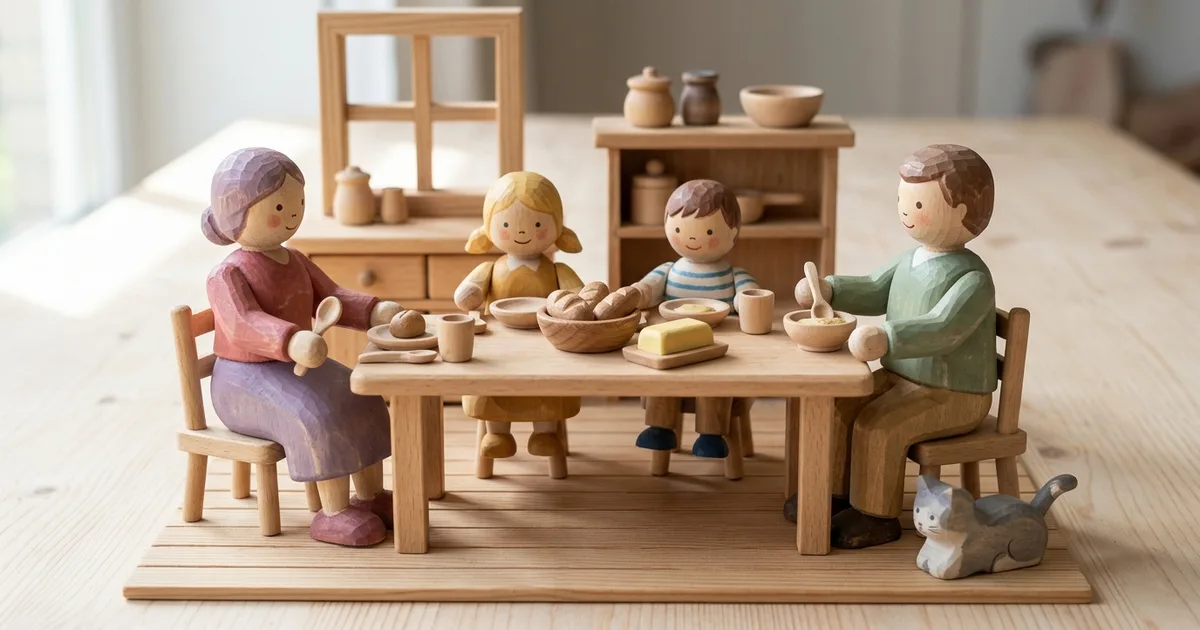
Prepositions ‘On,’ ‘In,’ ‘Under,’ and ‘By’: A Practical Guide for Kids asks one question: how are two things positioned? Use this table for a quick check.
On can signal attachment, not only “on top of”: a clock is on a wall. In also covers bounded open spaces, such as toys in a basket or children in a garden. Under needs no contact: a ball can lie under a chair.
Practise one contrast per round: on versus under, then in versus by. Next, compare all four words within one picture. Older learners can explain each choice.
When “By” Has More than One Job
For place, by means “beside” or “near”: “Wait by the gate” and “The lamp is by the bed.” Objects need not touch. For greater precision, next to suggests closer positioning, while near permits more distance.
By can show method: “We travelled by train” or “Send the picture by email.” Within passive sentences, it identifies the performer: “The mural was painted by the class.” Teach these meanings after the basic place meaning.
With time, by means “no later than.” “Finish the page by Friday” permits completion before or within Friday’s deadline. Compare “We have English on Friday,” where on names the event’s day. A timeline clarifies this difference.
Common Mistakes and How to Correct Them
Children may memorise object-word pairs instead of checking position. After learning “books are on shelves,” a child might say “The book is on the bag” when it is inside. Move one book through several positions, prompting your child to observe each relationship.
Children may treat on as “above.” A light can hang above a table without touching it; a cup is on the table because it touches the surface. To separate by from under, ask: is the toy beside the chair or below the seat?
Check words surrounding the preposition. “Pencil is on table” communicates position, but standard English requires articles: “The pencil is on the table.” Gently correct the full sentence. LearnLink tutors model the complete form, then let your child try again.
Practice with Objects, Pictures, and Sentences
Keep practice active: demonstrate with an object, identify its relationship within a picture, then complete a sentence without visual help. This sequence tests independent use.
Fill in the Missing Preposition
Choose on, in, under, or by.
1. The book is ___ the desk.
2. The socks are ___ the drawer.
3. The ball rolled ___ the chair.
4. We waited ___ the door.
5. Please finish the drawing ___ six o’clock.
6. They travelled ___ train.
Answers: 1. on; 2. in; 3. under; 4. by; 5. by; 6. by.
Correct the Preposition
Use each clue to correct the sentence.
1. The ring is on the drawer. It is inside the drawer.
2. The poster is in the wall. It is attached to the wall’s surface.
3. The cat is by the table. It is below the tabletop.
4. Our lesson is in Tuesday. Tuesday is a day.
Answers: 1. The ring is in the drawer. 2. The poster is on the wall. 3. The cat is under the table. 4. Our lesson is on Tuesday.
Repeat with a new object or location. Let your child give the instruction and check your answer.
For the rule wording, Wikipedia — English Grammar is a useful reference while the practice examples here stay adapted for children.
Frequently Asked Questions
At What Age Can a Child Learn These Prepositions?
Children can learn visible place words from about age four through familiar objects and simple speech. Prepositions ‘On,’ ‘In,’ ‘Under,’ and ‘By’: A Practical Guide for Kids supports older learners reviewing rules or wider meanings. Choose movement and toys with younger children; choose sentence building and time expressions for older learners.
Why Does My Child Understand the Words but Still Choose the Wrong One?
Recognition develops before accurate use. A child may follow “Put the bear in the box” but struggle to describe the result. Reverse roles: let your child hide an object, instruct you, then judge your response. Your child must select the preposition instead of recognising it.
Are “By,” “Beside,” and “Next to” the Same?
They overlap but differ by context. For place, by and beside mean near the side. Next to suggests the closest position in a row or group. “Sit by me” allows space; “the seat next to me” means the adjoining seat.
Do “On” and “In” Only Describe Place?
No. Both describe time. Use on with days and dates: “on Saturday,” “on 12 May.” Use in with months, years, seasons, and longer periods: “in August,” “in 2027,” “in winter.” Keep time patterns separate from place practice until spatial meanings become secure.
How Can a Multilingual Family Practise Without Translating Every Sentence?
Build a household-object scene and repeat one English question: “Where is the spoon?” Your child can point, move the spoon, and answer. Briefly explain through another family language when needed, then return to the full English sentence. Connect English directly with position instead of testing translation speed.
Want to see how these ideas work in a real lesson — try a free LearnLink lesson.
Stay updated on our latest tips and resources by following us on Instagram LearnLink.