Reading and Storytelling with Your Kids

Ten minutes of reading aloud each day can give a child more shared words, stronger listening habits, and sharper story sense. Reading and storytelling with your kids to develop their language works because a child hears words inside a scene: a character wants something, a problem appears, and someone tries to solve it. That pattern helps children remember vocabulary, sounds, and sentence forms. For families with two or more home languages, stories bridge languages calmly. You do not need polished pronunciation or long evening sessions. You need a small routine, warm talk, and stories your child asks for again.
📥 Talk, Read, and Tell Stories Together
A practical family activity sheet for building confident English through shared reading and storytelling
Leave your email — we'll send the PDF to your inbox.No spam — the PDF plus one short reminder. Unsubscribe anytime.
What Families Need to Know
Story language is richer than everyday instructions. A child may hear “put on your shoes” often, but books add words such as “whispered,” “stumbled,” “enormous,” “because,” and “although.” These words support school talk, friendships, games, and later reading.
Reading and storytelling with your kids to develop their language is not a parent performance test. It is a shared habit: the adult slows the pace, points to new words, asks one or two focused questions, and lets the child join at the right level.
For children aged 4-15, the core rule stays the same: meaning comes first. A 5-year-old may point, copy a sound, or finish a repeated line. A 12-year-old may discuss motive, tone, or a stronger ending. Both build language.
How to Read So Your Child Talks More
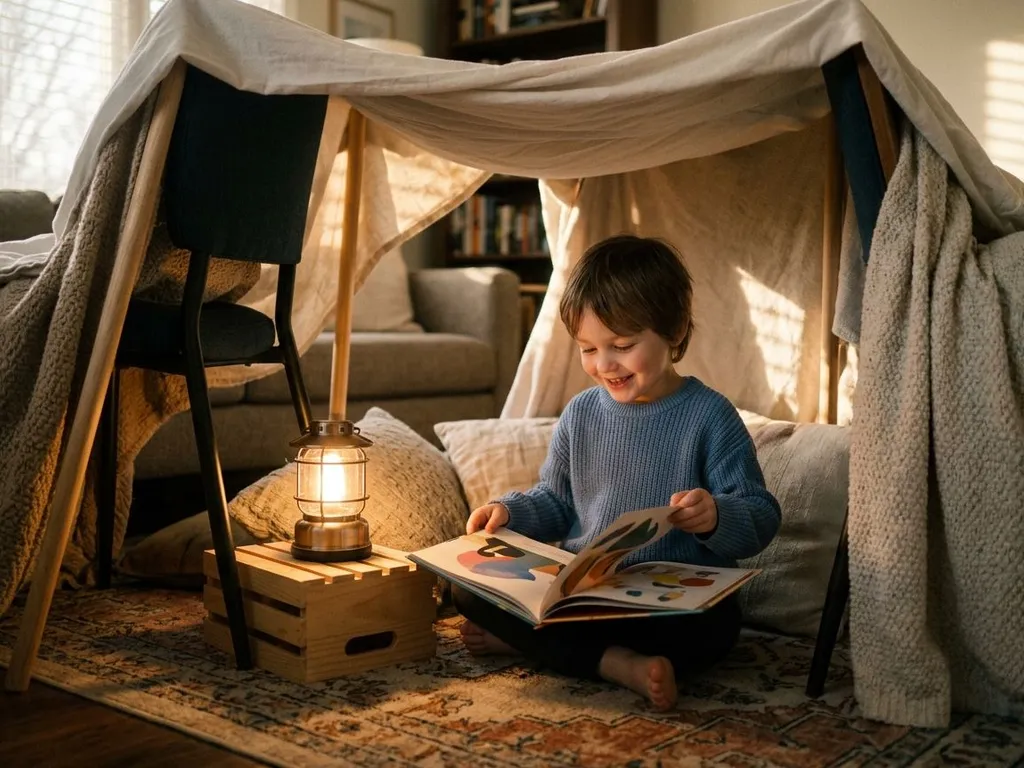
Choose a book, comic, article, or short story your child can enjoy without stopping at every line. A strong home text has a few new words, enough known words, and a reason to turn the page.
Use a three-step rhythm: before reading, look at the cover and predict; during reading, pause for one focused question; after reading, ask your child to retell one part. Keep questions open and small: “Why did she hide?” suits younger children more than “What is the moral of the story?”
Reading and storytelling with your kids to develop their language grows when the child has a role. They can make a sound effect, read one speech bubble, act out a line, choose a new title, or guess what happens next. Speaking grows when the child has a real job in the story.
Storytelling Without a Book
Oral stories work when books are not nearby: in the car, while cooking, during a walk, or before bed. Start with a frame: “A small robot lost its map,” “A girl found a key under the sofa,” or “Two brothers had to build a bridge before sunset.” Then ask your child to add one detail.
Keep the story short for younger children. Three scenes are enough: beginning, problem, ending. Older children can handle a twist, a second character, or a choice with consequences. Aim for precise language, not a polished plot.
For multilingual families, allow quick links across languages when they help. A child may know the idea in Spanish, Hebrew, French, Arabic, or another home language before they can say it in English. Give the English word, use it in a sentence, and move on.
Examples by Age
Different ages need different support. The table shows ways to adjust the same story habit without turning family reading into a lesson plan.
For a mixed-age family, let each child answer at their level. A 6-year-old can name the animal; a 10-year-old can explain why it ran away. The shared story stays fair and calm.
Practical Activities for Home
Use short activities after the story, not long worksheets before it. Effective tasks help children reuse story words in speech. Reading and storytelling with your kids to develop their language should feel like purposeful family talk, not homework in disguise.
Retell in Three Pictures
Ask your child to draw three boxes: beginning, problem, ending. They say one sentence for each box. Younger children can use “First,” “Then,” and “At the end.” Older children can add “because” or “however.”
Try a “new word basket.” Choose three words from the story and use them in family speech the next day. If the word is “careful,” say, “You were careful with the glass,” or ask, “Was the fox careful or careless?”
Pronunciation, Rhythm, and Listening Through Stories
Stories support pronunciation because children hear words in rhythm, not as isolated sounds. Repeated lines, rhymes, chants, and dialogue make stress easier to notice: “I can’t go there!” sounds different from “I can go there.” Stress changes meaning as much as accent.
Do not correct every sound. Choose one focus for a week: final sounds in “cat” and “cap,” the difference between “ship” and “sheep,” or sentence stress in questions. Tongue twisters can help when short and playful: “Red lorry, yellow lorry” is enough for most children.
British and American pronunciation can both be valid models. Pick one main model for a recording or lesson, then explain that English has varied accents. Across LearnLink lessons, our tutors keep speech precise and age-appropriate, while helping children understand real variation instead of chasing one accent.
- Read Brown Bear aloud to school-age kids, emphasizing repeated animal phrases.
- Clap each sentence rhythm twice, then let your child copy the pattern.
- Record one page together, replay it, and notice three clear sounds.
- Pause after rhyming words in Dr. Seuss, inviting your child to predict.
- Use puppet voices for two characters, practicing loud, soft, fast, and slow speech.
For reading and phonics support beyond the article examples, Scholastic Parents is a helpful independent resource for parents.
Frequently Asked Questions
How Often Should We Read or Tell Stories in English?
Short, steady reading beats rare marathon sessions. Ten minutes on most days can be enough for a young child; older children may prefer two or three longer sessions each week. Reading and storytelling with your kids to develop their language works when the routine feels normal, not special or stressful.
What If My Child Answers in Another Language?
Accept the idea first, then give the English model. If your child answers in another language, reply, “Yes, the dragon is frightened,” and continue. This respects the child’s full language system while building English. Over time, invite one English word, then one English phrase, then a sentence.
Should I Correct Grammar While My Child Tells a Story?
Correct lightly by recasting. If your child says, “He go to the forest,” answer, “Yes, he goes to the forest because he is looking for the key.” The child hears the right form inside a real sentence. Save direct correction for patterns your child is ready to notice.
What Books Are Best for Children Aged 4-15?
Choose books your child can understand with a little help. Younger children often need pictures, repetition, and visible action. Older children may enjoy comics, short mysteries, fantasy, biographies, or articles linked to hobbies. Interest matters: a child who loves football, animals, space, or cooking will work harder to understand that story.
- Start with 10 minutes of reading or storytelling on most days.
- Ask one clear question, then give your child time to answer.
- Practice three story words in real family sentences the next day.
Want to see how these ideas work in a real lesson — try a free LearnLink lesson.
Stay updated on our latest tips and resources by following us on Instagram LearnLink.