Reading Comprehension Questions for Kids

Reading Comprehension Questions for Kids help children notice text facts, meaning, personal links. Strong prompts check more than memory: they send children back toward pages, evidence, feelings, cause-effect links, opinions. A 5-year-old may point at a picture and say what happened first. A 12-year-old may compare two characters’ choices and support an answer with one detail. Home reading should not test every page; it should build calm thinking habits during reading.
What Families Need to Know About Reading Questions
Children understand stories and information texts layer by layer: words, events or facts, then inference, comparison, judgment. Reading Comprehension Questions for Kids should match your child’s current layer, not an adult’s hoped-for level.
A focused question sends children back to text. “How do you know?” beats “Did you like it?” because it asks for proof. Younger children may point, retell, or act answers out. Older children should quote a short phrase, paraphrase it, and explain why it matters.
Multilingual children need thinking time. A child may understand a story yet need extra seconds for an English answer. Accept a short answer first, then stretch it: “Yes, the dog ran away. What word tells us he was scared?” Thinking stays visible while language catches up.
The Main Types of Reading Comprehension Questions
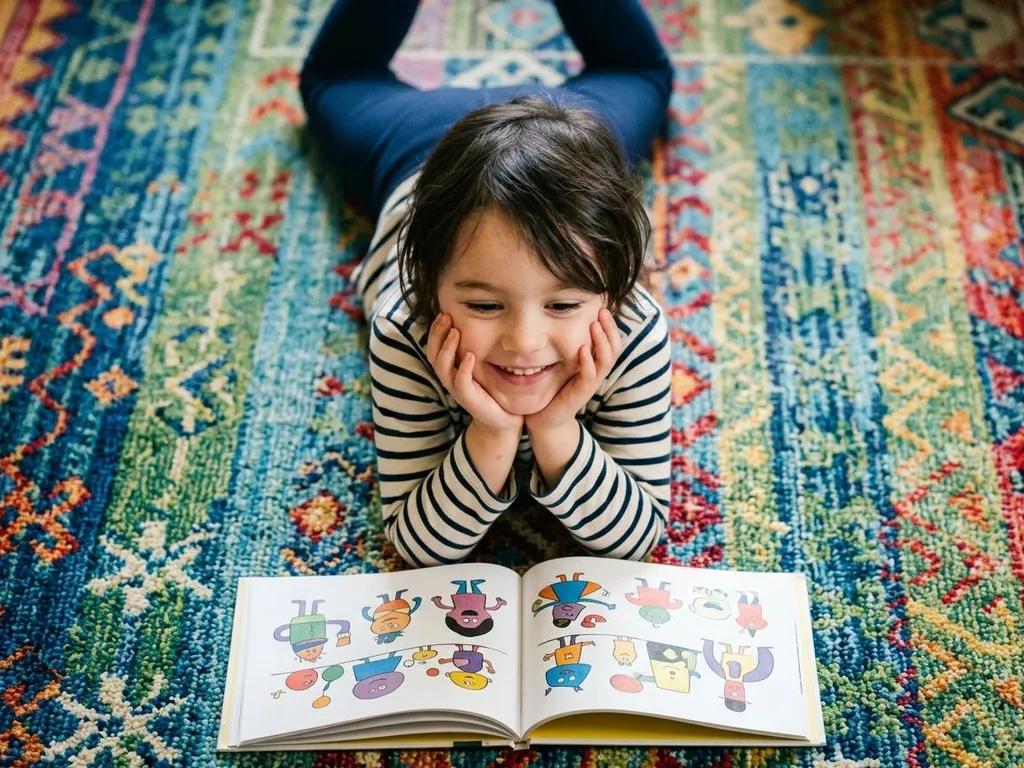
Strong reading practice uses several question types. Factual questions alone train children to skim names and dates while missing meaning. Open-ended questions alone can feel confusing. A balanced mix gives structure plus thinking space.
Use literal questions for stated text, inference questions for clues between lines, vocabulary questions for word sense, opinion questions after basic understanding. Reading Comprehension Questions for Kids work best when moving from recall toward deeper thinking, because children need events before reasons.
How to Use Questions at Home Without Turning Reading into a Test
Choose two or three questions for a short book, not twenty. Stop once before reading, once during reading, once after reading. This rhythm keeps stories alive, teaches thinking, and gives reading time a clear routine instead of a long interview.
Before reading, ask a prediction question: “What do you think this text will be about?” During reading, ask a tracking question: “What has changed?” After reading, ask a meaning question: “What lesson, fact, or idea should we remember?” If your child resists, read one page aloud and answer the first question together.
Keep your tone warm and steady. Children should not feel trapped by one perfect answer. Across LearnLink lessons, our tutors help children build confident, everyday English step by step.
Three-Question Home Routine
Use this after any short story. Ask: 1. Who wanted something in the story? 2. What problem got in the way? 3. What detail helped you understand the ending? Let your child answer in one sentence, then ask them to show the page or picture that supports the answer.
Age-Appropriate Examples for Children 4 to 15
For ages 4 to 6, keep questions concrete. Ask about pictures, actions, feelings: “Who is in the picture?” “What is the girl holding?” “Is the bear happy or cross?” Pointing and one-word answers count as comprehension work because children connect language, pictures, memory, meaning.
For ages 7 to 9, add sequence and cause: “Why did the character go back?” “What happened after the storm?” “Which word tells us the room was messy?” Children can retell events in order and explain basic reasons. They may still need sentence starters: “First,” “Then,” “I know because,” and “The clue is.”
For ages 10 to 15, use evidence and comparison. Ask: “How does the writer show that the character has changed?” “Which paragraph gives the strongest reason?” “Do you agree with the narrator’s choice?” Reading Comprehension Questions for Kids for this age range should invite longer answers while staying grounded in text.
Practical Activities That Build Comprehension
Try “stop and sketch.” After a paragraph or page, your child draws one quick picture of the most important moment. Then ask, “Why did you choose that part?” Drawing gives visual thinkers and children building English fluency something concrete to explain.
Try “question sorting.” Write five questions on small cards and ask your child to sort them into “right there in the text” and “think about clues.” Children learn answers need different reading moves. Some answers sit directly in text; others need clues from actions, dialogue, pictures, or repeated details.
Older children can keep a reading notebook with three headings: “What happened,” “What I noticed,” and “My evidence.” Answers stay brief and precise. School tasks feel easier without turning family reading into homework.
Find the Evidence
Read a short paragraph together. Ask your child to answer this question: “How does the character feel?” Then ask them to underline or say one word, action, or picture clue that proves it. If the first answer is “happy” or “sad,” follow with: “What made you think that?”
Sample Question Bank for Home Reading
Use this bank when you need quick Reading Comprehension Questions for Kids. Pick questions that fit your child’s book, article, poem, or comic. You do not need every question. One clear question with a supported answer beats a rushed long list at the end.
For stories: Who is the main character? What does the character want? What problem appears? What happens first, next, and last? Which part was the turning point? How did the character change? What detail shows the setting? What would you ask the character?
For non-fiction: What is the main idea? Which fact surprised you? What new word did you learn? What does the picture, chart, or heading help you understand? Which detail supports the main idea? What question do you still have? How could you explain this text to a younger child?
Short Answer Stretch
Start with a one-word answer and build it. Question: “Why did the character hide?” Short answer: “Scared.” Better answer: “The character hid because he was scared.” Strong answer: “The character hid because the text says he heard a loud crash and his hands were shaking.”
- Try five reading comprehension questions after one picture book tonight.
- Ask your six-year-old to retell three events in order.
- Use one why question and one evidence question per chapter.
- Practice predicting the ending before reading the final two pages.
- Choose one new word and use it in a sentence.
For reading and phonics support beyond the article examples, Scholastic Parents is a helpful independent resource for parents.
Frequently Asked Questions
How Many Reading Comprehension Questions Should I Ask at Once?
For most children, three well-chosen questions suit one short reading session. Ask one easy question, one thinking question, one evidence question. If your child feels tired, stop after one strong answer. Reading Comprehension Questions for Kids should make reading feel lighter, not heavier.
What Should I Do If My Child Gives Short Answers?
Treat a short answer as a starting point. Repeat it as a fuller sentence and invite one more detail. If your child says “because he was angry,” say, “Good. Which action shows he was angry?” This teaches expansion without making the first answer feel wrong.
Should Children Answer in Full Sentences Every Time?
No. Full sentences help school writing, but every reading moment does not need them. Young children may point, choose, act, or answer with a phrase. Older children should practise full sentences when explaining reasons, giving evidence, or comparing ideas.
Can Reading Comprehension Questions Help a Child Who Speaks More than One Language?
Yes, when questions stay direct and well paced. Multilingual children may have strong thinking skills while still searching for English words. Let your child answer simply first, then model the English sentence. Picture support, repeated phrasing, and text evidence bridge meaning and language. Reading Comprehension Questions for Kids can support English growth and deeper understanding when families give children time to think.
Want to see how these ideas work in a real lesson — try a free LearnLink lesson.
Stay updated on our latest tips and resources by following us on Instagram LearnLink.