Describing Pictures in English for Kids
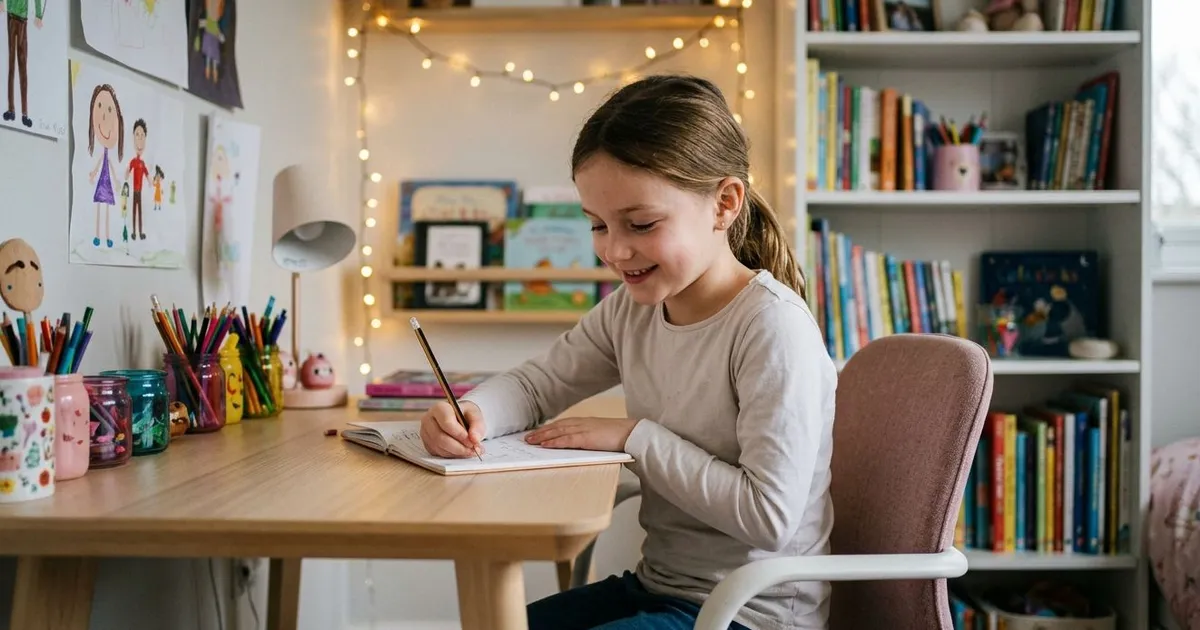
A 5-minute picture task lets a child practise object names, present continuous, place words, and one reason in English. English describing pictures for kids guides learners through an image: what appears, what happens, what may happen next. Beginners move from “I see a dog” toward “The dog is running after a red ball in the park.” One photo, drawing, or book page creates focused home speaking practice.
Why Picture Description Helps Children Speak
Pictures lower pressure. A child need not invent a story from nothing. Images supply clues: people, clothes, places, colours, actions, feelings, details. English describing pictures for kids links naming words with real speech.
Learners slow down, notice, and build school phrases: “There is,” “There are,” “He is wearing,” “She looks happy,” and “In the background.” These phrases appear in school talk, online lessons, reading tasks, and family chats.
For multilingual children, visible meaning helps. A learner may know an idea through one home language first, then attach an English word to the same object or action. That pattern shows normal language growth.
What Children Should Learn First
Start with four layers: objects, actions, places, and feelings. Young children name visible items: “a cat,” “a blue car,” “two girls.” Older learners add action: “The cat is sleeping,” “The car is turning,” “The girls are laughing.”
Next, add position words and reasons. A child can say, “The book is on the table,” then “The girl is holding an umbrella because it is raining.” “Because” turns a list into a thought.
This step ladder keeps English describing pictures for kids calm and fair. A 5-year-old may use short phrases. A 12-year-old can compare, explain, and predict.
A Step-by-Step Method for Any Picture
Use one order each time, so the child knows the task: three visible things, one person or animal action, scene place, then one thinking question: “What might happen next?”
A practical routine: see, say, add, think. See main things. Say one sentence. Add colour, size, number, or place. Think about a reason or next event. Example: “I see a boy. The boy is eating. He is eating a sandwich in the kitchen. Maybe he is hungry after school.”
Use this pattern with a family photo, picture book, cartoon scene, or school worksheet image. English describing pictures for kids feels easier when predictable steps support shy speakers and help quick speakers add sharper details.
Useful Language for Describing Pictures
Children need ready-made phrases before free speech. Give sentence starters, not long grammar talks. Say the phrase, point, and let your child finish.
For English describing pictures for kids, these frames work well: “I can see…,” “There is…,” “There are…,” “He is…,” “She is…,” “They are…,” “It looks…,” “In the front…,” “At the back…,” and “I think… because…”. Keep early choices small. Too many options can block speech.
Grammar grows inside these frames. “There is” supports one thing. “There are” supports more than one. “He is running” gives present continuous naturally. “I think” lets learners make careful guesses without perfect certainty.
Practice: Build One Strong Sentence
Look at any picture and finish these lines: “I can see ______.” “The ______ is ______.” “It is in/on/under/next to ______.” “I think ______ because ______.” Encourage your child to say the full sentence aloud, not only the missing word.
Practical Examples by Age
For pre-school learners, keep tasks short and playful. Use real objects or bright book pictures. Ask, “What colour is it?” “How many?” “Is the cat happy or sad?” Good answers may have three or four words: “Two yellow ducks,” “Baby is sleeping,” or “Big red bus.”
For school-age kids, move toward full sentences and small stories. A child might say, “There are three children in the garden. One girl is watering the flowers. The boy is holding a ball. I think they will play after they finish.” This is the heart of English describing pictures for kids: speech built from visible evidence. English describing pictures for kids works best when each detail has page proof.
For older school-age kids, ask for comparison, opinion, and inference. Try, “Which person looks most busy?” “What problem can you see?” “How is this picture different from your school or home?” Older children should support ideas: “I think it is morning because the children are eating breakfast and wearing school clothes.”
Common Mistakes and Gentle Fixes
The most common mistake: word listing, such as “girl, dog, tree, ball.” Lists can begin the task, but they should become sentences. Model one stronger sentence and ask for a small change: “The girl is playing with a dog. Now use ‘boy’.”
Another common mistake: wrong “be” forms, such as “The boys is running.” Gentle correction beats a lecture. Say, “Yes, the boys are running,” with light stress on “are.” Then ask, “Where are they running?”
Some children guess wildly. That can feel fun, but picture description should teach evidence. Ask, “What makes you think that?” A learner sees that “The man is angry” sounds stronger with proof: “because his face is red and his arms are crossed.”
Practice: Fix the Sentence
Read these aloud: “There are a cat on the sofa.” “The children is playing.” “She wearing a green dress.” “I see three apple.” Then make each sentence longer by adding one detail.
Tips for Parents and Teachers
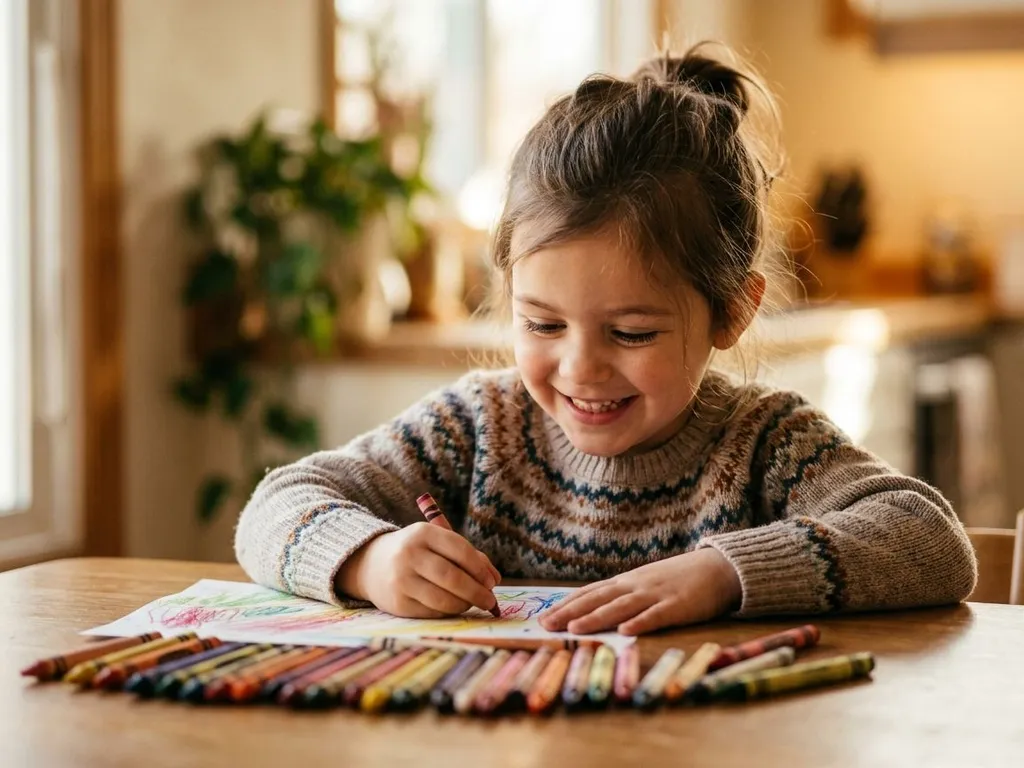
Choose pictures from your child’s world without assuming one culture or family routine. Food, school bags, parks, pets, sports, markets, buses, and rainy days work in many countries. Family photos can feel warm, but ask before using personal pictures in a class group.
Give thinking time. Many children need five quiet seconds before answering in another language. If your child gets stuck, offer two choices: “Is the boy running or sitting?” Then expand the answer: “Yes, he is running near the river.”
Keep correction small. During English describing pictures for kids, speech comes first. Choose one language point, such as “There is/There are” or “is wearing.” Correct every sentence, and some children stop trying.
Practice: Parent-Child Picture Talk
Take one picture and ask five questions: “What can you see?” “Where are they?” “What are they doing?” “How do they feel?” “What will happen next?” Let your child answer first, then repeat one answer in a fuller English sentence.
Quick Recap and Next Steps
Good picture description is a speaking routine, not a memory test. Children name visible things, build sentences, add details, and explain ideas. English describing pictures for kids helps beginners with ten words and teens ready for a full paragraph.
Use these steps this week:
- Start with one picture and ask for three visible things.
- Practise one target phrase, such as “There is” or “There are.”
- Add one action, one place word, and one reason.
- Try five minutes, two or three times a week.
Start small and repeat the routine. At LearnLink, English support for children aged 4-15 centres on steady speaking practice, and 4,000+ families use lessons to help kids speak with more confidence after regular practice.
Data current as of July 2026.
When a word has several meanings or pronunciations, Cambridge Dictionary is a useful check before turning it into child-friendly examples.
🎯 Not sure where your child stands?
Answer 5 questions about your child (4–15) and get a level guide — from Pre-A1 to B1 — with what to practise next.
Take the 2-minute quiz
Takes about 2 minutes. The result is a guide, not a formal assessment.
Frequently Asked Questions
What Pictures Are Best for Children Learning English?
Choose clear pictures with people, actions, and familiar objects. A street, classroom, kitchen, park, or birthday scene gives children plenty to say. Avoid images with too many tiny details for beginners. Older children can handle complex scenes where they compare, infer, and explain. English describing pictures for kids works best when each child can point to visible proof.
How Long Should a Picture Description Activity Take?
For young children, three to five minutes is enough. For school-age kids, aim for five to ten minutes. Teens can spend longer if the picture leads to opinion or debate. Stop while your child still wants to speak. Short, repeated practice usually beats one long session.
Should Parents Correct Every Grammar Mistake?
No. Correct one or two points that match the activity goal. If the goal is “There is” and “There are,” focus there. Restate your child’s sentence correctly and invite another try. Too much correction can make a child careful but silent. English describing pictures for kids needs confidence as much as accuracy.
Can Picture Description Help with Writing Too?
Yes. Speaking first often makes writing easier. After your child describes a picture aloud, ask them to write two or three best sentences. Older children can write a short paragraph with a beginning, details, and one guess about what happens next.
How Do Online Lessons Use This Skill?
In online English lessons, picture work gives tutors a quick view of vocabulary, grammar, pronunciation, and confidence. English describing pictures for kids also keeps tasks visual, helping first-time online learners understand before longer speech.
Start your child's English journey today — book a trial lesson with LearnLink.
Stay updated on our latest tips and resources by following us on Instagram LearnLink.