Describing People in English for Kids
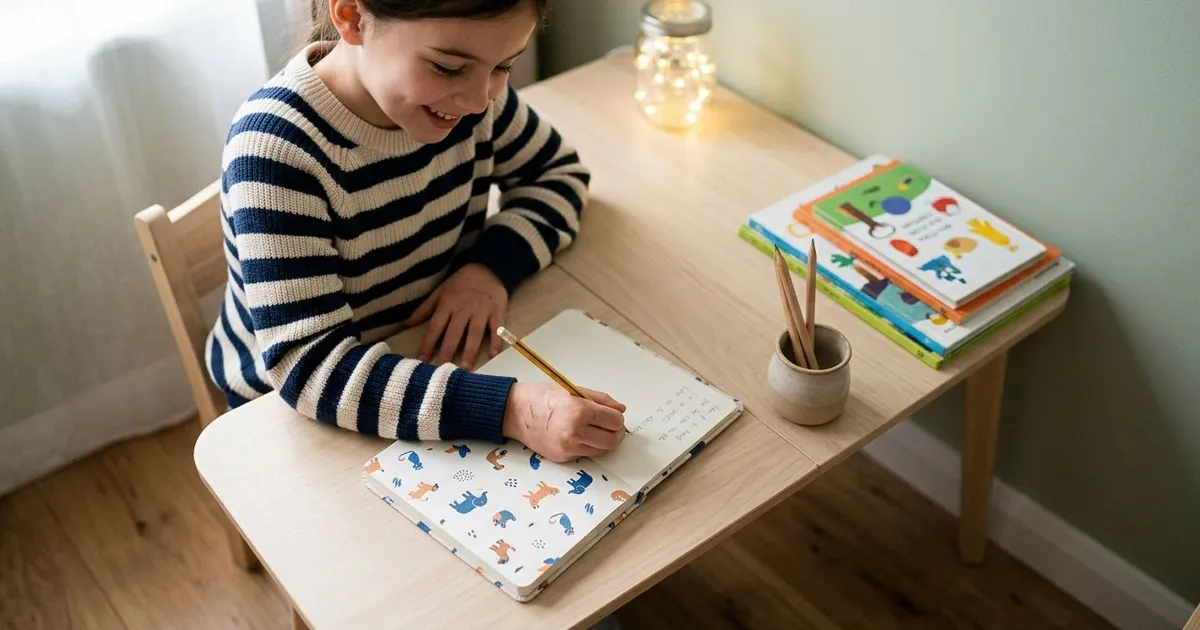
Children describe a person well through four detail types: appearance, clothing, action, feeling or character. Describing people in English for kids means choosing true, respectful words in clear order: “She has curls,” “He looks tired,” “My friend is kind.” Short practice with real faces, book characters, family photos, classmates builds safe vocabulary, sentence frames, and confidence.
Why This Skill Matters
Descriptions help children make meaning. “The boy with the red hat is running” sorts details, selects words, helps another person understand. Language, thinking, social care grow together. For parents, describing people in English for kids works best through short visual practice each week.
For multilingual children, this skill connects languages. A child may describe a grandparent in Spanish, Hebrew, French, or Arabic, yet still need English patterns: adjective before noun, “short style,” “brown eyes,” “a friendly smile.” Describing people in English for kids gives reusable patterns across topics.
Reading improves too. Story questions often ask, “What is the character like?” or “How do you know?” A child who separates appearance from personality can answer with evidence: “She is brave because she helps her brother,” not only “She has a blue dress.”
What Children Should Learn First
Start with respectful categories. Teach children to describe people without teasing, ranking, or guessing private facts. Early categories include hairstyle, clothes, general height, actions, feelings, and character traits. Avoid weight comments, skin value judgments, beauty ratings, or wording that could shame another child.
Data current as of July 2026.
Order helps. Young learners can handle one appearance detail, one clothing detail, one action, plus one kind or feeling word: “She has long black curls. She is wearing a yellow coat. She is reading. She looks calm.” Structure stays clear without stiff speech.
A Step-by-Step Way to Teach It
First, teach “see” words. Ask your child to describe only visible details: hairstyle, clothes, glasses, a bag, or an action. A younger learner might say, “He has a green hat.” An older child can add, “He is carrying a backpack and looking at the map.”
Second, add “think” words with proof. Personality words need evidence. Instead of “He is nice,” guide your child toward, “He is helpful because he opens the door.” Careful wording also prepares children for school writing, where reasons matter.
Third, build full sentences. Describing people in English for kids works best with repeatable frames: “She has…,” “He is wearing…,” “They look…,” “I think she is… because…”. In online English lessons for children, frames help children speak before every grammar rule feels secure.
Practice: Build a Safe Description
Choose one word from each group and make four sentences. Appearance: short, long, curly, straight. Clothes: blue jacket, red T-shirt, white shoes, green scarf. Action: reading, running, drawing, smiling. Feeling: happy, calm, tired, excited. Example: “She has curly hair. She is wearing a blue jacket. She is reading. She looks calm.”
Useful Words and Sentence Frames
For younger children, keep vocabulary small. Ten strong words beat forty loose ones. Begin with colors, clothes, hairstyle words, basic feelings. Add character words once your child can explain why: kind, fair, brave, careful, patient, cheerful, shy, honest, polite, curious.
Older children can use sharper language. “Tall” and “short” work, but “taller than his brother” or “about the same height as her friend” gives a clearer picture. “Angry” can become “annoyed,” “upset,” or “frustrated,” depending on the scene. The goal is fair description, not fancy English.
Use these home frames: “This person has…,” “This person is wearing…,” “This person looks…,” “This person may feel… because…,” and “This person seems… because…”. “May” and “seems” keep guesses from becoming facts.
Examples for Different Ages
School-age kids need short oral practice. Show a picture and ask for two details: “What can you see?” and “What is the person doing?” An answer might be, “He has brown curls. He is jumping.” Praise precise words, then model one more sentence: “He looks happy.”
School-age kids can handle a four-part description. For example: “My cousin has straight dark hair. She is wearing a purple sweater. She is holding a small dog. She is careful because she holds it gently.” This group enjoys guessing games when clues stay respectful.
School-age kids can describe people in stories, films, and real settings with more nuance. They can compare first impressions with evidence: “At first, the character seems quiet, but later he speaks up for his friend, so I think he is brave.” Describing people in English for kids should grow from naming features toward explaining choices.
Practice: Add Proof
Finish each sentence with a reason. 1. She is kind because _____. 2. He looks nervous because _____. 3. They are careful because _____. 4. I think the boy is curious because _____. Encourage your child to use an action as proof, not only a feeling word.
Tips for Parents and Teachers
Use real routines. At breakfast, describe a cereal-box picture. During a walk, describe shop-window clothes. While reading, pause and ask, “What do we know about this person?” Short repeated practice beats one long weekly lesson.
Correct with a model, not a lecture. If a child says, “She has hair yellow,” answer, “Yes, she has yellow hair, or we can say blond hair.” Then continue. Children keep speaking when correction feels supportive, not test-like.
Set a kindness rule from the start. Descriptions should help someone recognize, understand, or imagine a person. They should not judge worth. This rule sits at the heart of describing people in English for kids, especially in mixed groups where children bring different cultures, bodies, names, clothes, family habits.
Practice: Guess Who
Choose a family photo, class picture, or book page. One person gives three respectful clues: one appearance clue, one clothing clue, and one action clue. The other person guesses. Example: “This person has short hair. He is wearing glasses. He is waving.”
Common Mistakes to Avoid
One mistake: listing too much. “She has hair, eyes, a nose, shoes, a bag, and a dress” says little. Teach listener-helpful details: “She has long curls and a red school bag.”
Another mistake: mixing fact and opinion. “He is bad” gives no useful description. “He pushes the chair and looks angry” sounds clearer and fairer. Children need this difference because English descriptions can shape how classmates are seen.
A third mistake: translating word order from another language. Many children say, “eyes blue” or “hair long.” Keep correction simple: adjective first, noun second. Blue eyes. Long hair. A striped shirt. Spoken practice makes the order feel natural.
When a word has several meanings or pronunciations, Cambridge Dictionary is a useful check before turning it into child-friendly examples.
Frequently Asked Questions
How Many Words Does My Child Need to Describe a Person Well?
A young child can start with 15-20 practical words: colors, clothes, appearance words, basic feelings. An older child needs more character words and action verbs. Quality matters more than size. Describing people in English for kids grows stronger when a child uses small vocabulary in full sentences with reasons.
Should Children Describe Skin Colour?
Teach thoughtful use. Skin colour may belong in a book description, art task, or identification activity, but it should not become a casual label or joke. If needed, use plain, respectful words plus other details, such as clothes, action, or hairstyle.
What If My Child Uses Unkind Words?
Stop the wording without shaming the child. Say, “We can describe people in a kinder and clearer way.” Then offer a replacement. For example, change “He looks weird” to “He is wearing unusual glasses” or “He looks surprised.” Children need exact language for difference, not teasing language.
How Can We Practise Without Worksheets?
Use books, family photos, museum pictures, cartoons, and daily life. Ask for one sentence first, then build to three. Play “guess who” with respectful clues. Keep turns short, and let your child describe adults, children, and story characters so the skill feels useful beyond homework.
Quick Recap and Next Steps
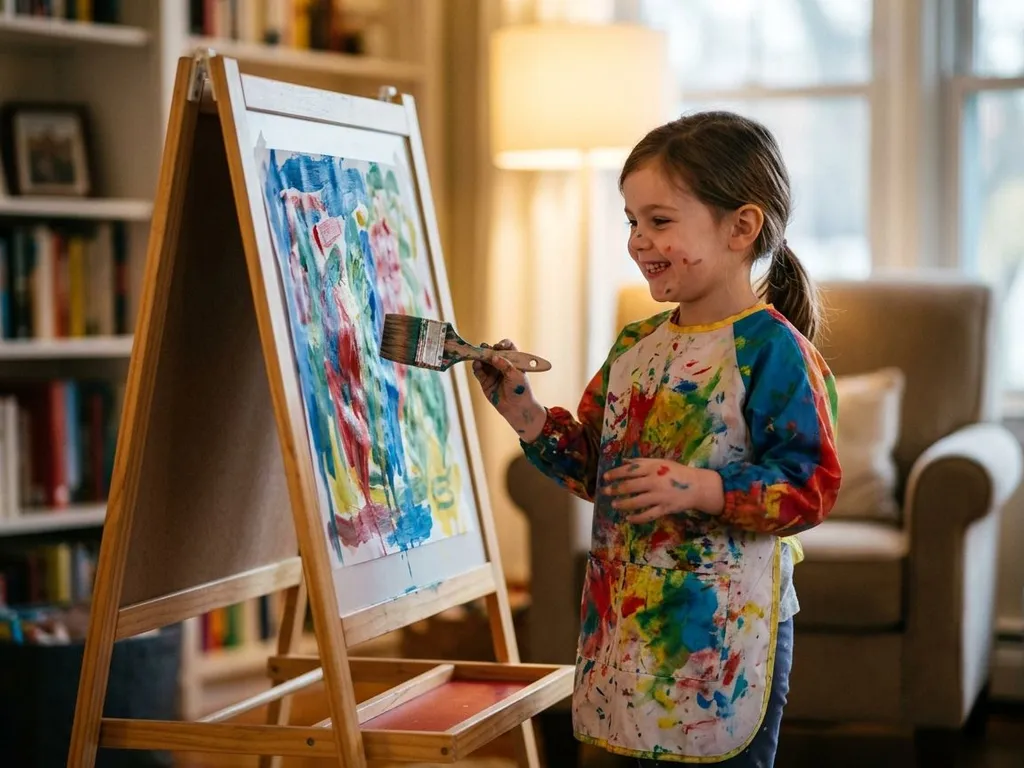
Strong descriptions stay kind and evidence-based. Start with visible details, then add feelings and character traits with proof. Keep sentence frames close: “She has…,” “He is wearing…,” “They look…,” and “I think… because…”. LearnLink supports English learners ages 4-15 and has helped 4,000+ families build steady speaking habits.
1. Try one picture a day and ask for four sentences: appearance, clothes, action, feeling or character. 2. Practice one respectful correction, such as “yellow hair” to “blond hair.” 3. Start each answer with evidence: “I think… because…”. Describing people in English for kids builds vocabulary, grammar, reading skills, social awareness together.
Start your child's English journey today — book a trial lesson with LearnLink.
Stay updated on our latest tips and resources by following us on Instagram LearnLink.