Simple Sentence Activities for Kids
A sentence gives a child one English idea: someone does one action, has one feeling, or shows one quality. For children, simply sentences for kids means short patterns such as “I see a cat,” “She is happy,” and “We enjoy apples.” These lines move a child from single words to speech without heavy grammar. A 5-year-old may start with three words and a picture. A 12-year-old may use the same pattern for longer, neater answers. The aim is not baby talk. It is English that grows with the child.
📥 Simple Sentence Builder
Printable practice for making clear English sentences with who, what, and where
Leave your email — we'll send the PDF to your inbox.No spam — the PDF plus one short reminder. Unsubscribe anytime.
Core Words and Sentence Patterns
Strong first sentences begin with words children use at home, in class, and during play. Start with people, verbs, objects, and feelings: I, you, he, she, we, enjoy, see, have, want, need, happy, tired, hungry, big, small. These words are short, but they carry meaning.
For simply sentences for kids, teach one pattern at a time. “I see ___” works with animals, colours, toys, food, and family words. “I enjoy ___” helps children share choices. “It is ___” describes size, colour, weather, or mood.
Keep the first set tight. Ten practised patterns beat forty patterns the child cannot use. In strong lessons, children hear the sentence, say it, see it, and write it in order.
Examples in Context
Children learn faster when a sentence belongs to a scene. A kitchen picture can lead to “I see a cup,” “I want water,” and “The spoon is small.” A family photo can lead to “This is my sister” or “Grandpa is happy.” Meaning comes before worksheet practice.
For simply sentences for kids, use one setting for several sentences before moving on. In a bedroom scene, a young child can say, “I see a bed.” An older child can add, “The blue book is on the bed.” A teen beginner can say, “I need my phone because I have class.” The base stays short, and the thought gains detail.
Do not rush into long answers. If a child can say “I enjoy apples” with confidence, add one detail: “I enjoy green apples.” Then add a reason: “I enjoy green apples because they are sweet.” Step-by-step growth keeps grammar practical.
Activities by Age
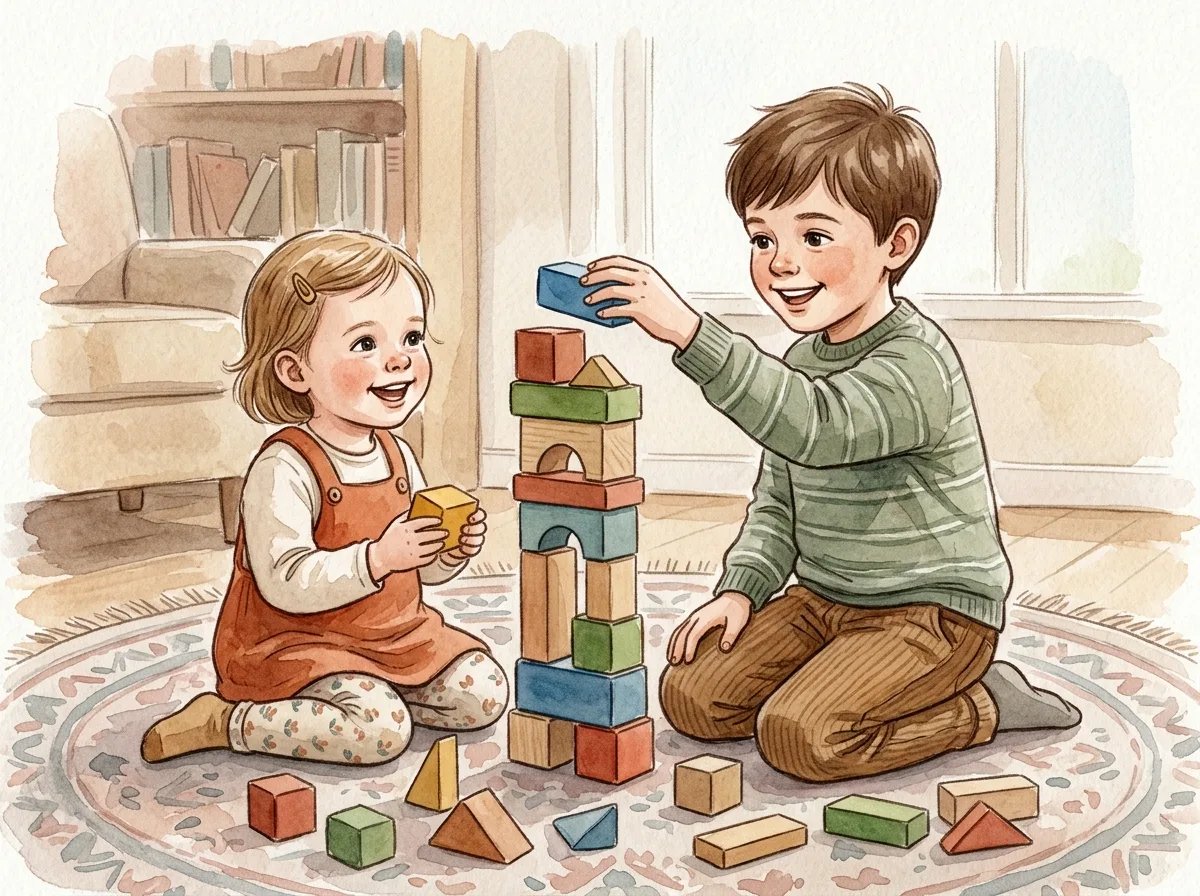
For school-age kids, keep the body moving. Put three toys on the table and ask the child to point and say, “I see a car,” “I see a bear,” or “I see a ball.” Use gestures for “big,” “small,” “happy,” and “sad.” Young children need short turns and quick success.
For school-age kids, use sorting and choice. Ask the child to group pictures by colour, animal, food, or action, then say one sentence for each group: “The frog is green,” “I enjoy pasta,” “The boy can run.” This is a strong age for simply sentences for kids because children can notice word order without grammar labels.
For school-age kids, keep the language respectful and age-fit. Use school life, sports, games, music, travel, and online safety. A beginner teen can still use short sentences, but the content should not feel childish: “I play chess online,” “My team trains on Friday,” “I need help with this word.”
Practice Block: One Picture, Five Sentences
Choose one picture from a book, photo album, or safe image search. Ask your child to make five sentences: one with “I see,” one with “It is,” one with “I enjoy,” one with “He/She has,” and one with “Can I.” Keep the picture in sight while the child speaks.
Practice Ideas for Home and Online Lessons
A daily five-minute routine beats a long weekly session. At breakfast, ask for one food sentence: “I want milk” or “The egg is hot.” On the way to school, ask for one colour sentence: “The car is white.” At bedtime, ask for one feeling sentence: “I am sleepy.”
In online lessons, simply sentences for kids should move between listening, speaking, reading, and small writing tasks. A tutor may show a picture, model the sentence, let the child repeat it, then change one word. In LearnLink tutors can also adapt the topic to a child’s age, culture, and home language background, which matters for multilingual families.
Parents can support this without turning home into a classroom. Use English for short, warm moments: “Open the door,” “I see your shoes,” “You have a red cup.” If the child answers with one word, model the full sentence once and move on.
Building from Words to Sentences
Children often know single words before they can build a sentence. The bridge is a frame. If the child knows “cat,” give the frame “I see a ___.” If the child knows “pizza,” give “I enjoy ___.” If the child knows “cold,” give “It is ___.”
For simply sentences for kids, sentence frames are not a grammar shortcut. They are a child-friendly route into grammar. The child learns that English usually needs a subject before the verb: “I enjoy,” “She has,” “It is.” This habit helps later with school answers, stories, and messages.
Once the frame is steady, change one part at a time. Move from “I enjoy rice” to “She enjoys rice,” then to “She enjoys rice and fish.” The child hears the small verb change without a long grammar lecture.
Common Mistakes and How to Fix Them
One frequent mistake is dropping the small word “is.” A child may say, “It red” or “She happy.” Give a direct model: “It is red,” “She is happy.” Do not stop every sentence for correction. Repeat the right form naturally and ask the child to try again once.
Another issue is word order. A child may say, “I apples enjoy” because another home language uses a different order. This is not weak thinking. The child is mapping English onto a language system they already know. Use colour cards or hand signs for “who,” “does,” and “what” to show the order: “I enjoy apples.”
Spelling can distract older beginners. When teaching simply sentences for kids, separate speaking practice from spelling practice at first. Let the child say “I have a pencil” with fluency before asking them to write every word correctly. Accuracy matters, but speech needs room to grow.
How to Keep Simple Sentences Interesting
Simple does not mean dull. Children can use short sentences to talk about preferences, worries, plans, and opinions. “I do not enjoy loud games” is direct. So are “My brother plays football” and “I need more time.” These are real thoughts, not empty drills.
For a child who already speaks two or three languages, compare gently when it helps. You might say, “In English, we say ‘I am hungry,’ not only ‘hungry.’” Keep the focus on the English pattern, not on blaming the home language. Multilingual children often notice patterns when adults make them visible.
Review should feel familiar, not stale. Use the same sentence frame with new content each week: animals, clothes, school things, weekend plans, or family routines. This is one reason simply sentences for kids can support young beginners and older children who need stronger foundations.
- Start with one frame, such as “I see ___,” and practise it with three real objects.
- Try one small change after the sentence feels easy: colour, number, place, or reason.
- Practice speaking before spelling so the child builds confidence first.
- Use age-fit topics, especially for older beginners, so simple English still feels useful.
When a word has several meanings or pronunciations, Cambridge Dictionary is a useful check before turning it into child-friendly examples.
Frequently Asked Questions
What Are Good First Simple Sentences for a Young Beginner?
Start with sentences the child can use right away: “I see a dog,” “I want milk,” “I have a ball,” “It is red,” and “I am happy.” Use objects, pictures, and gestures so meaning is visible. For simply sentences for kids at this stage, three to five words are enough. The child should feel that English helps them say something real.
How Many Simple Sentences Should My Child Practise Each Week?
Five to ten sentence patterns a week is enough for most beginners if the child uses them several times. Repetition across settings matters more than a large list. A child might practise “I see ___” with toys, animals, food, and pictures. When the pattern feels easy, add a new one such as “I want ___” or “It is ___.”
Should I Correct Every Grammar Mistake?
No. Correct the mistake that blocks meaning or belongs to the pattern you are practising. If the goal is “I enjoy ___,” focus on that order. You can model the right sentence softly: the child says “I apples enjoy,” and you answer, “Yes, I enjoy apples.” Too much correction can make a child speak less.
Can Older Children Use Simple Sentences Without Feeling Childish?
Yes, if the topics match their age. An older beginner can practise short sentences about sport, music, school, travel, games, or friends. Avoid babyish pictures unless the child enjoys them. Simple English is not childish English; it is clear English. Older learners can build strong answers from short, correct sentences.
Start your child's English journey today — book a trial lesson with LearnLink.
Stay updated on our latest tips and resources by following us on Instagram LearnLink.