Speak vs. Talk: A Practical Guide for Kids
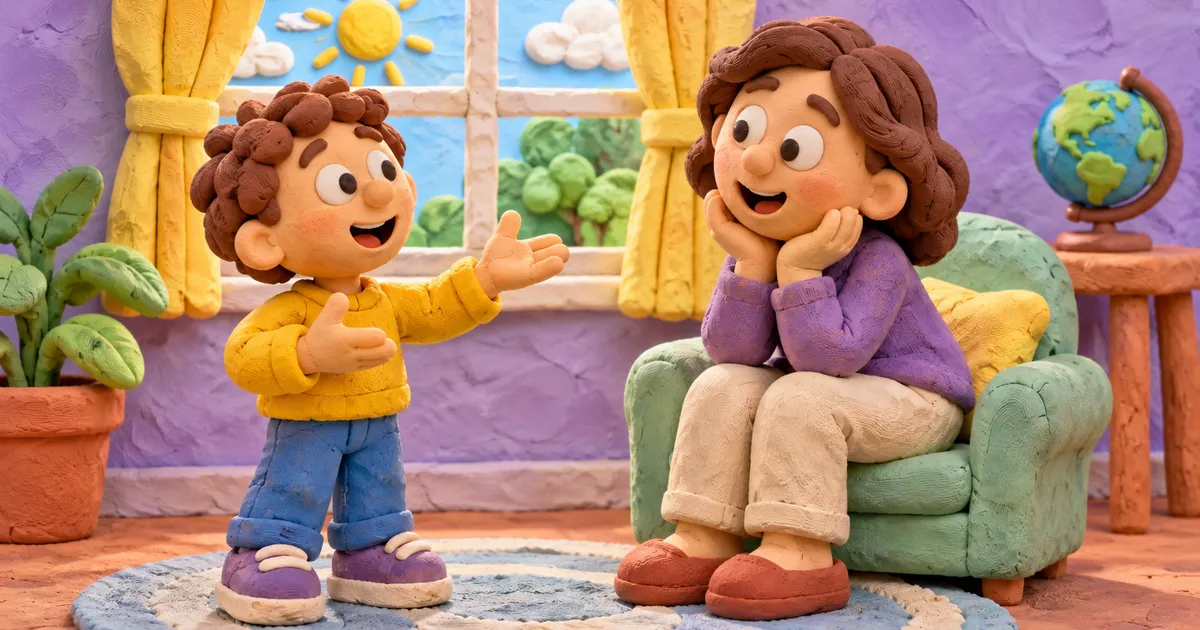
Speak means to use your voice or a language; talk means to have a conversation. Speak vs. Talk for Kids: A Practical Guide helps children choose at home, school, and online lessons. Say “I speak English” for a language and “I talk with my friends” for a conversation. Both verbs describe communication, but their grammar and purpose differ. Linking each verb to language or conversation builds confident choices without teaching every use at once.
What Children Need to Understand
Use speak for languages and talk for conversations. “We speak Spanish at home” names language ability. “We talk about school at dinner” describes an exchange. This rule covers daily situations.
The verbs overlap. “I spoke to my tutor” and “I talked to my tutor” are correct. Spoke may sound more formal or emphasize speaking. Talked suggests an exchange of ideas. This is a tendency, not an absolute rule.
Children need not learn every exception first. Speak vs. Talk for Kids: A Practical Guide begins with one firm rule, then adds frequent patterns. Children who use two or more languages can connect each English verb with its purpose instead of translating word by word.
How the Grammar Works
Speak is irregular: speak, speaks, spoke, spoken, and speaking. Across LearnLink lessons, our tutors help children build confident, everyday English step by step. The past form is not speaked.
Talk is regular: talk, talks, talked, and talking. Compare “They talk after class,” “They talked yesterday,” and “They are talking now.” Its spelling follows a predictable tense pattern.
One translation cannot fit every sentence. Speak vs. Talk for Kids: A Practical Guide connects each form to its role. Children identify the meaning, choose the verb, then check the tense.
Rules and Examples for Daily English
Place speak directly before a language: “Can you speak French?” and “Our family speaks three languages.” No preposition separates the verb and language. An adverb may follow: “Please speak slowly,” “Speak clearly,” or “He speaks quietly.”
Use talk about before a subject: “Let’s talk about the book.” Use talk to or talk with before a person: “I talked to my parent” or “I talked with my friend.” With emphasizes a two-way exchange, though both forms can describe a conversation.
SpeakAcross LearnLink lessons, our tutors help children build confident, everyday English step by step. In LearnLink lessons, our experienced tutors model these patterns in full sentences. Speak vs. Talk for Kids: A Practical Guide explains both the core contrast and its overlap.
Choosing the Verb for Different Situations
For ability, choose speak: “I speak Italian.” For a shared discussion, choose talk: “We talk about our day.” Ask: Is the sentence about a language or a conversation?
On the phone, “May I speak to your parent?” is polite. “Can I talk to your parent?” is correct but more informal. In class, “Please speak louder” changes voice delivery. “Please stop talking” ends conversation or chatter.
Older children may meet give a talk, meaning to present information to an audience: “She gave a talk about space.” We do not say “gave a speak.” A formal address is a speech, a noun separate from this verb choice.
Common Mistakes and How to Correct Them
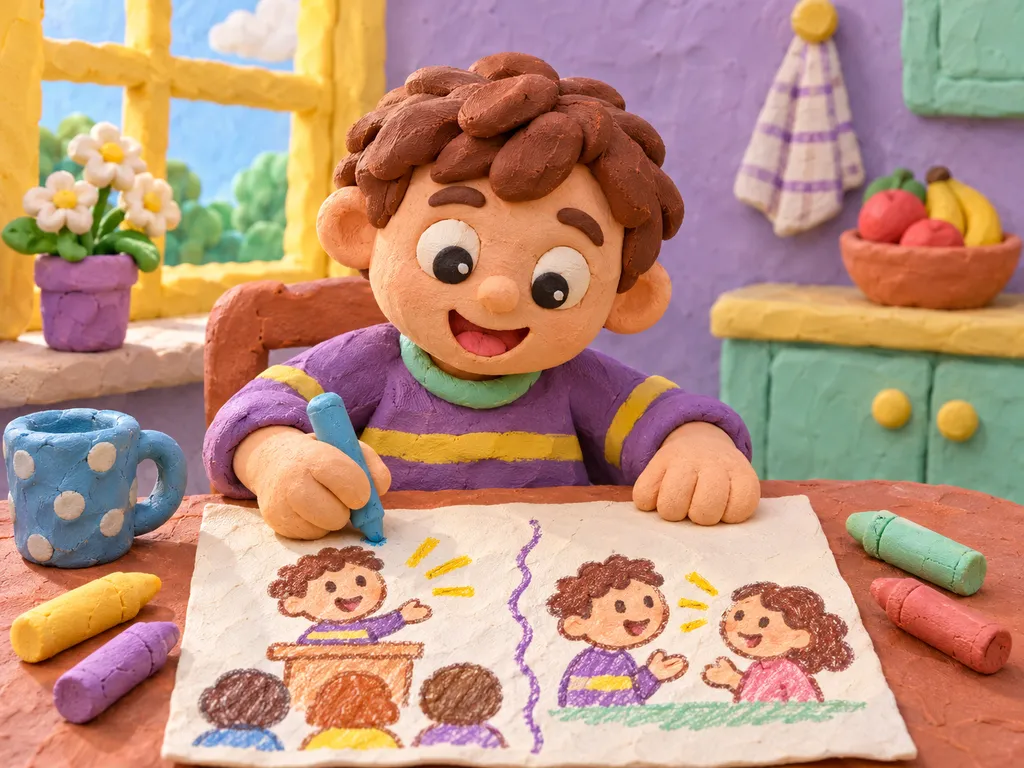
Change “I talk English” to “I speak English.” In “Yesterday I speak to my friend,” yesterday requires the past form: “Yesterday I spoke to my friend.” For talk, add -ed: “Yesterday I talked to my friend.”
Missing prepositions cause another error. Change “We talked the film” to “We talked about the film.” A language follows speak without a preposition: “We speak German” for general ability. “We spoke in German during the game” is correct because it identifies the language used in one event.
Do not teach that speak always means one person and talk always means two. “We spoke for an hour” can describe an exchange. Speak vs. Talk for Kids: A Practical Guide starts with language versus conversation, then uses surrounding words to refine the choice.
Practice Activities
Ask your child to explain each answer aloud; the reason tests understanding. Younger children can answer with one word. Older children can read the full sentence and change its tense.
Choose Speak or Talk
Complete each sentence with the correct form.
1. We ______ about our favourite games after class.
2. My child can ______ two languages.
3. Please ______ more slowly.
4. They ______ about the story yesterday.
5. She has ______ with her tutor.
Answers: 1. talk, 2. speak, 3. speak, 4. talked, 5. spoken.
For a sorting game, write “language” on one card and “conversation” on another. Read a sentence. Your child points to the matching idea before choosing the verb. Separating meaning from spelling gives multilingual children time to think in English.
Correct the Mistake
Rewrite each sentence.
1. I talk Arabic with my grandparents.
2. Yesterday we speak about school.
3. They talked the new book.
4. Can you speaking more loudly?
5. She has spoke to the teacher.
Answers: 1. I speak Arabic with my grandparents. 2. Yesterday we spoke about school. 3. They talked about the new book. 4. Can you speak more loudly? 5. She has spoken to the teacher.
Finish with a two-minute family exchange. Ask, “Which languages do we speak?” Then ask, “What do we like to talk about?” The answers place both verbs in a real setting without a long grammar test.
When a word has several meanings or pronunciations, Cambridge Dictionary is a useful check before turning it into child-friendly examples.
Frequently Asked Questions
What Is the Simplest Way to Teach the Difference?
Start with two ideas: speak for a language and talk for a conversation. Pair “I speak English” with “I talk with my family.” Speak vs. Talk for Kids: A Practical Guide adds overlapping cases after children master this contrast. Ask for the meaning before the verb or tense.
Can Speak and Talk Sometimes Mean the Same Thing?
Yes. “I spoke to my tutor” and “I talked to my tutor” can describe the same event. Talked suggests an exchange; spoke may sound formal or emphasize speaking. Both fit when the context supports them.
Should My Child Say Talk to or Talk With?
Both fit everyday conversation. “Talk with” can stress two-way participation. “Talk to” can describe an exchange or a message directed at someone. Regional preferences differ. Teach both forms and consistent use within a sentence.
Why Is Spoke Correct but Speaked Incorrect?
Speak is irregular, so its past form is spoke. Its past participle is spoken, as in “We have spoken.” Regular talk becomes talked. Comparison drills reinforce the forms: speak–spoke–spoken and talk–talked–talked.
How Can a Multilingual Child Practise These Verbs?
Use real languages and conversations. Ask which languages family members speak, then what they talk about together. Accept a short answer before expanding it into a full sentence. This respects every family language while reinforcing the English pattern.
Start your child's English journey today — book a trial lesson with LearnLink.
Stay updated on our latest tips and resources by following us on Instagram LearnLink.