English Superhero Vocabulary for Kids

A starter set for English Superhero Vocabulary and Activities for Kids contains 24 words covering characters, powers, clothing, actions, and values. Children can describe a character, follow a mission, or invent a story. Younger learners may begin with six words and gestures; older children can add reasons, problems, and solutions. Repeated practice through speech, pictures, movement, reading, and play works better than memorising the list at once.
📥 Superhero Word Power
Learn useful words, build clear sentences, and complete hero missions all week.
Leave your email — we'll send the PDF to your inbox.No spam — the PDF plus one short reminder. Unsubscribe anytime.
Build a Useful Starter Set
Start with words children can show through pictures or actions. These 24 items support descriptions and short stories without introducing rare comic-book terms.
For English Superhero Vocabulary and Activities for Kids, teach connected groups. Combine cape, mask, and costume. Pair rescue, protect, and save with actions. Contrast hero and villain through choices: “One character helps the town. The villain takes the shield.”
Put the Words into Sentences
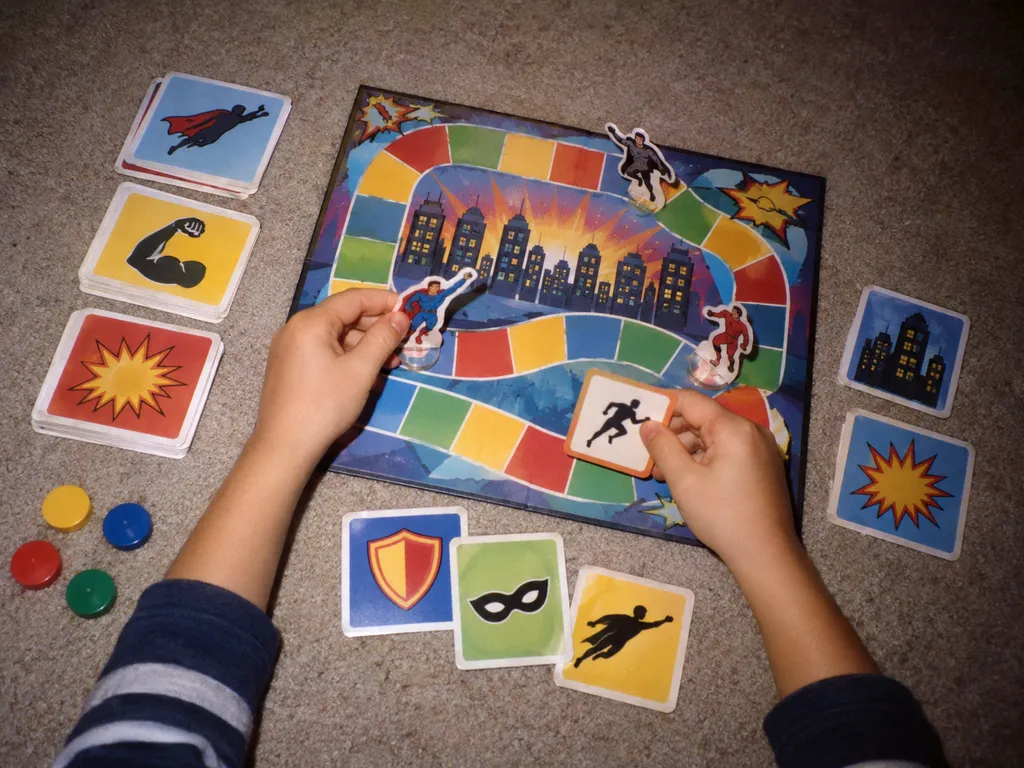
Keep English Superhero Vocabulary and Activities for Kids tied to reusable sentences: “The masked character can fly,” “She wears a green cape,” or “They protect the city.” These frames teach grammar while maintaining focus on meaning.
Move from labels to questions: “What can your character do?”, “What does the villain want?”, and “Who needs help?” A beginner may answer, “Climb walls.” Model the full form during play: “Yes, your hero can climb walls.” Confident learners can explain causes: “The team uses a shield because the bridge is dangerous.”
Multilingual children may explain a power in a home language before building the English sentence. Their ideas stay rich while vocabulary develops. Compare related meanings when needed: strong describes someone or something, while strength names the quality.
Choose Activities for Each Age Group
One word set can support a four-year-old or teenager, but each needs a different task. Consider language level, attention span, interests, and age.
The strongest English Superhero Vocabulary and Activities for Kids create a reason to speak. Matching suits early practice, then should lead to a choice or message. After matching shield to its picture, ask, “Who needs the shield?” After designing a costume, ask how each item helps during the mission.
Practise Through Short Missions
Create a three-step routine for family life: review four cards, act out two words, and finish with one sentence. Another day, hide cards around the room and give clues: “Find something the character wears,” or “Find the word that means keeping people safe.” Homemade drawings work like printed pictures.
Five-minute Rescue Mission
Choose a place, problem, and two powers. Your child completes three sentences: “The city is in danger.” “My character can fly and become invisible.” “The rescuer saves the people.” Change one card, then repeat with a new ending.
LearnLink tutors extend this pattern through listening, speaking, reading, and writing. A child might hear a clue, select the character, describe the rescue aloud, then write two lines. At home, finish with a voice recording, drawing caption, or three speech bubbles.
Correct Common Vocabulary Mistakes
Separate abilities from descriptions: “The hero is invisible,” but “The hero can fly.” When transformation matters, say “can become invisible.” Say, “She has a shield,” not “She have a shield.” Repeat the complete sentence, then let the child retry.
Watch similar-looking words. A cape hangs from the shoulders; a cap sits on the head. The plural of hero is heroes; the plural of villain is villains. Let children hear, point, and say each contrast before spelling it.
Not every mission needs a fight. Superhero language supports help, protect, rescue, teamwork, planning, and fair choices. Families can replace frightening scenes, avoid weapons, or create community missions such as finding a lost animal or helping after a storm.
- Practice five superhero words with your six-year-old using picture cards today.
- Ask your child to describe one hero’s costume using three precise nouns.
- Correct confusing pairs like cape and cloak through quick matching games.
- Read a superhero book aloud and model accurate action verbs together.
- Use English Superhero Vocabulary and Activities for Kids in a ten-minute review.
When a word has several meanings or pronunciations, Cambridge Dictionary is a useful check before turning it into child-friendly examples.
Frequently Asked Questions
These answers help families adapt superhero practice to a child’s level, languages, and interests.
How Many Superhero Words Should My Child Learn at Once?
Begin with four to six connected words, such as cape, mask, costume, and shield. Add items after your child recognises the first group and uses some words in speech. Older or confident learners may handle eight to ten words when practising them in sentences.
Can My Child Use Another Language During the Activity?
Yes. A home language can help your child plan a detailed character or understand a new idea. Then guide the child towards an English word, phrase, or sentence. English-only play is unnecessary. Set one English goal, such as naming three powers or answering “What can the hero do?”
Do We Need Superhero Toys or Branded Characters?
No. A lesson built around English Superhero Vocabulary and Activities for Kids works with paper cards, household objects, drawings, or gestures. Your child can invent a hero with a name, costume, power, and mission. Original characters require no knowledge of a film or comic and give different cultures an equal starting point.
What If My Child Does Not Like Superhero Stories?
Keep the language but change the setting. A rescue team, animal helper, space explorer, or magical guardian can protect, climb, fly, and complete a mission. Follow your child’s interests and comfort. The goal is connected sentences, not enthusiasm for one story type.
Turn the vocabulary into a speaking routine instead of a memorisation test. Finish with three steps:
- Start small: choose four connected words and review their meanings.
- Practise aloud: use each word in a complete sentence or question.
- Try a mission: combine two actions, one problem, and a clear ending.
A short one-to-one lesson can show what level and pace fit your child — book a trial English lesson.
Stay updated on our latest tips and resources by following us on Instagram LearnLink.