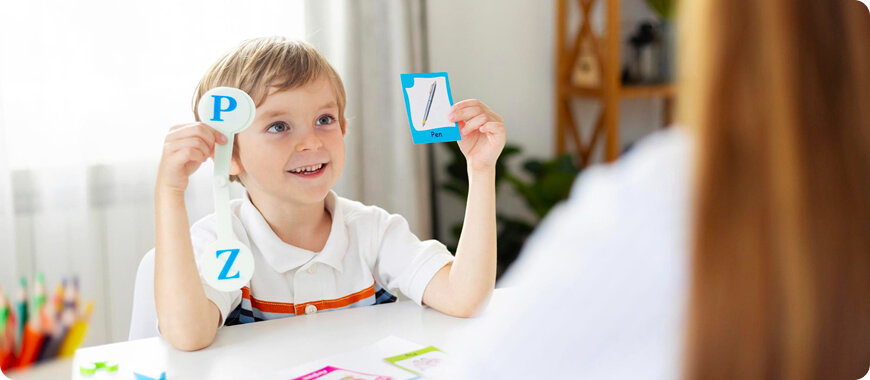
Past tense verbs denote actions completed prior to the current moment. Effective acquisition requires transitioning from passive observation to active production using visual tools. Storyboards facilitate this process by linking specific actions to grammatical forms across sequential panels. Pedagogical research indicates that accuracy precedes fluency in language development. Structured visual aids help learners distinguish regular forms ending in "-ed" from irregular past forms with unique patterns. This method supports past-tense action words for kids: storyboards integration by providing concrete context for abstract temporal concepts.
📥 Past Tense Storyboard Verb Cards
A printable verb practice set for turning picture stories into clear past-tense sentences.
Leave your email — we'll send the PDF to your inbox.No spam — one email with your PDF. Unsubscribe anytime.
Limitations of Passive Media Consumption
While cartoons for learning English provide auditory input, passive exposure rarely ensures grammatical mastery. Active engagement through structured activities is necessary for English for kids. Learners must progress from comprehension to independent production to solidify linguistic patterns. Visual grammar transforms abstract rules into chronological narratives where each panel represents a subject performing a finished action.
For elementary kids, the gap between watching and using the past tense often appears when they retell a scene. A learner may understand that a character opened a door, found a key, and ran away, yet still say “he open the door” or “she finded the key” when asked to describe it independently. This shows that recognition has not become controlled production. A practical classroom sequence can use a six-panel storyboard: first, learners point to each completed action; second, they match action-word cards such as walked, jumped, helped, and carried to the correct panel; third, they arrange the panels in chronological order; fourth, they say one sentence per panel using a fixed frame, “Yesterday, the character ___.” This technique forces attention onto time, sequence, and verb form instead of letting the story pass as entertainment.
Passive media also tends to hide grammatical contrasts because animation supplies meaning through movement, sound, and facial expression. If a character falls into a pond, learners may understand the event without noticing whether the narrator says fell, has fallen, or is falling. To unlock past tense power with visual storytelling, teachers can pause at three predictable points: before the action, during the action, and after the action. The class labels them “going to happen,” “happening now,” and “finished,” then writes only the finished version under the final image. This reduces a common mistake: mixing present continuous with simple past, as in “He is climbed the tree yesterday.” A short correction routine helps: underline the time marker, circle the action word, and ask whether the action is finished. Learners then replace it with the correct past form and reread the whole sentence aloud.
Age-Specific Learning Objectives
Educational goals for past tense acquisition vary by developmental stage. Younger learners focus on recognition, while older students apply complex narrative sequencing.
Common Errors in Verb Formation
Learners frequently over-regularize irregular forms, using "eated" instead of "ate." Another error involves auxiliaries in negatives. In "He didn't go," the auxiliary "did" indicates past tense, requiring the base verb form. Visual storyboards clarify these distinctions during grammar teaching for kids.
Look at these pictures. Choose the correct past tense verb for each one. Write it in the space provided.
1. Picture of a boy running: The boy ______ yesterday. (run / ran)
2. Picture of a girl jumping: She ______ over the rope. (jump / jumped)
3. Picture of a cat sleeping: The cat ______ all morning. (sleep / slept)
Why Parents Choose LearnLink

LearnLink serves 4,000+ families across 100+ countries with 200+ tutors. The platform utilizes structured concept recycling to ensure mastery. For educational resources and visual learning updates, follow the official Instagram account. To implement these strategies effectively:
Data current as of July 2026.
- Identify target action words for the lesson.
- Create three-panel storyboards for each one.
- Practice regular "-ed" endings first.
- Introduce irregular forms using visual contrast.
For the rule wording, Wikipedia — English Grammar is a useful reference while the practice examples here stay adapted for children.
Parents often value a lesson flow that makes grammar visible before it becomes abstract. For children, a past-tense activity can begin with a 3-minute picture walk: the tutor shows a simple sequence such as a child opening a box, finding a toy, and showing it to a friend. The learner first describes what they see in the present tense, then retells the same sequence as something that happened yesterday. This supports the goal to unlock past tense power with visual storytelling because the child is not memorizing isolated forms; they are linking each action word to a clear before-and-after image. A practical routine is to choose 6 target verbs per lesson, with 4 regular verbs and 2 irregular verbs. The tutor can mark regular forms in one color and irregular past forms in another, then ask the learner to sort story cards into “add -ed” and “new word” groups. One common mistake is overgeneralizing the pattern, producing forms such as “goed” or “eated.” Rather than simply correcting the child, the tutor can place “go/went” or “eat/ate” beside two contrasting images and ask which word sounds like the story happened yesterday.
Another useful technique is delayed retelling. After the first storyboard practice, the child completes a short unrelated task, such as matching adjectives to pictures, then returns to the same story and retells it without seeing the verb list. This checks whether the past-tense form is becoming usable in memory, not only repeated on cue. For younger learners, one sentence per panel is enough: “She jumped,” “She landed,” “She smiled.” For learners upper elementary kids, the same visual sequence can be expanded into connected narration with time words: “First,” “Then,” “After that,” and “Finally.” The tutor can listen for two predictable errors: dropping the past marker in speech, as in “Yesterday he walk,” and mixing time signals, as in “Yesterday he walks.” A precise correction routine keeps the pace calm: repeat the sentence back with a pause at the verb, point to the picture, and let the child repair the form before giving the model. Written follow-up should stay short, usually 5-7 sentences, so attention remains on accurate tense choice rather than on producing a long paragraph. Over several lessons, the same target words can reappear in new scenes, helping children notice that the form stays stable even when the characters, setting, and objects change.
Stay updated on our latest tips and resources by following us on Instagram LearnLink.