A Back-to-School Poem in English
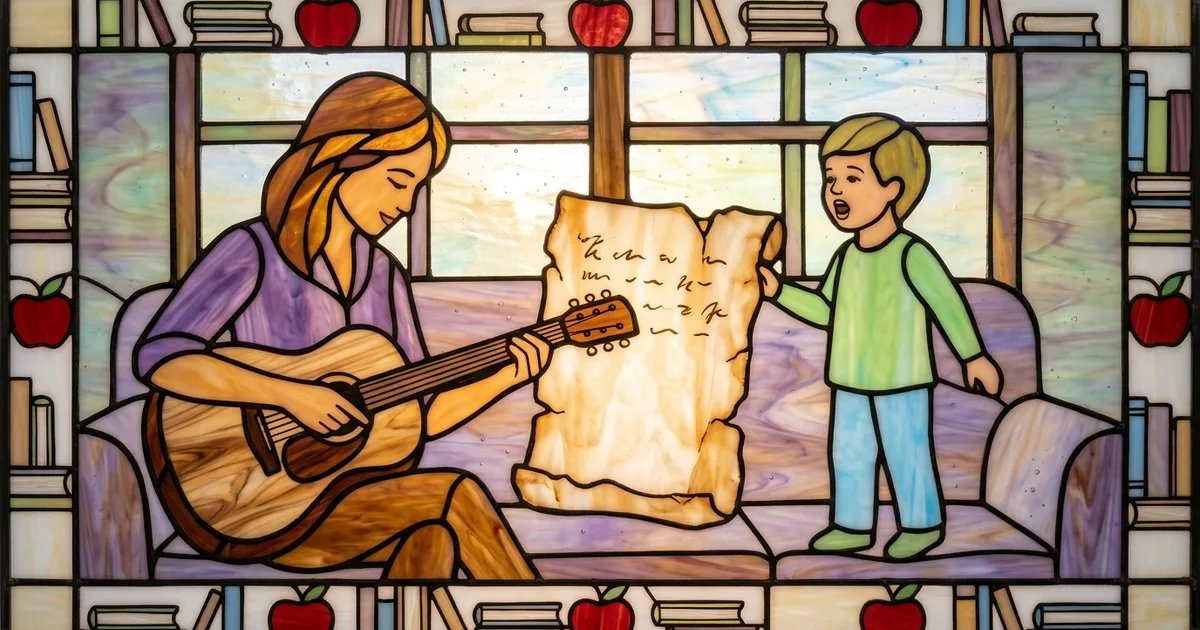
A back-to-school poem helps a child name school routines, feelings, and hopes in English. A Back-to-School Poem in English: A Practical Guide for Families explains how to choose a suitable poem, read together, and turn it into speaking practice. The goal is not flawless recitation. Your child should understand the idea, say important phrases with growing confidence, and connect the words to school life. The approach works whether school begins in August, September, January, or another month.
📥 My Back-to-School Poem Practice
Read, rhyme, move, match, and create
Leave your email — we'll send the PDF to your inbox.No spam — the PDF plus one short reminder. Unsubscribe anytime.
What Families Need to Know
A poem gives language a steady beat. Repeated sounds and sentence patterns help children notice how English words fit together. A young learner might practise “Here is my bag,” while an older child explores “timetable,” “challenge,” or “belong.” Rhyme supports memory, but meaning matters more.
Use A Back-to-School Poem in English: A Practical Guide for Families as a teaching plan, not a level test. One fluent or hesitant reading cannot prove a CEFR level or weak English. Watch for progress: understanding the scene, recognising phrases, and speaking with less support.
Choosing the Right Poem
Choose a poem your child can understand after a short explanation. One or two new words per stanza is enough. Pick a familiar subject: packing a school bag, greeting classmates, finding a classroom, meeting a teacher, or starting a routine.
These age bands are guides. A multilingual eight-year-old may understand complex ideas but need help with English sounds. The comparison keeps A Back-to-School Poem in English: A Practical Guide for Families flexible: adjust the words, length, and support without turning the activity into a test.
How to Use the Poem at Home
Begin with meaning. Read the title, find school words, and ask what the poem describes. Explain unfamiliar terms with an object, picture, action, or short example. Translate when one word blocks understanding; avoid translating the poem word for word.
Use the routine from A Back-to-School Poem in English: A Practical Guide for Families over three readings. First, the adult reads while the child listens. Second, the child echoes each phrase. Third, read together while the child chooses the pace, gestures, or stressed words.
Limit sessions to about ten minutes for younger children. Stop while attention remains strong. On another day, revisit two favourite passages instead of restarting. Across LearnLink lessons, our tutors build speaking through short, manageable exchanges instead of demanding long answers at once.
Examples for Different Ages
School-age kids: Use actions for “bag,” “chair,” “wave,” and “share.”
Here is my bag,
Here is my chair.
I wave hello,
And learn to share.
The repeated pattern helps a beginner join before every word feels secure.
School-age kids: This verse adds a school routine and a feeling.
A pencil waits beside my page,
New words are ready for the day.
I may feel quiet at the start,
Then find a friendly game to play.
I listen, ask, and try once more,
And know what learning can be for.
Ask which part sounds hopeful and which words show action.
School-age kids: Older learners need language that does not feel childish.
A timetable, a crowded hall,
A name I have not learned at all.
A question waiting in my mind,
A place to speak, a seat to find.
I bring the languages I know,
And add new words as lessons flow.
I do not need to know each part;
A school year grows from one small start.
These examples make A Back-to-School Poem in English: A Practical Guide for Families suitable for beginners and confident multilingual learners.
Practical Activities
Move from recognition to choice. Let your child point to a word, complete a phrase, change one detail, then compose a new sentence. The sequence reduces the speaking load while personalising the poem. Accept an understandable idea before correcting grammar or pronunciation.
Fill in the School Words
Use bag, page, chair, hello to complete: “Here is my ___.” “I sit on my ___.” “I open a new ___.” “I wave and say ___.” Read all four sentences with a steady beat. Answers: bag, chair, page, hello.
Change the Poem
Choose one passage and replace a detail with something true for your child. For example, change “A pencil waits beside my page” to “My blue pen waits beside my book.” Add another sentence beginning with “At school, I can…” Read the new version aloud twice.
- Try reading a four-line school poem aloud with children aged six to eight.
- Practice clapping each syllable twice, then repeat the poem without looking.
- Use colored pencils to circle three rhyming pairs in a familiar book.
- Invite your child to replace two nouns with classroom objects from home.
- Record one performance, replay it, and praise clear rhythm and confident pronunciation.
For the child-development context behind this advice, American Academy of Pediatrics gives a broader reference point for parents.
Frequently Asked Questions

How Long Should a Back-to-school Poem Be?
For school-age kids, four lines may be enough. Children often manage six to eight short lines; older learners may prefer a longer poem with a stronger idea. Choose by attention span and English experience, not age alone. The child should reach the end without losing the meaning.
Should My Child Memorise the Whole Poem?
No. Memorisation is optional. A child gains language by understanding the poem, repeating phrases, and reading with support. If memorising causes stress, ask for one favourite excerpt or read together. Confidence and comprehension matter more than a flawless performance.
Is It Helpful to Translate the Poem?
Translate a word when pictures or gestures cannot convey its meaning. Then return to the English version and use it in a question or action. A multilingual child can compare two or three languages, provided the speaking practice remains in English.
What If My Child Is Worried About Pronunciation?
Model the line slowly and let your child echo small parts. Focus on one feature, such as the final sound in “book” or the stress in “pencil.” Avoid interrupting every line. Recordings can reveal progress, but sharing them remains optional. A willing attempt is enough.
Can Families Use the Guide If School Starts at a Different Time of Year?
Yes. A Back-to-School Poem in English: A Practical Guide for Families is not tied to one country, season, or school calendar. Replace details that do not fit. “Autumn morning” can become “warm morning,” and “new term” can become “new school year.” Match the language to your child’s setting.
If your child needs steady speaking practice, start small — choose a trial lesson.
Stay updated on our latest tips and resources by following us on Instagram LearnLink.