Between and Among: A Guide for Kids
Between points to separate people, things, places, or choices, while among places someone or something inside a group. Between and Among for Kids: A Practical Guide helps children choose. Start with visible objects: a ball between two shoes, then a ball among toys. Children can extend that picture to sharing, relationships, and choices. The rule “between for two, among for more than two” is a good first step, but older learners need to know that between can describe three or more distinct items.
The Core Idea Children Need to Know
Space is the easiest starting point. A teddy bear can sit between a chair and a bed or hide among cushions. The first sentence identifies separate sides; the second places the bear inside a group.
The contrast works without physical objects. A child may choose between drawing and reading or feel comfortable among friends. Between keeps the options or people distinct. Among presents a group.
Use Between and Among for Kids: A Practical Guide as a reference, but teach through examples. Ask, “Can you point to the separate people or things?” If yes, between may fit. If the focus is membership inside a group, choose among.
How Between and Among Work
Both words are prepositions, linking a noun or pronoun to another sentence part. In The lamp is between the beds, the phrase locates the lamp. In The note was hidden among the papers, it places the note inside a collection.
The table offers a compact rule-and-example check and shows why counting alone cannot solve every sentence.
Between and Among for Kids: A Practical Guide uses two questions: “Are the items separate and distinct?” and “Is the sentence treating them as one group?” Meaning is more reliable than noun counting.
Rules for Choosing Between or Among
Use between for two points, people, objects, times, or options: between Monday and Friday, between the door and the window, and between staying home and visiting the park. The pattern is between A and B; do not replace and with to.
Use among when someone or something is surrounded by, included in, or shared through a group: among the trees, among the pupils, and among several boxes. Do not pair among with a separate and phrase.
Between can refer to more than two people or things when each remains distinct. A family might choose between three routes. An agreement might exist between four schools. Between and Among for Kids: A Practical Guide introduces this exception after children master the two-versus-group rule.
Teaching Between and Among by Age
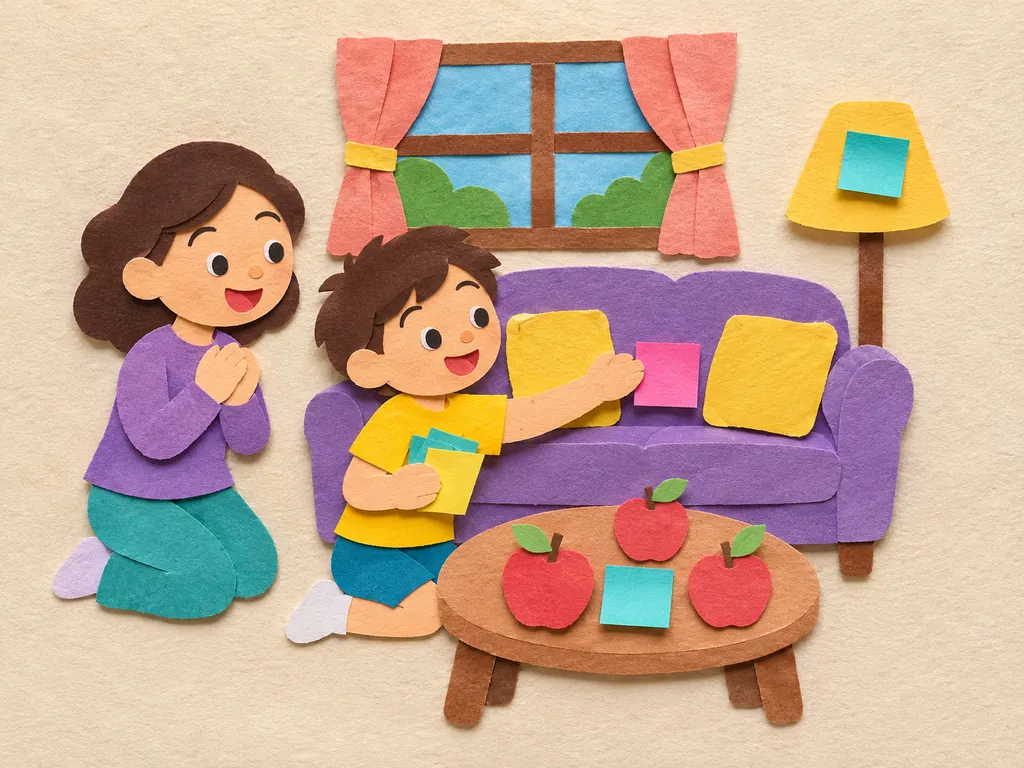
For young children, use objects and movement. Put a toy between two books, then place it among blocks. Let your child move the toy after each instruction. Save the exception for distinct items until later.
Children can sort sentence cards into two groups and explain each choice. Ask for one location sentence and one sharing sentence. Pictures help, but children should explain, “These are separate” or “This is a group.”
Older learners can compare sentences where both words seem possible. Across LearnLink lessons, our tutors ask children to justify each choice instead of counting nouns. Their explanation shows whether they understand the grammar.
Common Between and Among Mistakes
An early mistake is The ball is among the chair and the desk. The chair and desk are separate reference points, so use between. The reverse appears in She stood between the crowd. If the crowd forms one surrounding group, use among.
Children may write between you and I. A preposition takes an object pronoun, so the standard form is between you and me. Compare I found it with Give it to me: the pronoun changes after between too.
The rule “between means two” can mislead. In Talks continued between the four teams, the teams have separate relationships, so between works. Between and Among for Kids: A Practical Guide teaches the beginner rule before adding this exception.
Practice with Between and Among
Read each sentence aloud before your child fills the gap. Request a reason after every answer. “Two clear sides” or “inside a group” matters more than speed. This turns Between and Among for Kids: A Practical Guide into active grammar practice.
Choose Between or Among
1. The cat slept ___ the bed and the desk.
2. The teacher shared the cards ___ four groups.
3. We must choose ___ the red, blue, and green routes.
4. The rabbit was hidden ___ the tall plants.
5. Keep this message ___ you and me.
Answers: 1. between; 2. among; 3. between; 4. among; 5. between.
Sentence 3 uses between because the three routes are distinct choices. Ask your child to identify those options before continuing.
Fix the Sentence
1. The bench is among the gate and the fountain.
2. She found her glove between a pile of coats.
3. This stays between you and I.
4. The sweets were shared between the whole class.
Possible corrections: 1. The bench is between the gate and the fountain. 2. She found her glove among a pile of coats. 3. This stays between you and me. 4. The sweets were shared among the whole class.
For a final check, ask your child to create two examples from the room. One should name two separate reference points; the other should place an object inside a group. Physical examples strengthen recall during later writing.
When a word has several meanings or pronunciations, Cambridge Dictionary is a useful check before turning it into child-friendly examples.
Frequently Asked Questions
Is Between Only Used for Two Things?
No. Teaching between for two things is a sound starting rule for younger children. Yet between can describe three or more people, objects, or choices treated as separate items. Your child can choose between three books because each book is an individual option. Use among when the sentence presents a group.
Can Between and Among Ever Both Sound Possible?
Yes, but the emphasis changes. There was an agreement between the teams highlights separate parties. There was agreement among the teams focuses on a shared view within the group. Between and Among for Kids: A Practical Guide helps your child judge how the sentence presents the teams, not merely count them.
What Is the Easiest Way to Explain Among?
Begin with “inside a group.” Place one coloured pencil among others or hide a small toy among blocks. Then use social examples such as Your child felt welcome among the other learners. The group need not surround someone on every side; the sentence must present a collection instead of separate reference points.
How Can My Child Remember Between You and Me?
Explain that between is a preposition and takes the object pronoun me, not the subject pronoun I. Compare I kept the note with Give the note to me. Remove the other person from the phrase: between I sounds wrong, while between me follows the object-pronoun pattern.
When Should We Teach the Exception to the Basic Rule?
Wait until your child can use between for two clear points and among for a group with little help. Then introduce three distinct choices, routes, or people. Teach one contrasting pair followed by a short explanation; further nuances can wait.
If your child needs steady speaking practice, start small — choose a trial lesson.
Stay updated on our latest tips and resources by following us on Instagram LearnLink.