Seven cartoon types help children learn English: alphabet shows, story cartoons, song-led clips, real-life preschool series, science cartoons, comedy sketches, and subtitled family films. If you searched for cartoongs for kids learn english, ask one practical question: “What language work will this screen time do?” Useful choices offer clean speech, repeated phrases, visible action, plus a reason to answer back. For ages 4-15, cartoons work best as short planned tasks: watch, say something, use the words in play, then stop before passive viewing starts.
Start with the English Your Child Can Hear and Use
Choose cartoons where action shows meaning. A learner should understand “open the door,” “I’m hungry,” or “Where is my hat?” through picture clues, not only translation. Family, school, and adventure scenes often beat fast fantasy plots because words connect with daily life.
For younger learners, look for short turns, slow speech, and clear feelings: happy, sad, scared, proud, sorry. For school-age kids, choose stories with problems and choices: losing a game, helping a friend, sharing toys, or planning a trip. For older learners, animated series, interviews, and short explainers can build natural listening if slang and speed do not hide meaning.
What Makes a Cartoon Good for English Learning?
A strong cartoon repeats language without becoming a drill. Young learners need reusable sentence frames: “Can I have…?”, “I don’t like…”, “Let’s go…”, “It’s too big.” Repetition helps because the child predicts the next line and joins in with less fear.
Speech clarity matters more than accent. Children can learn from British, American, Australian, or other English voices when sound stays clean and scenes show meaning. For multilingual families, that variety helps. Your child may already know one idea can have different English shapes vocabulary; cartoons add sound, rhythm, and social use.
When parents compare cartoongs for kids learn english, the strongest choices show three signs: episodes short enough to rewatch, stories using everyday words, and children able to retell one part after viewing.
Best Cartoon Types by Age and Level
The same show will not serve both a young beginner and a teen who reads well but avoids speaking. Match cartoon to task. Beginners need naming, routines, and songs. Older learners need plot, humour, opinion, and longer listening turns.
Use this practical filter before pressing play: younger beginners often need songs, alphabet clips, animal stories, and simple family routines; growing readers can handle short adventures, school stories, science cartoons, and clear comedy; teens usually need stronger plots, explainers, interviews, subtitled scenes, and discussable topics. At every age, cartoongs for kids learn english should give children words they can say after the clip, not only a story watched silently.
Cartoon and Video Sources That Can Work Well

British Council LearnEnglish Kids is a strong starting point for families wanting songs, stories, and activities made for English learners. English is planned, topics feel familiar, and clips can lead into a small task instead of scrolling.
BBC Learning English suits older children and teens ready for short teaching videos, pronunciation work, and listening practice. For younger children, parents can use gentle public-service programming, such as selected PBS Kids shows, when the child follows the story and the family accepts the cultural setting.
YouTube can help, but adult setup matters. Official YouTube Kids parental controls explain profiles, content levels, search limits, and watch time. For cartoongs for kids learn english, a saved playlist works better than letting the next video choose the lesson.
How to Watch So the Language Sticks
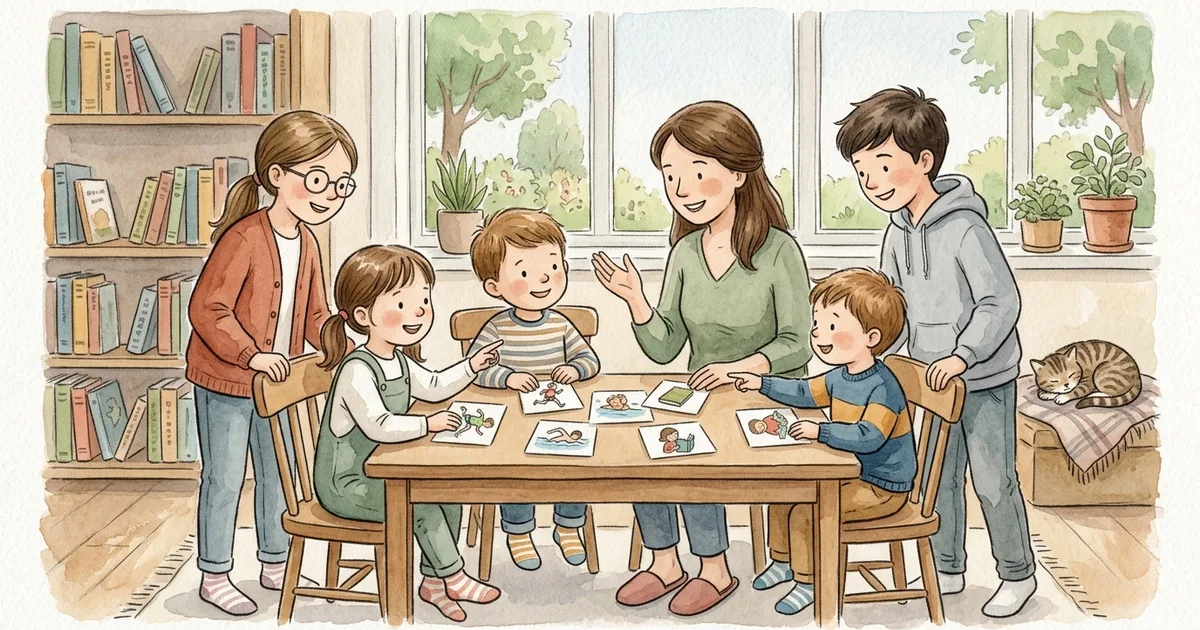
Use a three-step routine: before, during, after. Before watching, teach three words the child will hear, such as “rocket,” “lost,” and “again.” During watching, pause once or twice; too many pauses turn story into test. After watching, ask for one action: say a line, draw the scene, sort picture cards, or tell you who helped whom.
For a younger learner, an answer may be a gesture and one word. For a school-age learner, it can be “The girl is sad because the dog ran away.” For a teen, ask for an opinion: “Was the ending fair?” The goal is not proof of every word. Move one phrase from screen into your child’s speech.
Use Subtitles with Care
Subtitles can help, but the wrong kind turns listening into reading or translation. For beginners, first watch without subtitles if images show meaning. Then replay a short part with English subtitles and point to one phrase matching the sound.
Avoid home-language subtitles as the main habit. They help with plot, but often reduce listening effort. For older children, English subtitles can support spelling, word boundaries, and fast speech. Ask them to copy one short line, then change it: “I can’t find my bag” becomes “I can’t find my pencil.”
Keep Screen Time Active, Short, and Predictable
A cartoon lesson need not run long. Ten focused minutes can beat forty loose minutes. Younger children often learn more from rewatching one short episode than from seeing five new ones. Rewatching lets them catch rhythm and join in.
Set the finish point before the episode starts: “We will watch one story and use three words.” This reduces bargaining and keeps English linked to action. If your child asks for more, save the next episode for another day and reuse today’s words at dinner, bath time, or on the way to school.
Across LearnLink lessons, tutors often use short media-style prompts as a bridge into speaking, not as the lesson itself. The screen gives shared context; the tutor checks meaning, models pronunciation, and draws the child into real exchange. That is why cartoongs for kids learn english work best when viewing leads to a person-to-person response.
Common Mistakes Parents Can Avoid
The first mistake is choosing cartoons only because native-speaking children like them. Popular shows can be too fast, full of jokes, or built on cultural references a new learner misses. Enjoyment matters, but language fit matters more.
The second mistake is asking too many questions after every scene. Children may start seeing English as a quiz. Use light checks: “Show me the red car,” “Say it like the speaker,” or “Was he kind or silly?”
The third mistake is treating cartoongs for kids learn english as a full course. Cartoons support listening, vocabulary, and confidence, but children still need live speech, correction, and guided practice. A child may understand a phrase on screen and still need help using it with a person.
Five-minute Cartoon Speaking Task
Choose a 2-4 minute clip. Before watching, write three target phrases: “Let’s go,” “I need help,” and “Thank you.” After watching, ask your child to act out a new scene with the same phrases. Younger children can use toys; older children can add one extra sentence of their own.
How Cartoons Fit with One-to-one English Lessons

Cartoons give children a low-pressure English model. One-to-one lessons help them answer, ask, repair mistakes, and build speech at the right pace. This matters for children who understand more than they can say, common in multilingual homes.
In a LearnLink lesson for ages 4-15, the tutor can use familiar themes from school, games, animals, stories, or hobbies, then guide the child into speaking. A 25-minute lesson may suit younger learners or new online learners. A 50-minute lesson may suit older children who can focus longer and work through reading, speaking, and vocabulary in one session.
If your family uses cartoongs for kids learn english at home, tell the tutor which shows your child likes and which words keep appearing. That gives the lesson a bridge from home screen time to live conversation. LearnLink supports English learners aged 4-15 and has worked with 3,500+ families.
Data current as of June 2026.
FAQ
Can My Child Learn English Only by Watching Videos?
Videos can build listening, word memory, and confidence, but they are not enough alone. Children need to answer real people, make choices with words, and receive gentle correction. Use screen input, then add speaking: repeat a line, describe a picture, role-play a scene, or discuss the story with a tutor or parent.
How Often Should We Use Short Videos for English Practice?
For most children, three or four short sessions a week beat long daily viewing. Keep the routine tight: one short clip, three words or phrases, one speaking task. If your child feels tired, stop after viewing and reuse the words later in play or family talk.
Should We Choose British or American English Materials?
Either can work. Ask whether speech is clean, story easy to follow, and words fit your child. International children may hear different English accents over time. That can be healthy if first materials are not too fast or slang-heavy.
What If My Child Understands the Video but Will Not Speak?
Do not force a full answer too soon. Start with low-risk output: pointing, choosing, repeating one word, or finishing a familiar line. Then move to short frames such as “I like…” or “He is…” Some children need repeated listening before speech comes. A live tutor can turn quiet understanding into speaking practice.
What Are Good Search Terms Besides Cartoongs for Kids Learn English?
Try searches such as “English videos for kids,” “ESL stories for beginners,” “English stories for children,” “phonics videos,” or “English listening for kids.” Check the clip before your child watches. Look for short length, clean sound, everyday words, and a task you can do afterwards. Cartoongs for kids learn english should lead to speech, not only watching.
A short one-to-one lesson can show what level and pace fit your child — book a free English lesson.
Stay updated on our latest tips and resources by following us on Instagram LearnLink.