Dairy Products Vocabulary for Kids
Dairy Products Vocabulary for Kids covers words for milk, cheese, yogurt, butter, and related foods. Children can learn familiar items, package terms, and phrases such as “a slice of cheese” and “Is there any milk?” The goal is to recognise each word, say it in a short sentence, and use it during meals, shop games, or online lessons. Choose foods your child knows, and present regional words as additions, not corrections.
Core Dairy Words and Phrases
Build Dairy Products Vocabulary for Kids in groups. Teach foods your child sees at home or in local shops before unfamiliar items. Link each word to an object, picture, taste, or meal.
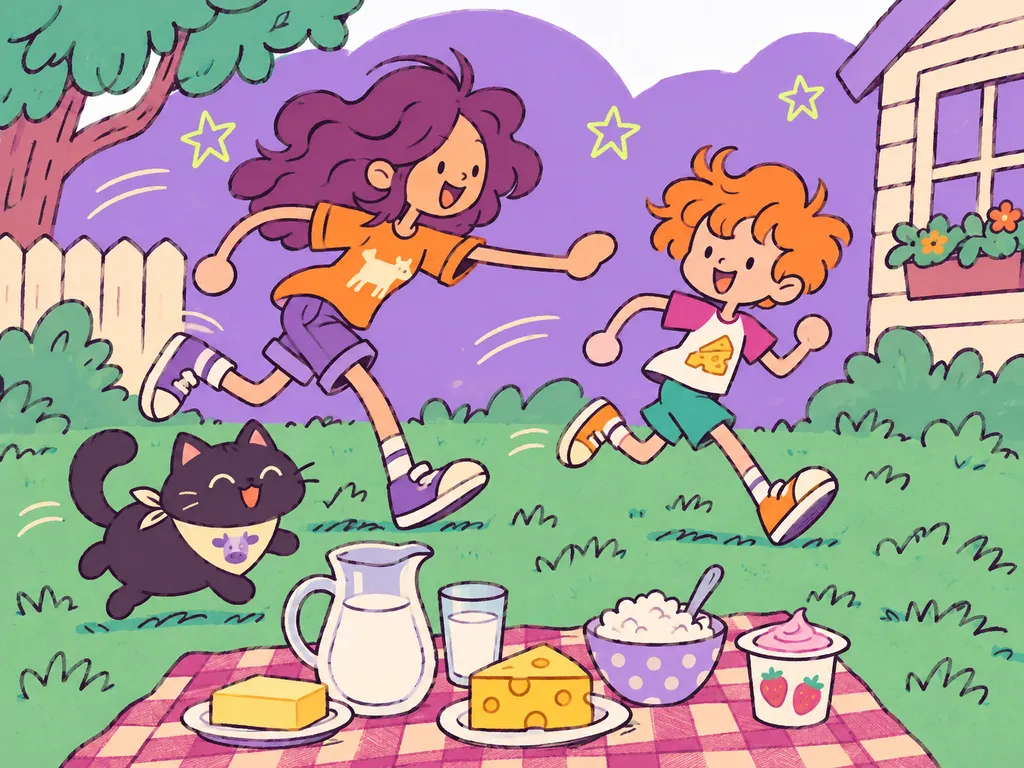
milk, whole milk, skimmed milk, cream, whipped cream.
butter, ghee, buttermilk.
yogurt or yoghurt, Greek yogurt, kefir, sour cream.
cheese, cheddar, mozzarella, feta, paneer, cottage cheese, cream cheese.
milkshake, ice cream, frozen yogurt, custard.
condensed milk, powdered milk.
a carton of milk, a bottle of cream, a tub of yogurt, a slice of cheese, a block of cheese, a scoop of ice cream.
Teach compound words as complete chunks. Buttermilk is one product name, not an instruction to mix butter and milk. Keep package phrases together: children buy a tub of yogurt, not a yogurt tub when referring to its contents.
Using Dairy Words in Context
Short sentences turn recognised words into spoken language. Start with repeatable patterns: “I like cheese,” “This is a carton of milk,” “We need butter,” and “The yogurt is in the fridge.” Keep the grammar stable and change one food word.
Practise questions and choices: “Would you like milk or water?”, “What kind of cheese is this?”, “How much yogurt do we need?”, and “Is this dairy-free?” The questions combine food terms with requests, quantities, and label reading.
Older children can describe texture and taste: “The cream is thick,” “This cheese tastes salty,” or “The yogurt is smooth.” They can explain purpose: “Mozzarella goes on the pizza” or “We use butter for baking.” These sentences teach meaning without a translation test.
How to Introduce the Vocabulary
To introduce Dairy Products Vocabulary for Kids, choose four to six familiar items. Show a package, toy food, or picture. Say the word, invite repetition, and add a short phrase such as “cold milk” or “a slice of cheese.”
Follow three steps: recognise, name, and use. Ask, “Where is the yogurt?” Next show it and ask, “What is this?” Finish with: “I have a tub of yogurt.” A child may recognise ten words before saying all ten. This gap is normal.
Multilingual children may link each English term to two or more known words. Encourage those connections. Add an English label and phrase without replacing the home-language word. When foods differ across cultures, compare the products without presenting one version as standard.
Activities for Different Ages
Adapt the same words to each learning stage. Younger children benefit from movement, matching, and repetition. Older learners can classify products, read labels, plan menus, and explain choices.
Keep activities brief enough to finish carefully. Revisit the words through a new task. A shop game, fridge search, and menu challenge practise different skills with the same vocabulary.
Simple Practice at Home and in Lessons
Frequent practice makes Dairy Products Vocabulary for Kids easier to recall. Ask your child to find three products in a picture, draw and label a meal, or sort package terms such as carton, tub, and block. Across LearnLink’s online English lessons for children, our tutors can adapt similar tasks to each learner’s age and speaking confidence.
Build the Dairy Basket
Write these words on separate cards: milk, butter, apple, yogurt, bread, cheese, cream, rice, kefir, and carrot. Ask your child to put only the dairy words in a pretend basket. Choose three basket items and make one sentence for each, such as “The cheese is soft.” For an extra challenge, add the correct package phrase to every item.
Try a one-minute menu. Your child chooses a breakfast, snack, or café order and names its dairy items. The real or imagined meal need not match family habits, provided the child can name and describe each chosen food.
Common Mistakes to Correct Gently
Milk, butter, and cheese are uncountable when discussing food in general. Children say “milk” or “cheese,” not “a milk” or “three cheeses.” In cafés, “two milks” may informally mean two servings. Teach the general pattern before the service phrase.
Yogurt and yoghurt are standard spellings in different English varieties. A schoolbook’s choice does not make the other wrong. Children should recognise both and use one form consistently in their writing.
Distinguish dairy from diary through sentences: “Cheese is a dairy product” and “I write in my diary.” Keep dairy-free and lactose-free separate because their meanings differ. Children should check labels instead of guessing. When tasting is unsuitable, use pictures or clean empty packages.
- Model the correct word once, then invite your child to repeat it.
- Sort six dairy picture cards into milk, cheese, and yogurt groups.
- Read one food book aloud and gently point to each dairy item.
- Play a three-clue guessing game using color, texture, and container words.
- Praise clear attempts, then recast mistakes naturally without interrupting the conversation.
When a word has several meanings or pronunciations, Cambridge Dictionary is a useful check before turning it into child-friendly examples.
Frequently Asked Questions
How Many Dairy Words Should a Child Learn at Once?
For Dairy Products Vocabulary for Kids, begin with four to six words from your child's life, such as milk, cheese, yogurt, and butter. Add two or three after the first set feels easy in pictures and sentences. A small working set beats a long list practised once.
Should Children Learn Different Regional Words and Spellings?
Teach your family’s word first. Then introduce another regional form, such as yogurt and yoghurt, or a local name for a familiar cheese. Explain that both may be correct. Multilingual children can then recognise variation without viewing home language or regional English as wrong.
Is Ice Cream Always a Dairy Product?
Ice cream belongs to the dairy group when made with milk or cream, but plant-based versions exist. Teach your child to check the product name and label instead of judging the picture. In vocabulary practice, “ice cream” remains a practical food phrase.
How Can a Child Practise If They Do Not Eat Dairy?
Use pictures, toy food, menus, or clean empty packages instead of tasting. Teach dairy terms for comprehension, then add dairy-free, oat drink, or plant-based yogurt when relevant. For allergies, follow product labels and guidance from your child's healthcare professional.
If your child needs steady speaking practice, start small — choose a trial lesson.
Stay updated on our latest tips and resources by following us on Instagram LearnLink.