Desserts and Sweets in English for Kids
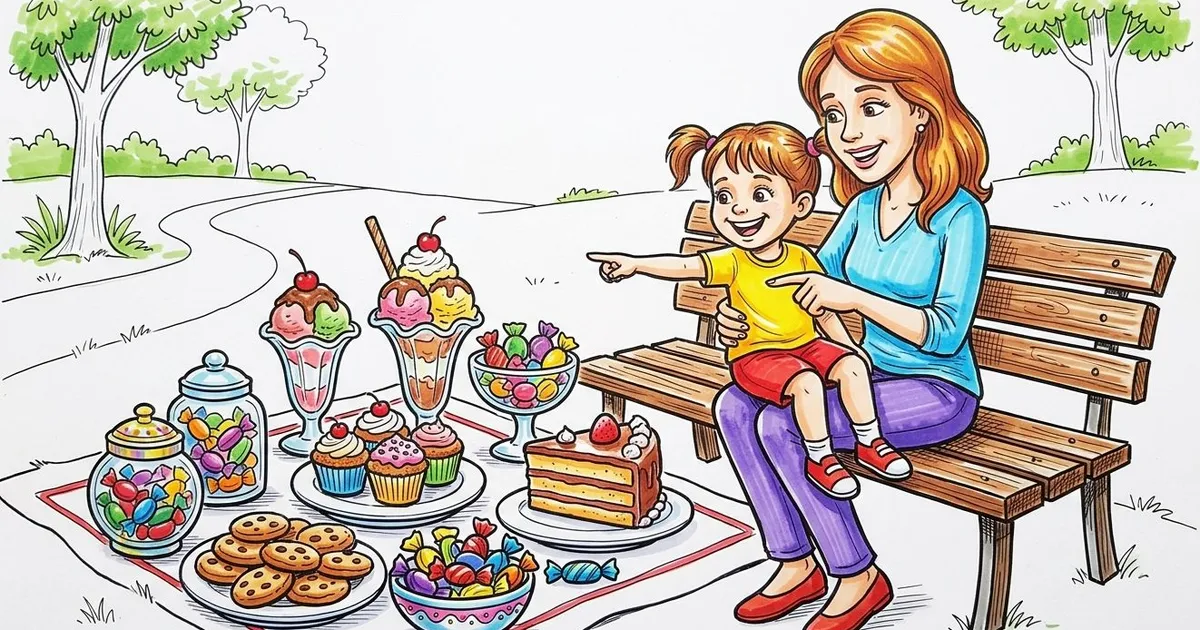
Desserts and Sweets in English for Kids: Words and Activities teaches food nouns, flavours, quantities, and polite requests. Begin with familiar words such as cake, ice cream, and chocolate, then build short sentences. A child should recognise each word, pronounce it clearly, and use it in a phrase. Families can adapt the examples and games to desserts eaten at home.
📥 Desserts and Sweets: Practice Sheet
Vocabulary, international word choices, and useful sentences
Leave your email — we'll send the PDF to your inbox.No spam — the PDF plus one short reminder. Unsubscribe anytime.
Practical Vocabulary for Desserts and Sweets
Begin with words your child can see, draw, or act out. This guide to Desserts and Sweets in English for Kids: Words and Activities groups vocabulary by type for easier comparison and recall.
Children need not learn every word immediately. For school-age kids, choose five familiar items and two flavours. Older learners can add ingredients, textures, and cooking verbs such as mix, bake, melt, and freeze. Include local foods: keep the original name, explain the dish, and use it in an English sentence.
Words That Change Across Countries
Words can differ between varieties of English. Children may hear one form at school and another in a video or game. Teach both without treating either as the sole correct choice.
Model contrasts in sentences: “We had fruit for dessert,” “He bought some sweets,” and “This video calls them candy.” Multilingual children may know that one object can have different names. That experience supports learning.
Putting the Words into Useful Sentences
Nouns stick when used in short patterns. The Desserts and Sweets in English for Kids: Words and Activities theme builds phrases for preferences, descriptions, offers, and quantities.
Practise “I like chocolate,” “I don’t like mint,” “The cake smells sweet,” and “There are three biscuits.” Polite exchanges include “Would you like some cake?”, “Yes, please,” “No, thank you,” and “Could I have a small piece?” These phrases fit birthdays, cafés, and family meals.
Children can compare foods: “Sorbet is colder than cake,” “The lemon tart is sour and sweet,” or “This biscuit is crisp, but the brownie is soft.” Older learners can give reasons: “I would choose fruit yoghurt because it is light and not too sweet.” Focus on the explanation, not the food chosen.
Build a Dessert Sentence
Choose one item, one flavour, and one describing word. Say: “The strawberry ice cream is cold and creamy.” Change one part and repeat the new sentence aloud.
How to Introduce the Vocabulary
Show meaning before expecting accurate speech. Use packaging, toy food, family photographs, or clear drawings. Point to an item, name it, and make a short sentence. Ask your child to find, sort, or match it. Recognition comes before recall.
Teach small sets across multiple days. Start with cake, pie, ice cream, chocolate, and fruit. Review them the next day before adding custard and sorbet. Desserts and Sweets in English for Kids: Words and Activities works best when vocabulary returns through varied games instead of one long drill.
Keep cultural context open. Families may serve sweet soup, rice pudding, fruit, cheese, pastries, or no dessert. Ask, “What sweet foods do people eat in our family?” Older children can describe celebration food without translating its name: “It is made with rice, milk, and spices.”
Activities for Different Ages
For school-age kids, combine movement with pictures. Place food cards around the room and say: “Touch the cake,” “Find the yellow ice pop,” or “Put the biscuit beside the chocolate.” End after a few successful rounds. Short, repeated play beats a long test.
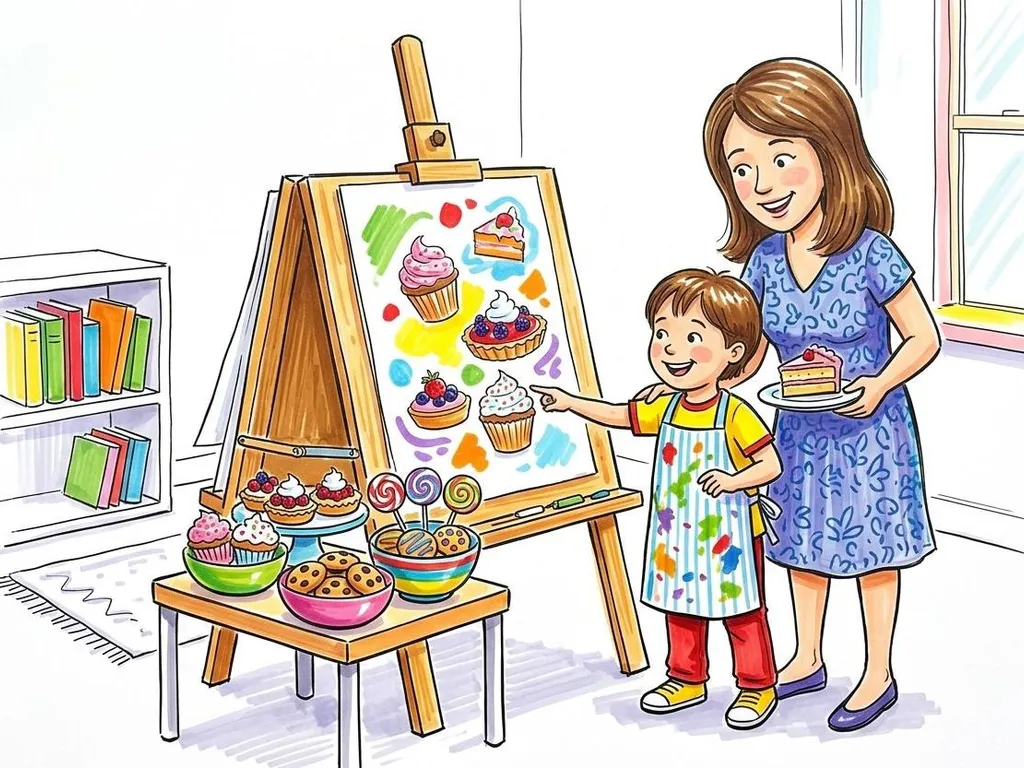
For school-age kids, create a pretend dessert shop. One child orders while another serves. Add a menu with flavours and sizes; omit prices if arithmetic distracts from English. Practise “What would you like?” and “I’d like a small vanilla ice cream, please.” Then switch roles.
For school-age kids, assign classification and opinion tasks. Learners can group foods by ingredient, texture, temperature, or preparation. They can design a balanced party menu, compare desserts from several countries, or record a short review with words such as crisp, smooth, rich, and mild.
Simple Practice at Home
Practise dessert vocabulary during daily routines. At a shop, ask your child to find three flavour words. While cooking, say “Add the fruit,” “Mix the yoghurt,” or “Put the bowls on the table.” Adults must handle hot surfaces, sharp tools, and allergy checks.
Try a memory game. Place six picture cards face down, with two cards for each food. Players turn over two cards and name both foods. A matching pair stays face up. For extra challenge, require a sentence before the player keeps the pair.
Finish with retrieval. Hide the cards and ask, “Which desserts can you remember?” Accept a drawing, gesture, or partial beginner answer, then model the full phrase. LearnLink tutors follow the same progression: recognition, guided speech, and independent use.
Two-minute Menu Challenge
Draw a menu with one baked dessert, one cold dessert, and one fruit option. Your child orders two items in complete sentences and explains one choice.
Common Mistakes and How to Correct Them
Children may treat “I like cake” and “I like cakes” as identical. The first refers to cake in general; the second can mean different kinds or individual cakes. Correct lightly by repeating the intended form in a natural reply without interrupting the conversation.
Another difficulty is choosing some or a. We say “some ice cream,” “some chocolate,” and “a piece of cake,” but “a biscuit” and “a lollipop.” Demonstrate with objects or drawings. One whole item can take a; food treated as a mass often takes some.
Pronunciation needs attention. In dessert, stress falls on the second part: “di-ZURT.” The word desert has a different sound and meaning. Desserts and Sweets in English for Kids: Words and Activities prioritises clear communication, so correct one feature at a time.
- Practice five dessert words with children ages six to eight after dinner.
- Use picture cards to correct three pronunciation errors during a ten-minute game.
- Read one illustrated recipe book and repeat each sweet’s name twice aloud.
- Sort eight food pictures into desserts and non-desserts, explaining every correction.
- Try a bakery role-play, prompting complete sentences instead of single-word answers.
When a word has several meanings or pronunciations, Cambridge Dictionary is a useful check before turning it into child-friendly examples.
Frequently Asked Questions
How Many Dessert Words Should a Child Learn at Once?
School-age kids can work with about five familiar words in one activity. Older children may learn more, depending on attention, prior English, and word similarity. Add vocabulary after your child recognises most of the earlier set. Review through sentences and games, not list recitation.
Should My Child Learn “Sweets” or “Candy”?
Teach the form your child will hear most, then present the regional alternative. “Sweets” is common in British English, while “candy” is common in American English. Both are widely understood. Compare them once: “Some people say sweets, and some people say candy.” Do not replace a correct form.
Can Dessert Vocabulary Work for a Beginner?
Yes. Desserts and Sweets in English for Kids: Words and Activities suits first-time online learners because pictures and objects show the nouns clearly. Begin with listening and pointing, then progress to one-word answers and patterns such as “I like cake.” Multilingual children may compare names across languages, but English remains the goal.
How Can We Practise Without Encouraging Children to Eat More Sweets?
Use drawings, cards, toy food, menus, and photographs instead of edible rewards. Include fruit, yoghurt, and celebration foods to reflect real choices. Focus activities on sorting, describing, ordering, and comparing. With real food, adults should consider allergies, family rules, and each child’s health needs.
A short one-to-one lesson can show what level and pace fit your child — book a trial English lesson.
Stay updated on our latest tips and resources by following us on Instagram LearnLink.