Fairy Tale Words in English for Kids

A 15-minute lesson can introduce six to eight fairy tale words through pictures, gestures, and a short story. Fairy Tale Words in English for Kids: Vocabulary and Activities groups characters, places, objects, actions, and linking phrases. Start with visible or actable words such as castle, dragon, crown, and escape. Add three phrases that connect events: once upon a time, suddenly, and in the end. Reuse the set in two activities so each word becomes part of a story your child can understand and retell.
📥 Fairy Tale Word Quest
Vocabulary, context, and recall practice for young storytellers
Leave your email — we'll send the PDF to your inbox.No spam — the PDF plus one short reminder. Unsubscribe anytime.
Core Word Groups
Teach fairy tale words in meaningful groups. Show character nouns in pictures and action verbs through gestures. Place and object words build scenes, while story phrases connect the beginning, problem, and ending.
Use Fairy Tale Words in English for Kids: Vocabulary and Activities as a flexible bank, not a test. A five-year-old might learn fairy, castle, and fly. A nine-year-old can compare a brave knight with a clever princess. A teenager can discuss why a character broke a promise or whether an ending was fair.
Putting the Words into Context
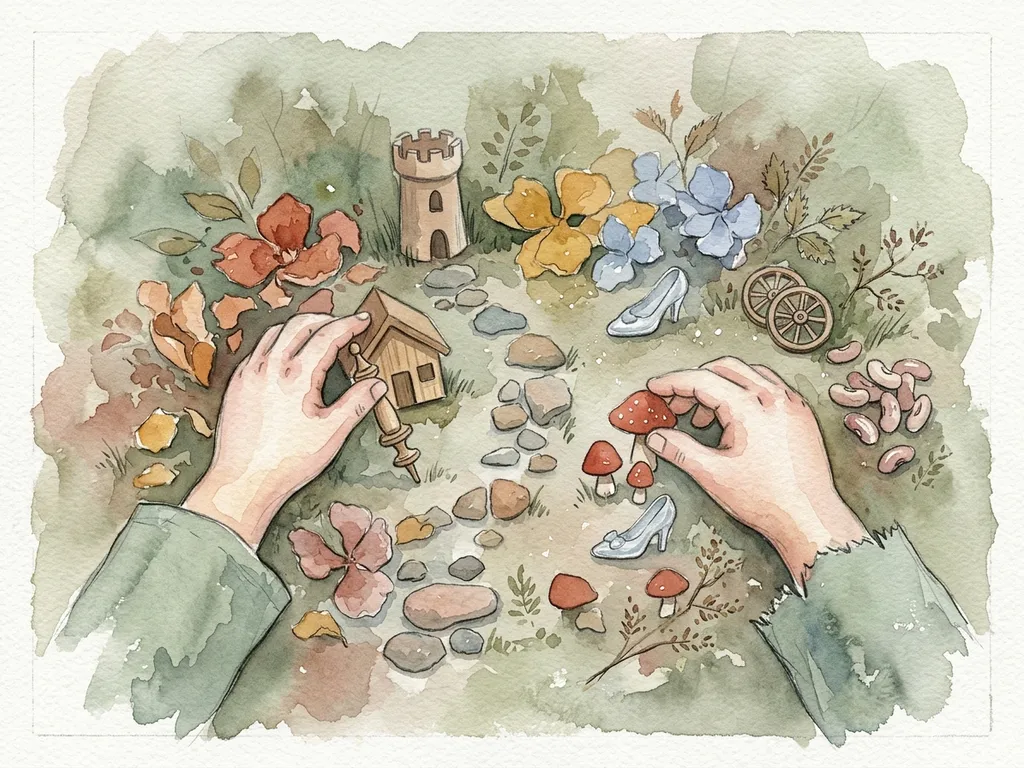
A word gains meaning in a sentence your child can picture. Begin with a fixed pattern: “The dragon is in the cave.” Change one part: “The treasure is in the cave” or “The dragon is behind the tower.” The grammar stays steady while vocabulary changes.
Use the pattern with actions and descriptions: “The brave child opens the hidden door.” Ask your child to replace one word with closes, magical, or window. Fairy Tale Words in English for Kids: Vocabulary and Activities provides controlled choices, helping learners create sentences without facing a blank page.
For retelling, provide a frame: “Once upon a time, there was…” “One day…” “Suddenly…” “In the end…” Younger children can complete each line with a word or drawing. Older learners can add reasons and consequences: “The knight entered the forest because the map showed a hidden tower.”
Activities That Fit Each Age
Choose tasks by attention span, reading skill, and speaking confidence. Age is a guide, not a limit. A multilingual child may understand complex story ideas but need short English sentence frames.
Set the challenge just above what your child can do alone. Across LearnLink lessons, our tutors use pictures and sentence frames with beginners, then withdraw support as learners progress. At home, follow this sequence: show, practise together, then request an independent response.
Practice That Builds Recall
Short sessions across different days improve recall more than one long session. Choose a small set, say each word aloud, and revisit it in new tasks. First, sort pictures into characters, places, and objects. Next, hide and describe them. Later, use the words in a spoken or written tale.
Fairy Tale Words in English for Kids: Vocabulary and Activities can connect with your family’s languages. Compare words that look or sound alike, then check their meaning in the English sentence. Your child may plan a story in a stronger language before telling a short English version. Existing knowledge supports learning without word-for-word translation.
Build a Tale in Five Turns
Choose one character, place, object, problem, and ending. Take turns adding sentences with one target word each. After the ending, mix the choices and retell the story. Younger children may draw each part; older learners can add dialogue or explain a character’s choice.
Finish with retrieval practice. Place word cards face down and ask your child to define, draw, act out, or use each word. When a word is forgotten, offer a clue before the answer: “It is a place,” “It is made of gold,” or “A queen may wear it.”
Common Mistakes to Avoid
Word lists without stories are hard to use. Group vocabulary, teach a manageable set, and revisit familiar words in later sessions. Do not request spelling before your child can recognise and say the word. Beginners should understand castle in a picture and sentence before writing it from memory.
Do not correct every storytelling error. If your child says, “The dragon go to castle,” model the natural form: “Yes, the dragon goes to the castle.” Correct directly when an error blocks meaning or the lesson targets one language point. Frequent interruptions turn speaking practice into a grammar test.
Choose tales carefully. Stories span cultures, so children may not know the same characters or endings. Explain unfamiliar ideas instead of assuming shared knowledge. Check frightening scenes, old gender roles, and words such as wicked or ugly. Older children can examine these choices; younger children may need a gentler retelling.
- Choose one familiar fairy-tale book for children aged five to seven.
- Practice six new fairy tale words aloud before reading together.
- Use picture cards to review characters, settings, and magical objects.
- Ask three simple questions without correcting every pronunciation mistake immediately.
- Repeat the activity twice this week, keeping each session under fifteen minutes.
When a word has several meanings or pronunciations, Cambridge Dictionary is a useful check before turning it into child-friendly examples.
Frequently Asked Questions
How Many Fairy Tale Words Should My Child Learn at Once?
Choose a set your child can encounter repeatedly in one activity. Younger beginners may use a few picture words; confident readers can manage a larger group with phrases and verbs. Fairy Tale Words in English for Kids: Vocabulary and Activities works when new items return in sentences, games, and retelling. Add words after your child recognises most of the current set without prompts.
What If My Child Understands a Story but Will Not Speak English?
Reduce the speaking demand. Let your child point to a picture, choose between two words, or complete a sentence’s final word. Progress from “dragon” to “a green dragon,” then to “The green dragon is hiding.” Small responses create a safe entry into speech. Wait until key words feel familiar before requesting a full retelling.
Which Fairy Tales Are the Child for Vocabulary Practice?
Choose a tale with a defined sequence, repeated language, and supportive pictures. Match the story to your child’s interests and tolerance for danger or suspense. Familiar tales support prediction; stories from different cultures expand settings and characters. Read each version first because its language, message, and detail may differ.
Should I Translate Every New Fairy Tale Word?
No. Explain meaning through a picture, gesture, object, definition, or sentence. Translate when a word is abstract, confusion persists, or a brief explanation keeps the story moving. Multilingual children can compare related words across languages. Aim for accurate understanding and flexible use, not English-only learning.
- Start with six to eight words that your child can see, draw, or act out.
- Practice each word in a short sentence before asking for a full retelling.
- Try the same vocabulary again on another day through cards, gestures, or a new ending.
If your child needs steady speaking practice, start small — choose a trial lesson.
Stay updated on our latest tips and resources by following us on Instagram LearnLink.