How Kids Can Start Learning English
How kids can start learning English is straightforward: use practical words, brief daily practice, spoken answers, and age-appropriate material. A five-year-old may begin with songs, actions, and phrases such as “My turn”; a twelve-year-old may prefer games, short videos, and hobby conversations. Skip long grammar lectures on day one. Give English a purpose: choosing a snack, describing a picture, or sending a voice message. This guide offers an age-based starting plan, focused practice, and correction that protects speaking confidence.
📥 My English Start-at-Home Practice Sheet
Short routines and useful language for every age
Leave your email — we'll send the PDF to your inbox.No spam — the PDF plus one short reminder. Unsubscribe anytime.
What Families Need to Know
Start with a small outcome that matters to your child. “Name five animals” beats “learn more vocabulary.” “Ask for a drink” gives more direction than “study questions.” One reachable goal guides your choice of words, activities, and review.
How kids can start learning English depends on age, interests, and previous language contact. A complete beginner needs meaning, repetition, and response time. A child who understands basic English needs richer questions and more speaking opportunities.
Other home languages are assets, not obstacles. A multilingual child may compare words or borrow one while thinking. Accept the idea, then supply the English phrase: “Yes, you want the blue cup. Say, ‘The blue cup, please.’”
Build a Short Home Routine
For families deciding how kids can start learning English, regular contact matters more than an ambitious plan that quickly stops. Aim for ten to fifteen minutes on most days. Finish while your child has energy instead of pushing through frustration.
A session can follow four steps:
- Greet each other and recall two familiar phrases.
- Introduce one short song, picture, story, or video.
- Use three to five target words in a game or conversation.
- Finish with one question your child can answer successfully.
Keep the routine flexible. On busy days, name objects while setting the table or describe clothes while getting ready. Older children can record a short voice note about their day. Prioritise active use over background English audio.
Examples by Age
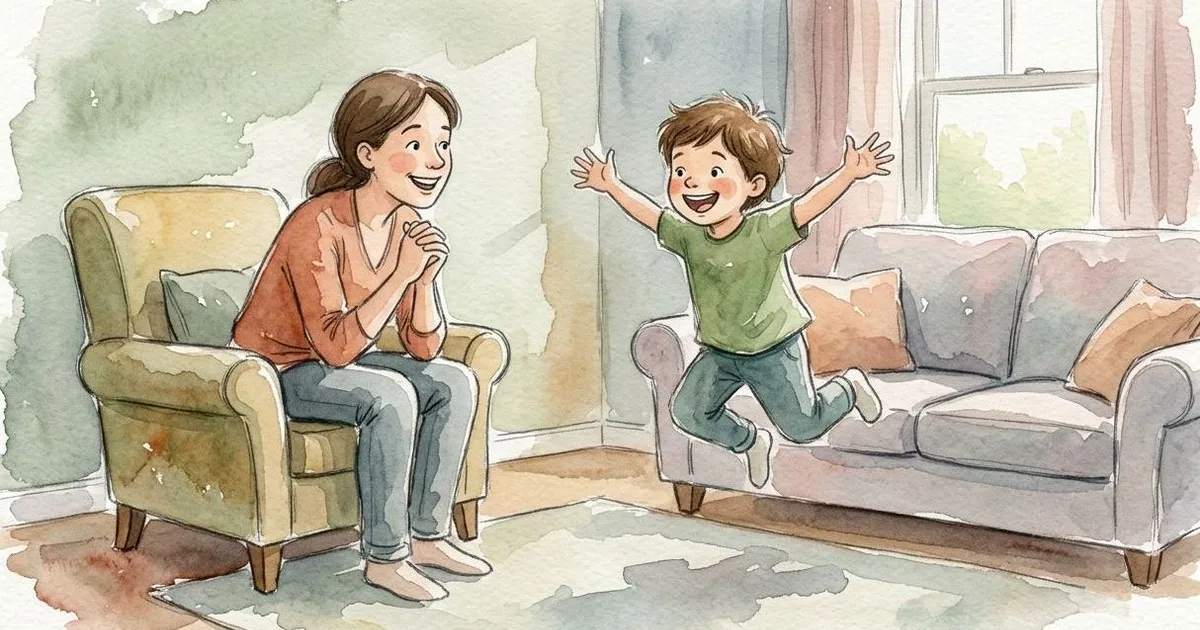
Different ages can explore the same theme at different depths. With food, a young learner might say “apple” and “I like apples.” An older learner might compare meals, explain a preference, or write a short recipe.
How kids can start learning English is easier to judge when the task matches the child’s stage:
Balance Listening, Speaking, Reading, and Writing
Beginners need understandable English before using it independently. Pair speech with a picture, object, gesture, or action. Instead of translating each line, hold up a pencil and ask, “Is this a pencil or a book?”
Invite speech without demanding long answers. A child can point, choose, repeat, or complete a sentence before producing one alone. Reading may begin with labels, sound-letter links, and short patterned books. Writing can start by copying one phrase and changing a word.
Teach grammar through examples before stating the rule. Show “I am tired,” “She is tired,” and “They are tired.” Ask what changes. After the child notices the pattern, explain that the verb be changes to match the subject.
Quick Grammar Check
Complete the sentences with am, is, or are: “I ___ seven.” “My shoes ___ wet.” “The dog ___ under the table.” Answers: am, are, is.
Practical Activities That Use Real English
How kids can start learning English becomes evident when each activity has a purpose. Use a toy shop to practise “How much?”, a treasure hunt for positions, or a family menu for “I would like.” Change the words while retaining the sentence frame.
Choice supports reluctant speakers. Ask, “Do you want to draw or act?” instead of “Do you want to study English?” For older children, place the same language goal within their interests: animals, sport, music, games, science, or cooking.
Picture Detective
Choose a busy picture. Take turns asking three questions: “What can you see?”, “Where is the cat?”, and “What is the boy doing?” A beginner may give one word; a stronger learner should use a full sentence.
Change the Sentence
Start with “I play tennis on Saturday.” Change one part at a time: person, activity, or day. Try “She plays chess on Friday” and “We read comics on Sunday.” Ask why play becomes plays.
Recognize Progress and Correct Mistakes

Track achievements, not only errors. Signs include answering a familiar question unaided, understanding a new instruction from context, or using an old phrase in a new situation. Save a brief monthly sample, such as a voice note or short paragraph.
Correct selectively. When confident speaking is the goal, respond to the message and model the correct form: Child: “He go school.” Adult: “Yes, he goes to school at eight.” Request repetition when the activity targets that form, but avoid interrupting every sentence.
LearnLink tutors adjust questions, pace, and support to each learner. Families can do likewise: make a task easier after repeated struggle or add one small challenge when answers become automatic.
- Try a five-minute picture-book read with children aged five to seven.
- Record three new words weekly and celebrate each correctly used word.
- Use gentle recasts: repeat your child’s sentence correctly without interrupting conversation.
- Practice one recurring mistake through two playful examples after each activity.
- Compare monthly recordings to show how kids can start learning English confidently.
When a word has several meanings or pronunciations, Cambridge Dictionary is a useful check before turning it into child-friendly examples.
Frequently Asked Questions
What Is the First Step for a Complete Beginner?
How kids can start learning English at home begins with ten practical words and two or three sentence frames from daily life. Choose toys, food, or family. Practise “I like ___,” “This is ___,” and “Where is ___?” Objects and pictures convey meaning without long explanations.
How Much English Practice Should a Child Do Each Day?
Ten to fifteen focused minutes suits most families. Younger children may complete two five-minute activities; older children may manage a longer task. Follow attention and mood, not only the clock. Brief sessions combining listening, speaking, and recall beat long passive viewing.
Should We Correct Every English Mistake?
No. Correct errors that match the day’s goal or affect meaning. During storytelling, frequent interruptions break the flow. Repeat the sentence correctly and continue. During a grammar exercise, pause and request another attempt. Correction stays focused without turning conversation into a test.
Can I Help If I Do Not Speak English Confidently?
Yes. Set the routine, choose suitable material, listen together, and praise steady effort. Use audio from a confident speaker when pronunciation is uncertain. Check unknown answers together. A tutor supplies a reliable language model; the family provides regular practice and encouragement between lessons.
When Should Children Begin Grammar and Writing?
Basic grammar can begin once a child uses short sentences, but it should explain familiar language. Young learners can sort examples or notice word changes without learning numerous labels. Writing can progress from names, labels, and copied phrases to messages, descriptions, and paragraphs as reading and hand control develop.
Want to see how these ideas work in a real lesson — try a LearnLink trial lesson.
Stay updated on our latest tips and resources by following us on Instagram LearnLink.