Help Children Overcome Fear of Public Speaking
How to Help Children Overcome Their Fear of Public Speaking: A Practical Guide for Families follows one rule: make speaking challenges smaller, not scarier. Children who fear an audience need brief, predictable speaking opportunities, not a sudden push onto a stage. Follow each attempt with calm, specific feedback. Start with one trusted listener, practise the opening sentence, and build confidence through repetition. Whether your child is 5 or 15, the goal is not to eliminate nerves but to help them speak while anxiety remains manageable.
What Fear of Speaking Can Look Like
Children may say, “I am scared,” avoid eye contact, whisper, forget familiar words, report a stomach ache, or become silly before speaking. A multilingual child may speak freely at home yet freeze in a less familiar language. Neither response means laziness or poor knowledge.
How to Help Children Overcome Their Fear of Public Speaking: A Practical Guide for Families separates fear from ability. Name the feeling without defining the child by it: “Your body is telling you this feels risky,” instead of “You are shy.” Then ask how to make the task one step easier.
Create Safety Before Building Confidence
At home, How to Help Children Overcome Their Fear of Public Speaking: A Practical Guide for Families replaces surprise performances with preparation. Explain who will listen, where the child will stand, how long the talk lasts, and what follows. Predictability reduces pressure.
Offer choices within a firm plan. The child may sit or stand, hold a picture, speak first or second, or record a message before presenting live. Choice provides control without letting fear eliminate speaking.
Respond steadily. Do not tease, compare siblings, or promise, “There is nothing to worry about.” Say: “It makes sense that your heart is beating fast. Let’s practise the first line together.” This accepts the feeling and prompts action.
Use a Gradual Speaking Ladder at Home
Move from low-pressure practice to harder tasks. Stay at each step until discomfort becomes manageable, then advance. If distress rises, reduce the step instead of abandoning the routine.
- Speak alone: say two prepared sentences to a mirror, toy, pet, or voice recorder.
- Add one listener: repeat the same sentences to a parent, sibling, or trusted adult.
- Add a small group: speak during a family meal or a video call with two familiar people.
- Try the real setting: answer in class, introduce a group activity, or give a short prepared talk.
Repeat familiar material as the audience grows. Do not combine new words, a new room, and new listeners. In LearnLink lessons, our tutors use short one-to-one speaking turns, letting children rehearse an idea before addressing a larger group.
Match Practice to Your Child’s Age
For families using How to Help Children Overcome Their Fear of Public Speaking: A Practical Guide for Families, age changes the practice format, not the method. Younger children need play and short turns. Older children can plan content, examine thought patterns, and rehearse likely questions.
Choose familiar topics: a game, family tradition, animal, book, sport, or local celebration. Familiar content leaves attention for voice, pace, and eye contact. Let multilingual children plan ideas in a known language, then select the words required for the speaking task.
Practise the Skills Behind a Calm Presentation
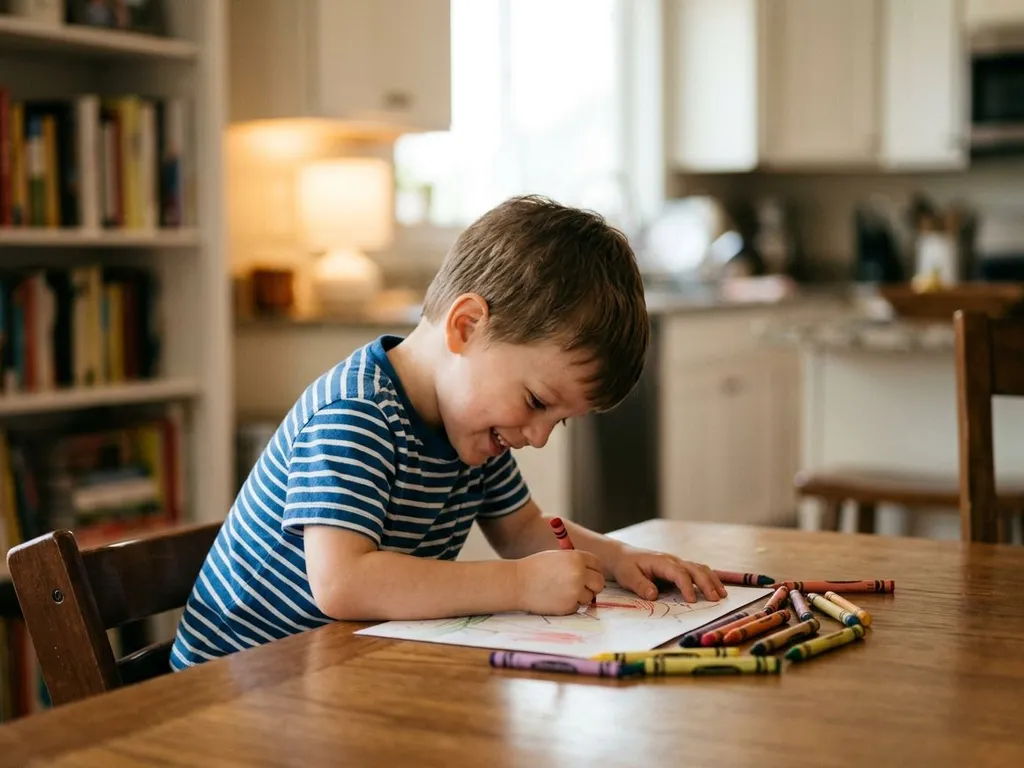
Public speaking combines breathing, posture, volume, pace, opening lines, and recovery. Practise each skill separately. A child who loses their place can pause, check a prompt card, and say, “Let me start that sentence again.” Recovery is a skill, not failure.
The One-minute Family Talk
Choose a familiar object. Give your child 30 seconds to prepare three points: what it is, why they chose it, and one detail. They speak for up to one minute while one person listens. The listener names one strength and asks one friendly question. Repeat later with two listeners.
Keep feedback narrow and factual: “I heard every word,” or “Your pause helped me follow the story.” Skip long lists of faults. Choose one next step, such as slowing the first sentence. How to Help Children Overcome Their Fear of Public Speaking: A Practical Guide for Families turns encouragement into focused coaching.
Support Progress Without Adding Pressure
Praise preparation and courage, not personality. “You practised twice and finished your talk” identifies repeatable actions better than “You are a natural speaker.” Do not make applause, prizes, or perfect delivery conditions for success.
Track small gains: sufficient volume for one listener, using a prompt card without stopping, or answering one question. Progress may dip after illness, a school change, or a difficult presentation. Return to an easier step, rebuild familiarity, and retry.
- Try rehearsing one 30-second introduction with your child after dinner tonight.
- Praise one specific strength, then ask which part felt easiest to share.
- Use a favorite picture book to practice speaking slowly for two minutes.
- Let children ages six to ten choose the audience and stopping point.
- Celebrate completion with a sticker, avoiding scores, comparisons, or repeated corrections.
When a word has several meanings or pronunciations, Cambridge Dictionary is a useful check before turning it into child-friendly examples.
Frequently Asked Questions
What Should I Do If My Child Refuses to Practise?
Reduce the demand and offer two manageable choices: record one sentence or say it behind a partly open door. How to Help Children Overcome Their Fear of Public Speaking: A Practical Guide for Families works when adults maintain the routine while adjusting each step. Avoid threats, public bargaining, and surprise audiences.
Should I Correct Every Mistake During a Speech?
No. Frequent interruptions make children monitor each word instead of communicating. Let them finish, identify one success, and correct one issue affecting understanding. In a newer language, prioritise the message. Practise grammar and pronunciation separately.
How Long Should Speaking Practice Last?
A few focused minutes may suit younger children. Older children can rehearse longer presentations in short sections. Set the endpoint beforehand and stop before practice becomes a battle. Regular brief sessions feel safer than one long rehearsal the night before a presentation.
Does Speaking More than One Language Cause Public-speaking Fear?
No. Multilingual children may need extra time to find words or feel exposed in a less familiar language, but they still have ideas. Permit planning in a known language, teach opening and recovery phrases, and assess the message separately from accent.
When Should a Family Seek Professional Support?
Consult a teacher, school counsellor, paediatrician, or qualified mental-health professional when fear causes repeated panic, physical distress, school refusal, or broad avoidance of ordinary social situations. Seek support if fear persists despite gentle, gradual practice. A professional can assess whether the difficulty extends beyond public speaking.
If your child needs steady speaking practice, start small — choose a free trial lesson.
Stay updated on our latest tips and resources by following us on Instagram LearnLink.