English Prepositions for Kids
Prepositions are small words such as in, on, under, after, and with. They show place, time, or links between ideas. How Kids Can Use English Prepositions Correctly: A Practical Guide starts with one aim: help children connect words with real places, times, and actions before rules. A 6-year-old can learn “The toy is under the bed” by moving a toy. A 12-year-old may need “interested in” or “good at” in writing. Both need the same base: meaning first, rule second, practice often.
📥 Preposition Practice Cards for Kids
Place and time words children can read, say, and use in their own sentences.
Leave your email — we'll send the PDF to your inbox.No spam — the PDF plus one short reminder. Unsubscribe anytime.
What Children Need to Understand First
A preposition works like a bridge. It links a noun or pronoun to another sentence part: “the book on the table,” “after school,” “with my brother.” Children grasp it faster when the word points to something they can see, move, draw, or act out.
For young learners, start with place: in, on, under, next to, behind, between. Show them with a pencil, cup, chair, or toy. Older children can add time and abstract uses: “on Monday,” “in July,” “afraid of spiders,” “ready for class.” How Kids Can Use English Prepositions Correctly: A Practical Guide should begin with meaning, not a full grammar chart.
Children who speak two or three languages may guess from their home language. Sometimes it helps; sometimes it misleads. A Spanish-speaking child may use one word where English uses several. A French-speaking child may expect another verb pattern. Respect the home language while teaching the English pattern directly.
How Prepositions Work in Sentences
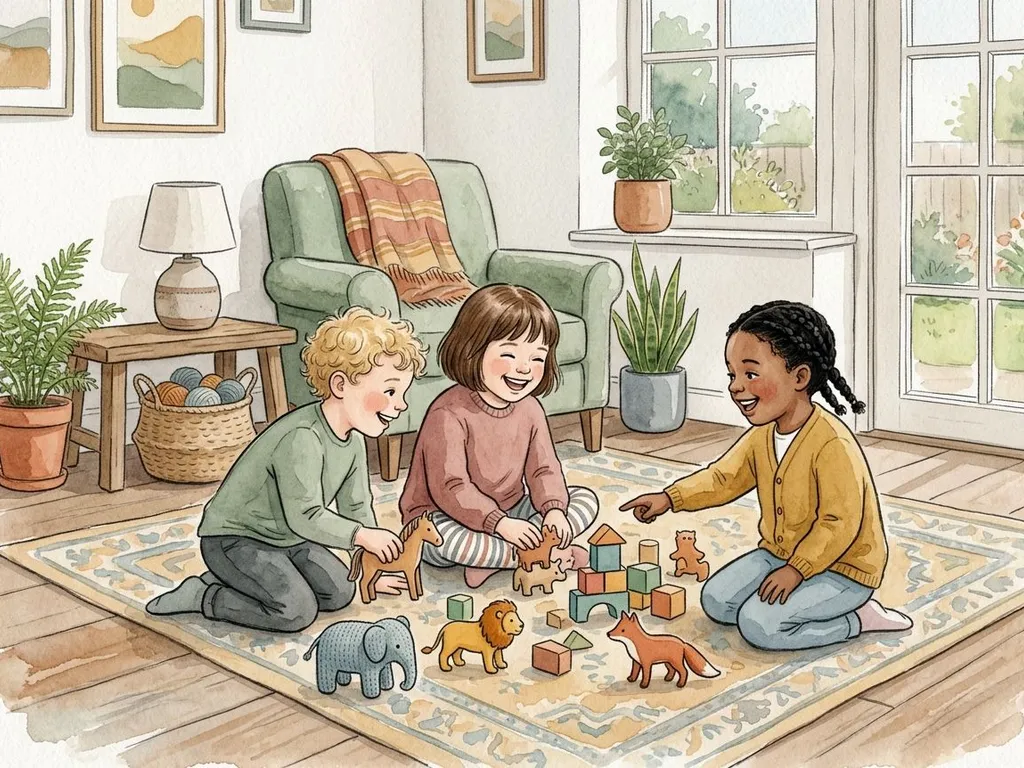
Most prepositions come before a noun phrase: “in the box,” “at the park,” “for my sister.” The phrase adds information. In “The cat sleeps on the sofa,” it tells us where. In “We eat lunch at noon,” it tells us when.
Prepositions often have several uses, so children need grouped examples. “In” can mean inside a place: “in the bag.” It can mean during a longer time: “in winter.” “On” can mean touching a surface: “on the wall.” It can name a day: “on Friday.”
Across LearnLink lessons, tutors teach prepositions through short speaking turns because children need to hear and say the pattern repeatedly. How Kids Can Use English Prepositions Correctly: A Practical Guide works when a child says full sentences: “The pencil is under the book,” not only “under.”
Rules and Examples for Place Prepositions
Place prepositions answer “Where?” They suit elementary kids because objects can be touched. Put a toy in a box, on a box, under a box, and next to a box. Each move makes the word concrete.
Use “in” for inside a space: “The ball is in the basket.” Use “on” for touching a surface: “The drawing is on the wall.” Use “under” for lower than another thing: “The shoes are under the chair.” Add “between” for two sides and “among” for a group: “The school is between the bank and the library,” but “The puppy is among the children.”
How Kids Can Use English Prepositions Correctly: A Practical Guide should include movement. “To” shows direction: “We walk to school.” “Into” shows movement from outside to inside: “She jumps into the pool.” “Onto” shows movement to a surface: “The cat jumps onto the table.” These differences build precise sentences.
Rules and Examples for Time Prepositions
Time prepositions are harder because children cannot touch Monday or January. Teach them as size groups. Use “at” for exact times: “at 8 o’clock,” “at lunchtime.” Use “on” for days and dates: “on Tuesday,” “on 5 May.” Use “in” for longer periods: “in the morning,” “in summer,” “in 2026.”
Fixed phrases work as chunks. We say “at night,” but “in the morning.” We say “on the weekend” in American English and often “at the weekend” in British English. An international family can name both forms and choose the one used in the child’s class or tutor materials.
Teen learners can add “by,” “until,” “for,” and “since.” “By Friday” means not later than Friday. “Until Friday” means the action continues and stops on Friday. “For two years” gives duration. “Since 2024” gives the starting point. How Kids Can Use English Prepositions Correctly: A Practical Guide becomes stronger when older children compare pairs instead of memorizing separate examples.
Common Mistakes and How to Fix Them
One common mistake is direct translation. A child may say “married with” because that pattern exists at home, but English uses “married to.” Another child may say “listen music,” leaving out “to.” Give the natural chunk: “listen to music,” then ask for a new sentence.
Another mistake is using “in” for nearly every place. Young children may say “The picture is in the wall” because “in” feels safe. Show the contrast with a quick drawing: a coin in a box, a poster on a wall. Then have the child say both sentences aloud.
Older children struggle after adjectives and verbs: “good at,” “interested in,” “worried about,” “depend on,” “wait for.” These are dependent prepositions. No perfect rule covers every one, so children need groups, spaced review, and sentence practice. How Kids Can Use English Prepositions Correctly: A Practical Guide should include these word partnerships because they affect weekly speaking and writing.
Practice Activities for Home or Lessons
Keep practice short. Five minutes with real objects can teach more than a silent worksheet. Ask your child to place a toy “under the chair,” “behind the book,” or “between two cups.” Then switch roles and let the child give instructions.
For children aged 8 to 12, use picture prompts. Show a room, street, kitchen, or park scene and ask for full sentences: “The clock is above the door.” “The boy is next to the tree.” “The sandwich is on the plate.” Teens can describe schedules, plans, and opinions: “The meeting is at 4,” “I am interested in science,” “We waited for the bus.”
Correct calmly and briefly. If the child says “I arrived to school,” answer, “In English we say ‘arrived at school.’ Try the full sentence.” The child gets a model without a lecture.
Practice 1: Choose the Place Preposition
Fill in each blank with in, on, under, behind, or between. 1. The apple is ___ the bag. 2. The phone is ___ the table. 3. The shoes are ___ the bed. 4. The small house is ___ two tall trees. 5. The cat is ___ the curtain.
Practice 2: Choose the Time Preposition
Fill in each blank with at, on, or in. 1. We have English ___ Monday. 2. The lesson starts ___ 5 o’clock. 3. My birthday is ___ July. 4. We play outside ___ the afternoon. 5. The film begins ___ night.
Practice 3: Fix the Sentence
Correct the preposition in each sentence. 1. I am good in tennis. 2. She listens music every day. 3. We arrived to the station. 4. He is afraid from dogs. 5. The poster is in the wall.
How to Support Different Ages
A 4- to 6-year-old needs movement, games, and pictures. Use only a few prepositions at once. “In,” “on,” and “under” are enough for a first lesson. The goal is not a definition. The goal is hearing, acting, and saying the word correctly in a short sentence.
A 7- to 10-year-old can handle contrast: “in the box” versus “on the box,” “at 7” versus “on Sunday.” Drawing helps this age group. Ask the child to draw “a bird above a house” or “a ball between two shoes,” then describe the picture.
An 11- to 15-year-old needs accuracy in longer speech and writing. Add dependent prepositions and abstract meanings: “proud of,” “similar to,” “different from,” “responsible for.” How Kids Can Use English Prepositions Correctly: A Practical Guide is not only for beginners; it helps older learners sound sharper and avoid small errors that weaken strong sentences.
For the rule wording, Wikipedia — English Grammar is a useful reference while the practice examples here stay adapted for children.
Frequently Asked Questions
What Is the Easiest Way to Teach Prepositions to a Young Child?
Start with objects the child can move. Put a pencil in a cup, on a book, under a chair, and behind a toy. Say each full sentence together. Young children learn prepositions through space, action, and repetition before grammar terms. Keep the set small, then add one new word when old ones feel familiar.
Why Does My Child Know the Rule but Still Use the Wrong Preposition?
Prepositions are often learned as word partnerships, not only rules. A child may know “on means surface” and still say “interested on” because “interested in” must be stored as a chunk. Short, repeated sentence practice helps. Correct the phrase, ask for one new example, and return to it another day.
Should Children Memorize a List of English Prepositions?
A short list can help older children, but memorizing alone rarely leads to correct speech. Children need grouped use: place words, time words, movement words, and dependent prepositions after verbs or adjectives. How Kids Can Use English Prepositions Correctly: A Practical Guide works when each word appears in a real sentence and a real task.
Which Prepositions Should a Beginner Learn First?
For beginners, teach in, on, under, next to, behind, and between for place. Then add at, on, and in for time. These words appear often in classroom English, stories, games, and daily routines. Once your child can use them in full sentences, add movement words such as to, into, and onto.
How Much Practice Does a Child Need?
Short practice works better than rare long sessions. Five to ten minutes, three or four times a week, is enough for many children to build accuracy. Use speaking, drawing, and quick correction. Review old prepositions while adding new ones because children often understand a word before using it smoothly.
If your child needs steady speaking practice, start small — choose a trial lesson.
Stay updated on our latest tips and resources by following us on Instagram LearnLink.