How to Write a Paragraph for Kids
A paragraph is a group of sentences that develops one focused idea. How to Write a Paragraph: A Practical Guide for Kids teaches children to choose that idea, add supporting details, and finish without changing subjects. Beginners can start with three to five sentences; older learners may write more when every sentence has a purpose. A strong paragraph guides the reader from the opening sentence to the final point.
What Children Need to Understand First
Every sentence in a paragraph should support the same idea. If the topic is a favourite reading place, details about that place belong. A sentence about football does not.
Younger children may explain an idea aloud before writing. Ask, “What should the reader know?” and “Which details will help?” Older children can make notes, then remove points outside the focus.
Use How to Write a Paragraph: A Practical Guide for Kids as a routine: state the idea, choose details, order them, and write. Separating planning from spelling and handwriting reduces the burden for new writers.
A Five-step Method for Building a Paragraph
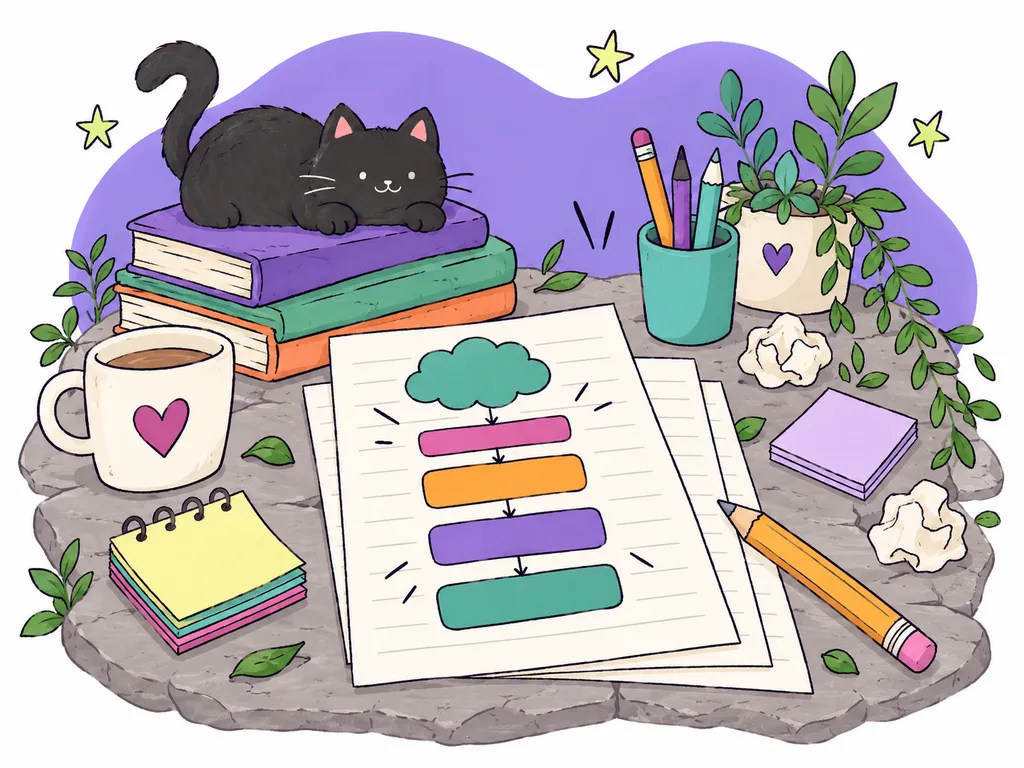
How to Write a Paragraph: A Practical Guide for Kids uses five steps for personal stories, school explanations, and descriptions.
- Choose one main idea. Make it narrow enough for one paragraph. “Animals” is broad; “Why rabbits need quiet hiding places” is focused.
- Write a topic sentence. State what the paragraph will explain: “Our local park is a good place to watch birds.”
- Add two or three details. Give reasons, examples, facts, or descriptions that support the topic sentence.
- Put the details in order. Use time order, place order, or an order from the strongest point to the weakest.
- End the paragraph. Sum up the main point or leave the reader with one useful final thought.
Here is the method in action: “Our balcony is a good place for growing herbs. Mint grows well in a small pot near the wall. Basil needs more sun, so we keep it by the railing. We water both plants before midday heat. Even a small outdoor space can become a garden.” Every sentence supports one idea.
Ask your child to identify the topic sentence, supporting details, and ending. Revise sentences without a job or save them for another paragraph.
Grammar That Holds the Ideas Together
A complete sentence usually needs a subject and verb: “The puppy sleeps.” The fragment “Under the kitchen table” leaves the thought unfinished. Write: “The puppy sleeps under the kitchen table.” Capitals and punctuation mark each thought’s boundaries.
Keep verb tense steady unless the time changes. “We walked to the beach and collected shells” works; “We walked to the beach and collect shells” shifts from past to present. Pronouns must point to a specific noun, especially when a paragraph names multiple people or objects.
In How to Write a Paragraph: A Practical Guide for Kids, linking words express relationships instead of decorating prose. Use first, because, but, for example, and as a result only when they connect ideas.
Examples for Different Ages and Stages
Children aged four to six may dictate a three-sentence paragraph for an adult to record. Try: “I like ___. It is ___. I enjoy it because ___.” The child chooses the content even before handwriting becomes fluent.
Children aged seven to ten can plan a topic sentence, two or three details, and an ending. Try: “Describe a place where you feel calm.” Encourage visible or audible details: light, sound, colour, and movement.
Older children can add explanations and evidence. A paragraph about school uniforms might state an opinion, give a reason and example, consider another view, then reach a measured conclusion. Multilingual children may plan in multiple languages, but their English draft should follow natural English sentence patterns.
Common Mistakes and Practical Fixes
Weak paragraphs rarely need harder words. They need focus, complete sentences, and logical order. Fix one problem at a time:
- Several main ideas: circle the central idea and move unrelated sentences elsewhere.
- No topic sentence: add an opening that tells the reader what the paragraph will explain.
- Repeated details: keep the clearest version and replace the others with new support.
- Sentence fragments: add the missing subject or verb.
- Run-on sentences: separate complete thoughts with full stops or suitable conjunctions.
- Too many linking words: remove any connector that does not show a true link.
- A sudden ending: add a sentence that returns to the main idea without copying the opening.
Return to How to Write a Paragraph: A Practical Guide for Kids during revision. Check the idea and order first; then review grammar, spelling, capitals, and punctuation. Correcting everything together can conceal a deeper problem: the paragraph may lack one focused message.
Practice Activities for Home or Lessons
Short tasks help children practise one writing skill. Let your child speak before writing, particularly when English is an additional language.
Practice 1: Put the Sentences in Order
Arrange these sentences as a clear paragraph:
A. Finally, we placed the pot beside a sunny window.
B. Planting a bean seed is a simple project.
C. Next, we covered the seed and added a little water.
D. First, we filled a small pot with soil.
Answer: B, D, C, A.
After ordering the sentences, identify the sequence words. Replace first, next, or finally if a different link sounds more natural.
Practice 2: Complete and Extend the Paragraph
Fill each blank, then add one supporting sentence: “Our street is busy in the morning. First, ___. A little later, ___. By nine o’clock, ___. The street then becomes ___.” Check that every detail describes the same time and place. For an extra challenge, replace one general word such as busy with a detail the reader can see or hear.
Finish with four questions: Does the paragraph have one idea? Does every sentence support it? Are the sentences complete and logically ordered? Does the final sentence close the point? Reading aloud exposes missing words, abrupt jumps, and overlong sentences.
When a word has several meanings or pronunciations, Cambridge Dictionary is a useful check before turning it into child-friendly examples.
Frequently Asked Questions
How Long Should a Child’s Paragraph Be?
No single length fits every writer. A beginner may develop one idea in three sentences; an older child may need six or more. Judge the paragraph by its work, not its size. It needs a topic sentence, enough supporting detail, and a suitable ending. Extra sentences should add meaning, not repetition.
What If My Child Can Explain an Idea but Cannot Write It?
Let your child speak, record the paragraph, or dictate it to an adult. Identify the topic sentence and supporting details together, then let the child copy or type the revision in short sections. Separating composition from handwriting, spelling, or typing protects the child’s control over the ideas.
Does Every Paragraph Need a Concluding Sentence?
A short paragraph may end after its final detail without a separate conclusion. Still, concluding sentences teach young writers to close one idea before starting another. The ending can summarise the point, explain its importance, or connect the details. It should not copy the topic sentence word for word.
How Much Help Should a Parent Give?
Use How to Write a Paragraph: A Practical Guide for Kids to ask questions instead of supplying sentences. Ask what the paragraph covers, which detail matters most, and what the reader needs to know. Point out one error type, then let your child repair it. The finished paragraph should sound like the child’s work.
If your child needs steady speaking practice, start small — choose a trial lesson.
Stay updated on our latest tips and resources by following us on Instagram LearnLink.