Infinitives of Purpose: A Guide for Kids
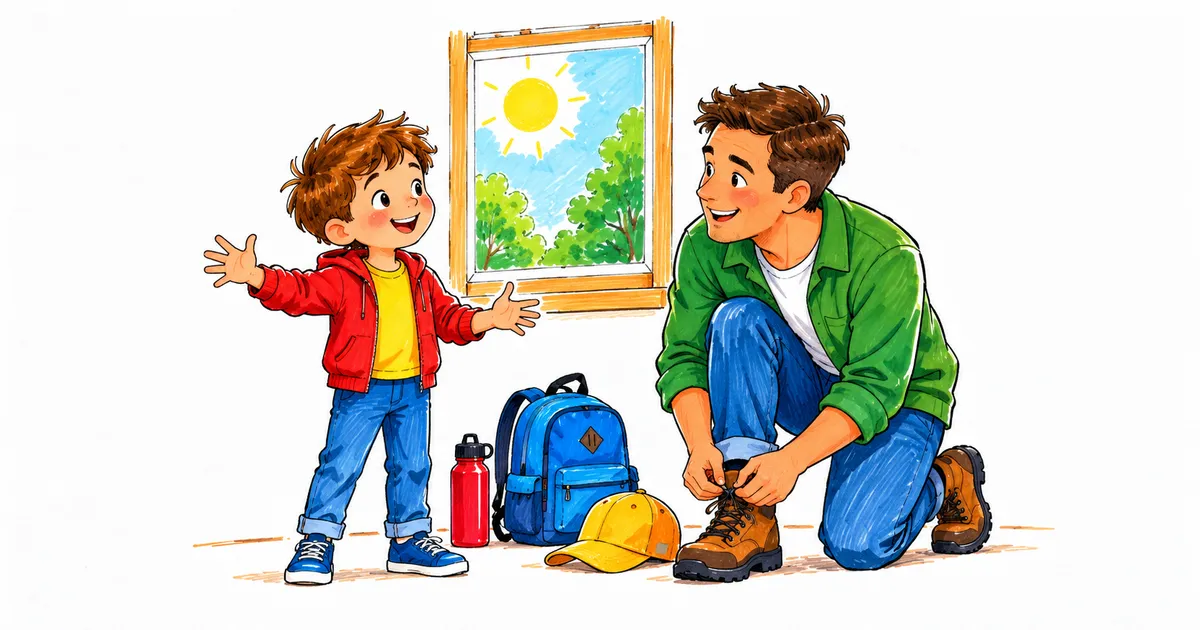
Purpose infinitives link actions and goals using to + base verb, answering “Why?” In “We opened the window to let in fresh air,” opened names action; to let states purpose. Infinitives of Purpose for Kids: A Practical Guide teaches the pattern using examples, corrections, and short practice.
📥 Mission: Explain the Purpose!
Practise using infinitives to explain why someone does something
Leave your email — we'll send the PDF to your inbox.No spam — the PDF plus one short reminder. Unsubscribe anytime.
What Children Need to Understand
Purpose means an activity’s reason. In “I went outside to play,” went outside names action; to play gives purpose. Ask, “Why did you go outside?” Answering “To play” identifies the phrase before children learn its name.
Infinitives of Purpose for Kids: A Practical Guide uses familiar situations. A child may carry a bottle to drink, open an app to practise spelling, or call a relative to share news. Such situations suit varied homes, schools, and language backgrounds.
Some to + verb phrases lack purpose. In “I want to read,” to read completes want; in “I went to the library to read,” it explains the visit. The “Why?” test separates these uses.
How the Basic Pattern Works
Follow action + to + base verb. Base verbs carry no ending: to read, to help, to make, to study. Avoid to reads, to helping, and to studied. Purpose forms stay unchanged across tenses.
Compare “We use cards to remember new words,” “We used cards to remember new words,” and “We will use cards to remember new words.” Only use, used, or will use marks time; to remember never changes.
Infinitives of Purpose for Kids: A Practical Guide begins with concrete examples. “She picked up a pencil to draw” creates an easy mental picture. Older children can progress toward study contexts: “He checked two sources to confirm the information.”
Useful Forms and Clear Examples
The shortest form sounds natural: “We left early to catch the bus.” In order to and so as to emphasize purpose but sound formal. Everyday speech and writing usually need to + verb.
Negative purposes require in order not to or so as not to: “She wrote the date down in order not to forget it.” Everyday English may favor “She wrote the date down so that she would not forget it.” During school exercises, beginners should avoid to not.
Choose to + verb for simple purposes; choose so that + clause when the second action needs its own subject. Teach both choices before formal alternatives.
Examples for Different Ages
Begin with visible actions: “I open the box to find the toy,” “We wash our hands to keep them clean,” and “She puts on her shoes to go outside.” Describe each action, ask “Why?”, then invite your child to supply its purpose. Add gestures or pictures when needed.
Children aged 8–10 can combine two ideas: “I use a map. I want to find the museum” becomes “I use a map to find the museum.” Try school-bag packing, song learning, recipe following, or speaking with relatives in another language.
Contrast purpose with other infinitives. In “They agreed to work together,” the infinitive follows agreed without answering why. In “They met online to work together,” it states the meeting’s purpose. Older learners can vary tone: “They met early in order to prepare.”
Common Mistakes and How to Correct Them
Children may add for: “We went to the shop for to buy bread.” Standard English uses “We went to the shop to buy bread.” For may introduce a noun: “We went to the shop for bread.” Compare both correct patterns.
Another error changes the purpose verb: “She opened the book to reading” or “He practises to improves.” After to, use the base form: “to read” and “to improve.” Remove to; the remaining word should match its dictionary form.
Infinitives of Purpose for Kids: A Practical Guide must distinguish purpose from meaning errors. “He was tired to walk” expresses no intended goal. Say “He was too tired to walk” when walking was impossible, or “He rested to feel better” when recovery was the goal. Ask: “Why did he rest?” “To feel better.”
Practice Activities at Home or in Class
Keep practice rounds short. Your child names an activity, gives its reason, then combines both ideas using to + base verb. Accept every answer expressing a logical purpose.
Fill in the Missing Purpose
Add to and a suitable verb.
1. We use a dictionary ______ a new word.
2. She opened her notebook ______ the homework.
3. They went to the kitchen ______ water.
Possible answers: to check, to write down, to get.
Check each verb, then ask “Why?” Each answer confirms purpose rather than grammar-only fit.
Join the Two Ideas
Combine each pair.
1. I called my cousin. I wanted to share the news.
2. We looked at the timetable. We wanted to check the train time.
3. He saved the document. He did not want to lose his work.
Answers: “I called my cousin to share the news.” “We looked at the timetable to check the train time.” “He saved the document in order not to lose his work.”
Next, children can create examples from daily routines. Prompts such as “I use my tablet to…,” “We go to the park to…,” and “I study English to…” welcome different interests, cultures, and family habits.
Find and Fix the Mistake
Correct these sentences.
1. She went outside for to play.
2. I turned on the computer to checking my email.
3. We spoke quietly to not wake the baby.
Answers: “She went outside to play.” “I turned on the computer to check my email.” “We spoke quietly in order not to wake the baby.”
For words with several meanings or pronunciations, Cambridge Dictionary provides a useful check before creating child-friendly examples.
Frequently Asked Questions

At What Age Can a Child Learn Infinitives of Purpose?
Children can learn the pattern once they connect an activity with a reason. Younger learners need no grammar label; they can answer “Why do we wear a coat?” with “To stay warm.” Older children can name, compare, and apply the forms in longer writing.
How Can I Tell Whether an Infinitive Shows Purpose?
Ask why the action happened. In “She opened the door to leave,” asking “Why did she open the door?” produces “To leave.” A phrase not answering why serves another role. In “He likes to swim,” to swim completes likes.
Should Children Use “In Order to” or Simply “To”?
Teach to + base verb first; everyday English favors its short form. Introduce in order to for formal writing or extra emphasis. Both work in “We left early to arrive on time” and “We left early in order to arrive on time.”
What Should We Do When Two Different People Are Involved?
Choose so that plus a subject and verb. Compare “I turned on the lamp to read,” where the speaker reads, with “I turned on the lamp so that my child could read,” where the child reads. This distinction prevents ambiguity.
How Much Practice Does a Child Need?
Practise for five minutes several times a week. Ask about daily routines: “Why did you open the fridge?” or “Why are you taking a pencil?” Give the child one or two accurate sentences per round, then revisit the pattern during reading and writing.
A short one-to-one lesson can show what level and pace fit your child — book a trial English lesson.
Stay updated on our latest tips and resources by following us on Instagram LearnLink.