Jungle Animals in English for Kids
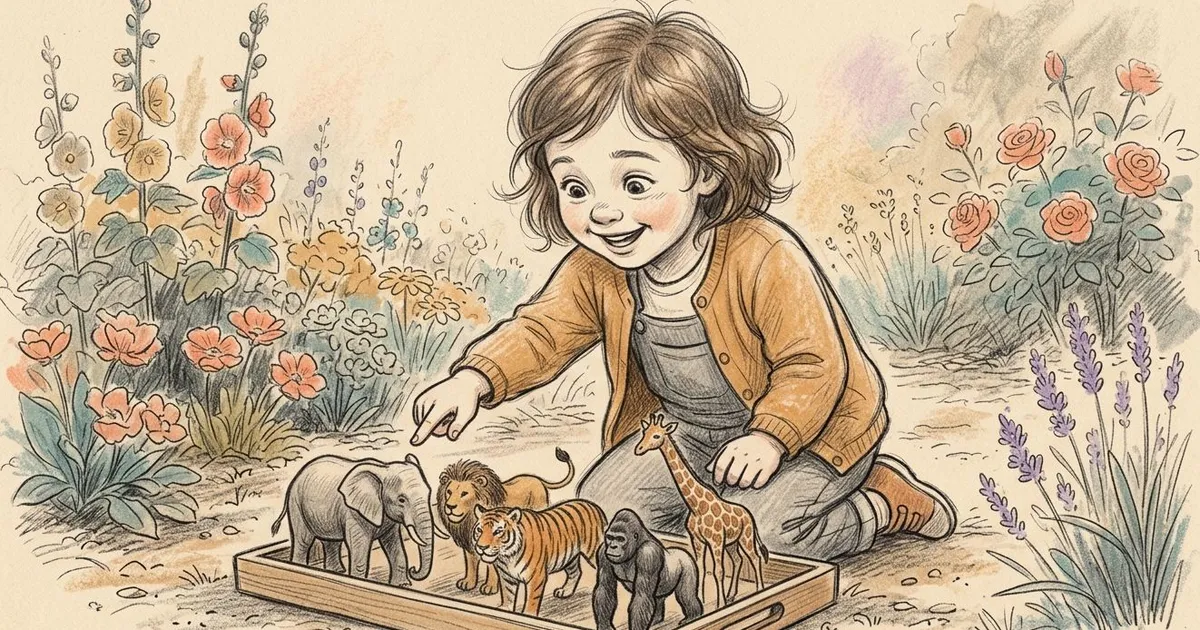
Jungle Animals in English for Kids: Words and Activities teaches animal names, action verbs, body parts, and descriptions. Begin with familiar animals: a monkey, tiger, parrot, and snake. Add phrases: “It has stripes,” “It can climb,” and “It lives in a forest.” Children remember vocabulary by seeing an image, moving, hearing the word, and using it in a sentence. The goal is to recognise each word and use it in speech, not memorise a long list.
📥 Jungle Animal Word Quest
Practise animal names, useful phrases, and clear sentences about jungle wildlife.
Leave your email — we'll send the PDF to your inbox.No spam — the PDF plus one short reminder. Unsubscribe anytime.
Core Animal Words and Phrases
Start with a small, varied vocabulary covering mammals, birds, reptiles, and amphibians, so your child can sort and name them. The table provides a clue and sentence model for each animal.
Teach Jungle Animals in English for Kids: Words and Activities by pairing each noun with one action and feature. Practise frames: “It is a…,” “It has…,” “It can…,” “It eats…,” and “It lives….” Older children can add linking words: “A toucan can fly, but it cannot swim like a crocodile.”
Using the Words in Context
Recognising a tiger picture does not mean a child can use tiger in a sentence. Move from naming to description. Show a picture and ask, “What is it?”, “What can it do?”, and “What does it look like?” Accept a short answer, then model a fuller one: “Tiger” becomes “It is a tiger” and later “The tiger has black stripes and strong legs.”
When practising Jungle Animals in English for Kids: Words and Activities, vary the sentence purpose: facts for description, questions for conversation, and guesses for play. Try “The sloth moves slowly,” “Can an iguana fly?”, “Which animal has a trunk?”, and “I think it is a jaguar.” Join the words in a picture story: “A monkey sees a snake. It climbs the tree. A parrot flies away.”
A Simple Teaching Sequence
Introduce three or four animals in a short session. Say each word, show a picture, and add a gesture. Your child can swing both arms for monkey, move slowly for sloth, or make a long shape with both hands for snake. Recognition comes before recall: “Point to the toucan” is easier than “What is this?”
Next, ask your child to sort the animals by a visible or meaningful feature: feathers, scales, climbing, or swimming. A multilingual child may already know the animal in another language. Use that knowledge: connect the new English word to the familiar animal, then return to an English sentence instead of testing translations alone.
Guess the Jungle Animal
One person gives clues without naming the animal: “It has a long tail. It can climb. It likes trees.” The other guesses, “Is it a monkey?” Swap roles after each answer. Younger children can use picture cards; older children can add habitat, diet, size, or comparisons.
Activities for Different Ages
Match activities to language level and age. A first-time online learner may need movement and pictures; a confident reader can research, compare, and explain. Jungle Animals in English for Kids: Words and Activities can grow from quick naming games into speaking and writing tasks.
Keep home practice brief and active. Play animal charades, label a child’s drawing, make a memory-card game, or describe an animal during a walk. Reuse the same words across days while changing the task: match pictures, ask questions, then write a riddle. Varied repetition builds stronger recall than repeatedly copying words.
Common Mistakes to Avoid
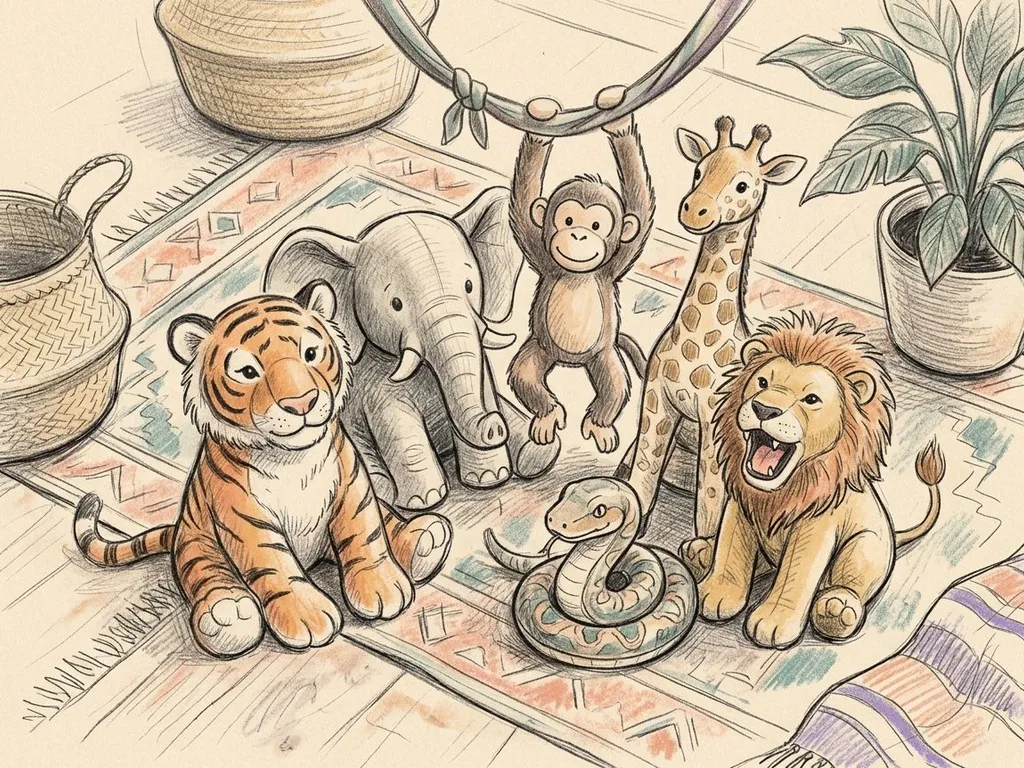
Do not label every well-known wild animal a jungle animal. Lions live mainly in grasslands and open habitats; polar bears live in the Arctic. Explain that jungle is a broad classroom theme, not a precise scientific habitat. Animals in this vocabulary may inhabit different tropical forests or other habitats.
Avoid teaching too many isolated nouns. Ten words a child can describe beat a long unusable list. Return to verbs and features: climb, swing, crawl, hunt, feathers, scales, spots, stripes, wings, tail, trunk, and claws. These terms turn animal names into real sentences.
Correct with care. If your child says “It have stripes,” reply naturally, “Yes, it has stripes,” and continue. For plural forms, contrast “one monkey” with “two monkeys.” Practise articles within phrases, not alone: “a tiger,” “a parrot,” but “an elephant” and “an iguana.”
- Try practicing five jungle animal names with children aged four to six daily.
- Use picture cards to match each animal with its spoken English name.
- Read one jungle storybook aloud, pausing for your child to identify animals.
- Practice correct pronunciation slowly, then repeat each word together three times.
- Avoid testing too many words; review six familiar animals through playful guessing.
When a word has several meanings or pronunciations, Cambridge Dictionary is a useful check before turning it into child-friendly examples.
Frequently Asked Questions
How Many Jungle Animal Words Should a Child Learn at Once?
For beginner school-age children, three or four new animals per session is enough. Five or six can work when the words appear in pictures, games, and sentences. Jungle Animals in English for Kids: Words and Activities is effective when old words return in later sessions. Add animals after your child recognises most earlier ones without help.
Should I Correct Every Pronunciation Mistake?
No. Correct words that listeners cannot understand, but do not interrupt every sentence. Repeat the word naturally with accurate pronunciation: if your child says “croc’dile,” answer, “Yes, a crocodile.” Then invite one relaxed repetition. Focus on the first and last sounds because they distinguish words such as frog, fog, and fox.
What If My Child Knows These Animals in Another Language?
Use existing knowledge as a bridge. Show the animal, say the English word, and place it in a short English phrase. Keep the other language available. A child who understands what a jaguar is can focus on its new sound, spelling, and sentence pattern. Check meaning through pointing, sorting, drawing, acting, and translation.
Are Animal Videos Enough for Learning the Vocabulary?
Videos provide images, movement, and animal sounds, but passive viewing gives little speaking practice. Pause to ask one focused question, such as “What can the orangutan do?” Afterward, let your child sort pictures, retell one scene, or draw and label an animal. Across LearnLink lessons, our tutors use questions and guided responses to turn familiar words into active language.
A short one-to-one lesson can show what level and pace fit your child — book a trial English lesson.
Stay updated on our latest tips and resources by following us on Instagram LearnLink.