Phrasal Verbs with Break for Kids
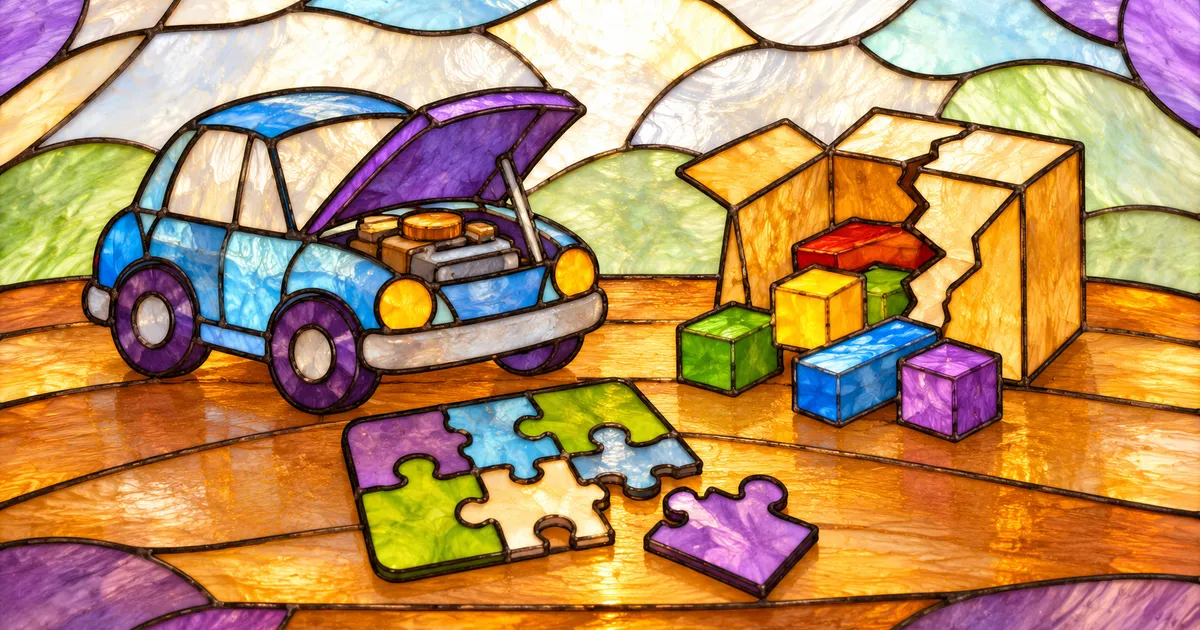
A phrasal verb combines a verb with a word such as up or down to create a new meaning. Phrasal Verbs with “Break” for Kids: A Practical Guide explains combinations including break down, break up, break into, and break out. Children should learn each combination as one phrase, not translate its parts separately. “The car has stopped working” expresses the meaning of “The car has broken down.” Examples, movement, and short tasks connect each phrase with its meaning.
What Children Need to Understand First
The verb break means to damage or separate something: “Be careful—the cup could shatter.” Another word can change its meaning. When we say “Our bus has broken down,” it stopped working; it did not split into pieces.
Literal meanings are easy to picture: a child can divide a biscuit into smaller parts. Less literal examples include a class separating for a holiday or a fire starting suddenly. The whole phrase and its context determine the meaning.
Phrasal Verbs with “Break” for Kids: A Practical Guide treats each expression as one language unit. Learners need a familiar example, its meaning, and practice using the phrase before studying grammar labels.
Five useful meaning clues
- Movement The speaker may describe entering, leaving, separating, or escaping from somewhere.
- Change A machine, meeting, relationship, or situation may stop or change suddenly.
- Beginning A fire, argument, rash, or other event may start without warning.
- Separation One object or group may divide into smaller parts.
- Context The surrounding words show which meaning of the phrasal verb is intended.
How the Grammar Works
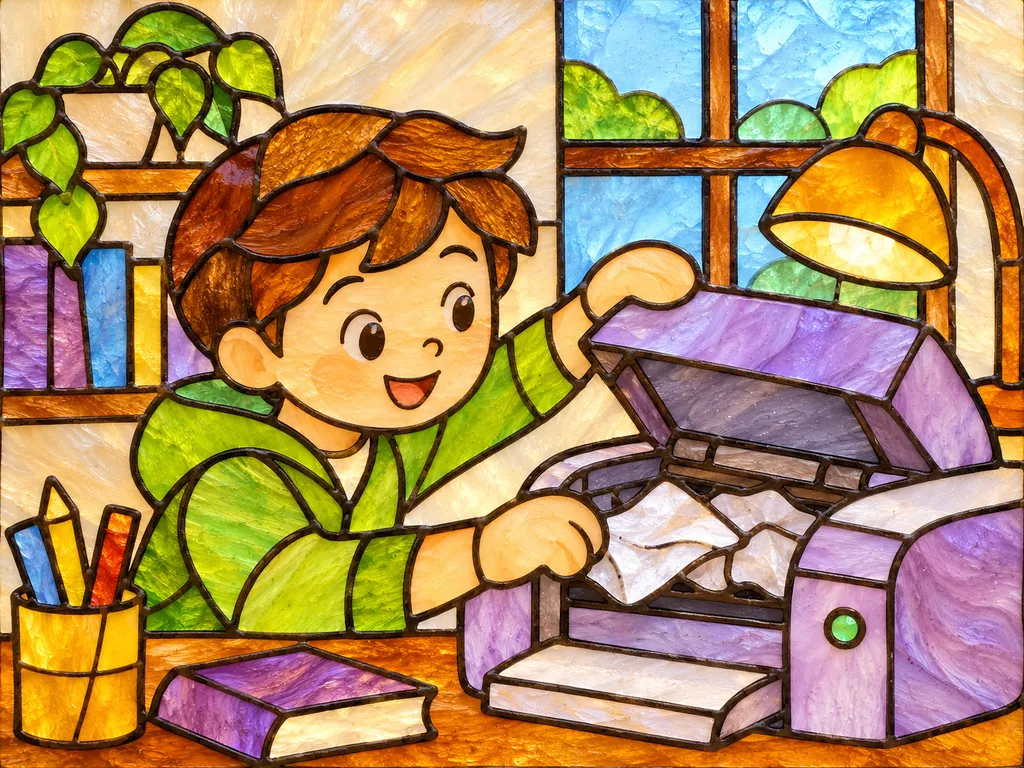
The first word carries the tense; the particle does not change. We say “The printer breaks down,” “The printer broke down,” and “The printer has broken down.” After did, use the base form: “Did the printer break down?”
Several expressions phrasal verbs take an object. When break down means “divide information into smaller parts,” the noun can appear in either position: “Break down the instructions” or “Break the instructions down.” A pronoun goes in the middle: “Break them down,” not with the pronoun after the particle.
Other combinations cannot be separated: “Someone tried to break into the building,” not a pattern that places the building between the verb and particle. Phrasal Verbs with “Break” for Kids: A Practical Guide teaches each meaning with its sentence pattern.
Useful “Break” Phrasal Verbs with Examples
Break down can mean a machine stops working: “The lift malfunctioned.” It can also mean dividing something complex into steps: “Let’s organise the project into manageable stages.” Break up describes separation—“Divide the chocolate and share it”—or the end of a group, event, or relationship.
Break into means entering by force: “A thief tried to force his way into the shop.” It can describe sudden action: “The children often burst into laughter.” Break out marks a sudden beginning or escape: “A storm can erupt during the match” or “The rabbit escaped from its pen.”
Break off means separating a piece or stopping something suddenly: “She snapped off a piece of bread” and “They abruptly ended the discussion.” Break through means passing a barrier: “The sun pierced the clouds.” Break away means escaping a person or group: “The cyclist pulled ahead of the others.”
How the Meanings and Patterns Compare
One main verb can create several meanings. Children should compare complete sentences instead of memorising particles alone. The table groups key combinations by meaning and sentence pattern.
Phrasal Verbs with “Break” for Kids: A Practical Guide shows how one combination can carry different meanings. The surrounding noun provides the clue: a car that “breaks down” stops working, while a learner who “breaks down a problem” divides it into manageable parts.
Common Mistakes and How to Correct Them
Children may translate each word separately and picture downward movement in break down. Ask them to check the subject. With a bus, computer, or lift, the phrase means “stop working.” With a task or idea as the object, it means “divide into parts.”
Learners may use the wrong past form: “The car breaked down.” The correct forms are break, broke, and broken. Pronouns cause another error. Say “Break it up” and “Divide it into steps,” placing the pronoun between the verb and particle rather than after the complete expression.
What the words do and do not tell us
Myth: Every expression in this group describes physical damage.
Fact: A machine can fail without splitting into pieces, and laughter can erupt without anything being damaged.
Myth: The particle can always move to another position.
Fact: Some phrases are separable, but combinations such as break into must stay together.
Children may confuse break out and break into. Direction separates them: the first expression describes leaving a place, while the second describes entering it. A hamster can escape from a cage; a thief can force a way into a building.
Practice Activities at Home and in Lessons
Begin with three or four phrases, not every meaning at once. Give a short situation and ask your child to choose the matching expression: “The laptop stopped working” becomes “The laptop has broken down.” For younger learners, actions and drawings distinguish into, out of, and away.
Fill in the Missing Particle
Choose down, up, into, or out. 1. Our car broke ___ on the way home. 2. Please divide the bread ___ into small pieces. 3. A bird flew ___ of the box. 4. Someone forced their way ___ the empty office. Answers: 1. down; 2. up; 3. out; 4. into.
Phrasal Verbs with “Break” for Kids: A Practical Guide supports a sorting game: write situations on cards and place them under matching phrase cards. In LearnLink lessons, our tutors adjust the number of phrases and reading load to a learner’s age and confidence.
Rewrite with a Phrasal Verb
Replace the words in brackets. 1. The printer (stopped working). 2. Please (divide) the puzzle into smaller steps. 3. A loud argument (started suddenly). Suggested answers: 1. The printer has broken down. 2. Please break the puzzle down into smaller steps. 3. A loud argument can break out.
Older children can write two sentences showing different meanings: “The bus broke down” and “We divided the question into smaller steps.” The contrast tests understanding beyond one memorised example.
Quick review: Ask your child to say the phrase, explain its meaning, and make a new sentence. These three steps reveal whether the expression is ready for independent use.
Keep corrections brief. If your child says “break down it,” model the correct word order with “put it in the middle” and request one new example. Aim for accurate reuse without interrupting speaking for a long grammar lecture.
For the rule wording, Wikipedia — English Grammar is a useful reference while the practice examples here stay adapted for children.
Frequently Asked Questions
How Many Phrasal Verbs with “Break” Should a Child Learn at Once?
Start with three or four suited to your child’s reading level and daily life. The four core combinations introduced in this guide form a strong first set. Phrasal Verbs with “Break” for Kids: A Practical Guide adds combinations for gradual study. Review known phrases in new sentences before introducing another group.
Can Younger Children Learn Phrasal Verbs Without Grammar Terms?
Yes. Connect each phrase with a picture, action, or short situation. A toy bus can stop working, building blocks can be separated, and a toy animal can escape from a pen. Terms such as verb, particle, and separable can wait. Meaning and correct use come first.
What Is the Difference Between “Break up” and “Break Down”?
The first expression involves separation or an ending: a child can divide a biscuit, a group can separate, or a school can close for a holiday. The second means something stops working or a complex idea is divided into steps. Compare “The computer has broken down” with “We have divided the instructions into stages.” Context reveals the meaning.
Should a Child Translate Each Phrasal Verb into a Home Language?
A home-language equivalent offers a quick bridge, especially for multilingual children. But one translation may not cover every meaning. Pair it with a short English sentence and situation, then ask your child to create a different sentence. The new example tests whether the phrase is usable beyond a translated list.
How Can Your Child Remember Which Phrasal Verbs Are Separable?
Teach a model sentence with each phrase. For a separable meaning, practise a noun and pronoun by showing both noun positions, then placing the pronoun in the middle. Keep inseparable phrases together: “They entered the building by force.” Reading aloud reinforces word order. When unsure, check the complete phrase and example in a learner’s dictionary.
Start your child's English journey today — book a trial lesson with LearnLink.
Stay updated on our latest tips and resources by following us on Instagram LearnLink.