Pond Animals in English for Kids
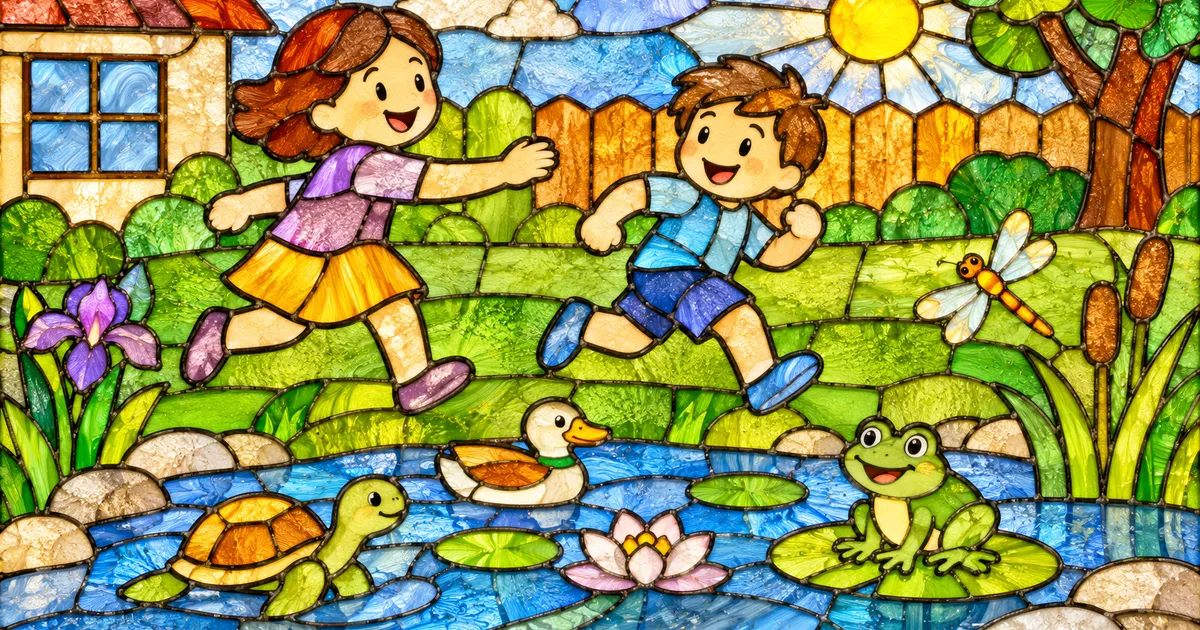
Pond Animals in English for Kids: Words and Activities teaches vocabulary through creatures that live in or visit ponds. Children learn names such as frog, duck, fish, and dragonfly, then practise descriptions, questions, and games. Begin with animals your child recognises in pictures. Add actions such as swim, jump, fly, and crawl, plus positions such as in, on, under, and near. Help your child notice an animal, name it, and describe it.
Core Pond Words and Useful Clues
Start with familiar animals, then introduce less familiar words through pictures or movements. Local ponds differ, so use the table as a language set, not a record of every pond.
Pair each word with its clue: “A heron has long legs” or “A tadpole has a tail.” Pond Animals in English for Kids: Words and Activities sticks when each noun connects to a feature, place, or action.
What children need to know
Myth: Every pond contains the same animals.
Fact: Pond life varies by place, season, and habitat, so examples differ.
Myth: Children must spell every animal name before using it.
Fact: Children can recognise, say, and use a word before learning its spelling.
After securing animal names, add habitat words: pond, water, bank, mud, stone, leaf, reed, and lily pad. Children can then describe scenes instead of reciting nouns.
Putting the Words into Context
Move Pond Animals in English for Kids: Words and Activities from naming to speaking. Use four sentence frames: “I can see a frog,” “The duck is swimming,” “The snail is on a leaf,” and “Where is the fish?” Change one word at a time to retain the pattern.
Combine nouns with actions and positions. The small amphibian can jump, swim, sit, or hide. A dragonfly can fly, land, or rest. Expand “It jumps” into “The green pond dweller jumps into the pond.” Accept a short correct answer before requesting detail.
Build a Pond Sentence
Choose one animal, one action, and one place. Try: “The ___ is ___ near the ___.” Swap one part to make a new sentence.
Questions give children a reason to speak. Ask “What can you see?”, “Which animal has wings?”, “Can a tadpole fly?”, and “Is the heron in the water or beside it?” The answers reveal understanding without creating a test.
Activities for Different Ages
Pond vocabulary supports several English levels. Younger children need pictures and movement. Older children can sort, compare, explain, and write. Match each task to language readiness and age.
Pond Animals in English for Kids: Words and Activities grows with your child. A five-year-old might hop after seeing the little jumper in a picture. A nine-year-old might say, “This amphibian can jump, but the fish cannot.” An older learner can explain how a tadpole changes as it grows.
Keep the challenge focused: change either the vocabulary or the sentence pattern in one activity, but not both at the same time.
A multilingual child may connect a pond animal to another language first. Show the picture, accept recognition, then model the English phrase. The goal is accurate English, not removing other languages.
Games for Regular Practice
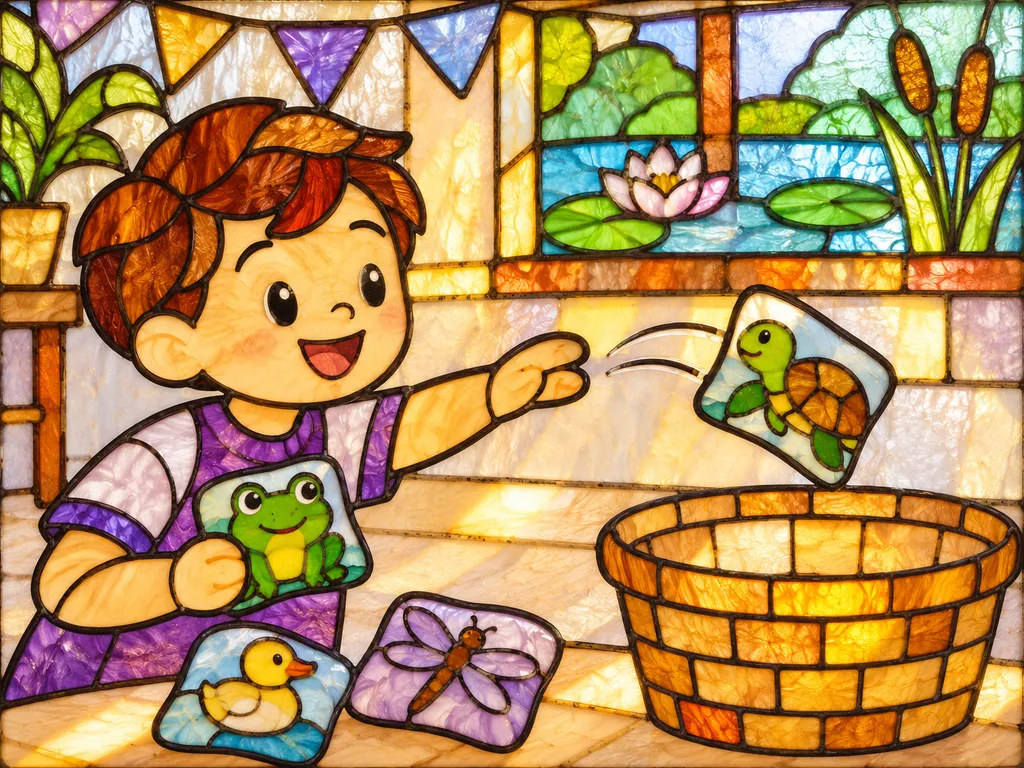
Practise Pond Animals in English for Kids: Words and Activities in short rounds. Hide picture cards and say, “Find an animal that can fly.” Play “Odd one out” with frog, duck, and dragonfly, then request an explanation.
For a listening game, place four animal pictures on a table. Read a clue without naming the animal: “It has long legs and stands near water.” Your child points to the heron and answers with a full phrase. Later, reverse roles.
A focused practice routine
- Choose four to six pond animal words.
- Review each word with a picture or movement.
- Say one model sentence aloud.
- Ask one meaning question and one location question.
- Finish with a game your child can complete successfully.
During pond visits, observe wildlife from a suitable distance, stay on the path, and never catch or touch animals. Photographs, drawings, and books offer the same language prompts.
Common Mistakes to Correct Gently
Children may say “It is swim” instead of “It is swimming.” Model the complete form without stopping the conversation: “Yes, the duck is swimming.” The correction preserves meaning and momentum.
Practise singular and plural forms: “one snail, two snails” and “one duck, three ducks,” but “one fish, two fish” in ordinary use. Pair numbers with pictures to give grammar a visible purpose.
Animal sounds vary across written languages. English books may use “ribbit” for this pond creature, while your child knows another sound word. Explain that languages represent the same animal sound differently. The mismatch becomes a language comparison.
- Choose three pond-animal words and model each pronunciation before asking for repetition.
- Point to one picture, say the word, and let your child echo it.
- Contrast two commonly confused animals, such as frogs and toads, using clear pictures.
- Repeat the correct sentence naturally, without interrupting your child’s pond-story explanation.
- Praise one accurate word, then invite a second attempt with the full phrase.
When a word has several meanings or pronunciations, Cambridge Dictionary is a useful check before turning it into child-friendly examples.
Frequently Asked Questions
How Many Pond Animal Words Should My Child Learn at Once?
Begin with four to six recognisable words. Duck, fish, snail, turtle, dragonfly, and tadpole form a strong first group. Pond Animals in English for Kids: Words and Activities works best when children use a small set in sentences before learning more names. Review older words with one or two new ones.
What Can We Do If There Is No Pond Near Our Home?
Use photographs, toy animals, drawings, or a short age-suitable nature video. Build a paper pond and place each animal in, on, or beside it. Direct pond access is unnecessary. If a local water habitat contains different animals, add their names and compare both places.
Should I Correct Every Pronunciation Mistake?
Correct errors that make a word hard to understand, but avoid interrupting every sentence. Repeat the word inside a natural reply: “Yes, that is a dragonfly.” Focus on steady progress, not one national accent. Your child needs understandable speech and confidence to attempt longer phrases.
How Can a Multilingual Child Avoid Mixing the Words?
Pair each picture with one English phrase and repeat it across several activities. If your child answers in another language, confirm the meaning and model English: “Yes, a frog. This little amphibian can jump.” Language mixing is not failure. Consistent examples teach when to use each word.
Want to see how these ideas work in a real lesson — try a LearnLink trial lesson.
Stay updated on our latest tips and resources by following us on Instagram LearnLink.