Singular and Plural for Kids
A singular noun names one person, animal, place, or thing; a plural noun names more than one. Learning singular and plural for kids starts with pairs such as one cat, two cats and one child, three children. Most nouns add -s, while spelling patterns and irregular forms require practice. Children must match nouns with is, are, this, and these. This guide covers rules, age-based examples, home activities, and errors.
📥 Singular and Plural Word Practice
Explore how nouns change when they name one or more than one.
Leave your email — we'll send the PDF to your inbox.No spam — the PDF plus one short reminder. Unsubscribe anytime.
What Families Need to Know
Start with meaning, not spelling. Place one spoon on a table and say, “one spoon.” Add another and say, “two spoons.” Seeing the quantity change connects it with the word form.
A practical approach to singular and plural for kids teaches whole phrases. Compare a red ball with three red balls, or this book is new with these books are new. Children learn agreement alongside plural endings.
Nouns are not always countable. We say two chairs, but furniture, not two furnitures. Older children can learn countable and uncountable; younger children need correct models.
How Spelling Changes in Plural Forms
Most nouns take -s. Certain endings require -es, while a consonant plus y changes y to ies. Exceptional plurals must be learned as pairs.
When singular and plural for kids is taught through related words, patterns stand out. Keep exceptions separate so one difficult word does not obscure a reliable rule.
Endings have exceptions: roof becomes roofs, not rooves. Teach children to check unfamiliar plurals instead of forcing one rule onto every word.
Examples by Age
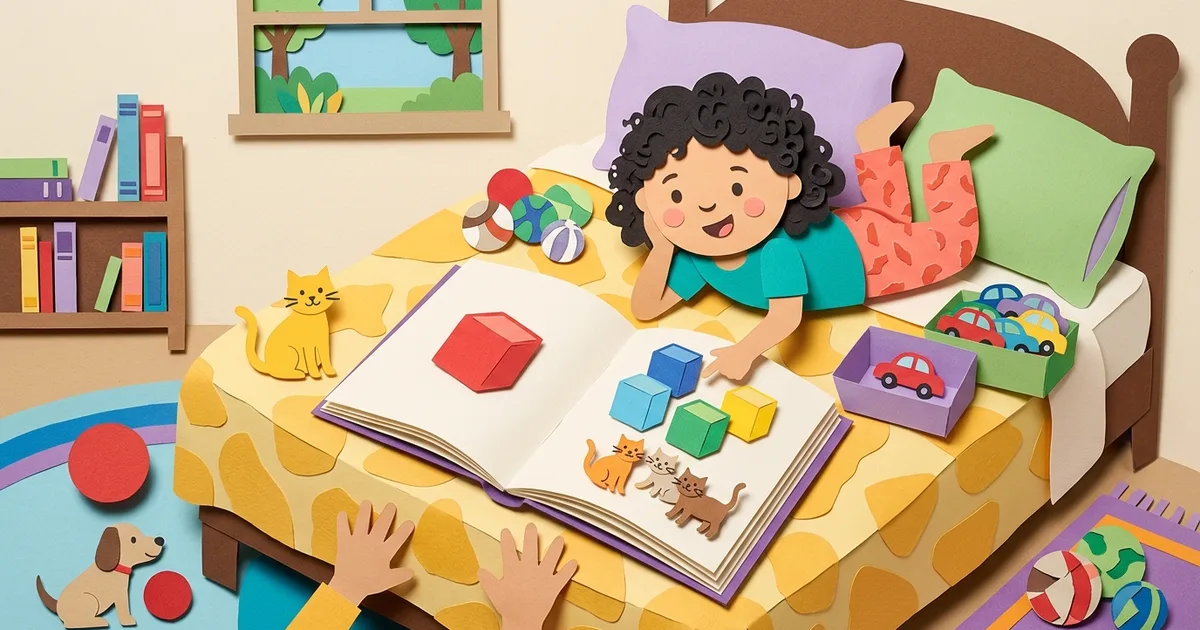
Younger children can handle objects: one cup, two cups; one shoe, two shoes; one orange, four oranges. Pictures, toys, and movement tie grammar to meaning.
Children can sort words by spelling pattern and build sentences: The fox is under the tree. The foxes are under the trees. Ask them to mark each changed word.
School-age learners can compare countable and uncountable nouns, irregular forms, and rarer plurals. Contrasts include an interesting story and interesting stories, or advice and two pieces of advice.
For school-age kids, use a six-card “one or many” game. Show three singular and three plural pictures, then ask the child to say each phrase before matching: a rabbit, two rabbits; a bus, three buses. After five rounds, remove pictures and repeat the pairs from memory. A common mistake is adding -s to every word, producing childs or sheeps. Correct it by giving two choices—children or childs—and asking which form sounds familiar.
For ages 8–10, try an eight-sentence editing challenge. Include two regular plurals, two -y or -es words, two irregular forms, and two uncountable terms. Learners circle the noun, underline its determiner, and repair agreement: This apples are red becomes These apples are red. Ask them to explain each change. If they write informations or furnitures, replace the plural with a quantity phrase, such as three pieces of information or two items of furniture.
How to Practise at Home
Use household items. While unpacking groceries, compare one tomato with six tomatoes. During a walk, count buses, dogs, trees, or bicycles. Correct the whole phrase calmly.
Practice with singular and plural for kids works best in short rounds. Say a singular form and ask for its plural. Next, reverse the task or request a sentence.
Multilingual children may notice that another language forms plurals differently. Welcome the comparison, then return to English: “That is how it works in French; in English, we say three houses.” This values each language without mixing rules.
For children, try a five-minute sorting game with 12 picture cards. Make two spaces labelled “one” and “more than one,” then ask the child to place each card and say the matching phrase aloud: one fox, two foxes. Include regular endings alongside words such as child/children and mouse/mice. If the child says two childs, repeat the correct form and invite one more attempt rather than giving a long explanation.
Use a “notice, change, check” routine for older primary pupils. First, notice the number clue; second, change the word; third, check the whole sentence, including is/are or this/these. For example, change “This dish is clean” to “These dishes are clean.” A common mistake is changing the target word but leaving the verb singular. Finish with three quick sentences, and revisit any missed form the next day.
Practical Activities
Try a household hunt. Your child finds one item, names it in a singular phrase, then finds a group for a plural phrase. A drawing can replace an unavailable group.
For reading practice, circle plural words on a short page and ask for each singular form. Older learners can sort results into regular, spelling-change, irregular, and no-change groups.
Change Each Word to the Plural
Write the plural forms of dish, key, city, child, and leaf. Then use two of them in complete sentences. Answers: dishes, keys, cities, children, leaves.
Choose the Matching Words
Complete the sentences: “This/These apple is/are green.” “This/These shoes is/are wet.” “The sheep is/are in the field.” Answers: This apple is green. These shoes are wet. For one sheep, use is; for several sheep, use are.
Common Mistakes and Helpful Corrections
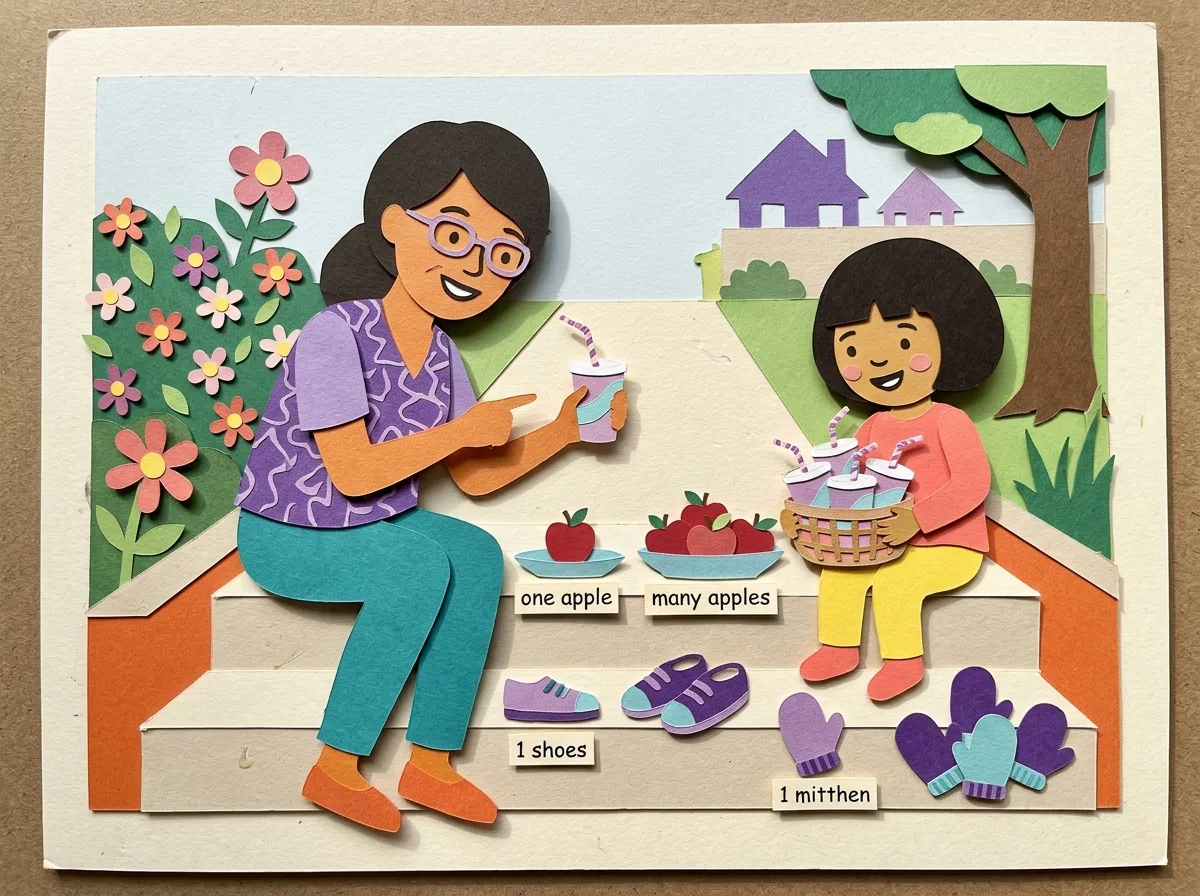
Children may extend the regular rule to every word, producing childs, foots, or sheeps. Give the correct pair briefly: “One child, two children.” Review irregular words later as a group.
Another error changes the key word but not the sentence: These dog is small. Repeat These dogs are small and ask which words changed.
Do not correct every slip during free speaking. When meaning remains understandable, note one pattern and practise it afterward. LearnLink tutors adapt examples and support to each child’s age, English level, and pace.
- Try sorting ten toy animals into singular and plural groups with your five-year-old.
- Practice adding -s to eight familiar words, then correct two irregular plurals.
- Use one picture book to spot six singular forms and their plural forms.
- Ask your six-year-old to explain three corrections aloud using complete sentences.
- Review Singular and plural for kids with five flashcards before bedtime tonight.
When a word has several meanings or pronunciations, Cambridge Dictionary is a useful check before turning it into child-friendly examples.
Frequently Asked Questions
When Should a Child Learn Singular and Plural Nouns?
Children can begin after understanding one object versus more than one. For a 4- or 5-year-old, spoken pairs and real objects suffice. School-age learners can study spelling rules and sentence agreement. Start from the child’s current English, not age alone.
What Is the Best Way to Explain Irregular Plurals?
Present irregular plurals as pairs: one person, two people; one tooth, two teeth. Do not imply a hidden rule. Practise the pairs through pictures, games, and sentences across multiple days. Frequent recall beats copying a long list once.
Why Does My Child Write “Babys” Instead of “Babies”?
Your child knows plurals often end in -s but has not applied the consonant-plus-y pattern. Compare baby–babies and city–cities with toy–toys and key–keys. The letter before y determines the spelling.
How Can Our Tutors Teach Plurals Without Using Worksheets?
The best way to teach singular and plural for kids without worksheets is through daily talk. Count plates, compare one sock with two socks, or name animals in a picture. Begin with short phrases, then build sentences. Daily tasks show how grammar conveys meaning.
Should I Correct Plural Mistakes During Conversation?
Correct mistakes that block meaning or match the current practice pattern. A brief model works: if your child says, “Two foot,” respond, “Yes, two feet.” Continue the conversation. Save detailed explanations for focused spelling and sentence work.
A short one-to-one lesson can show what level and pace fit your child — book a free English lesson.
Stay updated on our latest tips and resources by following us on Instagram LearnLink.