Possessive Apostrophe S for Kids
The possessive apostrophe s for kids is one of the first punctuation rules children master, typically introduced around age five through simple ownership phrases like "Anna's scarf" or "the dog's lead." The rule itself is reassuringly consistent: an apostrophe followed by s always signals that something belongs to someone. That predictability makes it easier to teach than most punctuation — once children see the pattern clearly, they recognise it everywhere. The sections below cover how it works, the common mistakes to watch for, and activities that make it stick.
What the Possessive Apostrophe S Actually Means
The apostrophe is the small curved mark ( ' ) that sits above the line in print or handwriting. When it appears directly before an s and follows a name or noun, its job is ownership. "Tom's bike" tells the reader the bike belongs to Tom. "The cat's bowl" tells the reader the bowl belongs to the cat. One mark, one meaning, used the same way every time.
Unlike some European languages that change a word's ending to show possession, English uses this apostrophe-and-s construction instead. That makes it easier to learn in isolation: there are no gender agreements to memorise, no verb changes, no endings to remember by gender. Children simply need to spot the mark and ask one question — who is the owner? For parents, possessive apostrophe s for kids works best when practice is short, visual, and repeated every week.
In early LearnLink sessions, our tutors connect this rule to physical objects straight away: a child's water bottle, a picture of a family pet, a drawing of someone's bedroom. Anchoring the grammar to something visible and familiar cuts the time children spend guessing at abstract definitions.
When to Use It — Situations Children Encounter Every Day
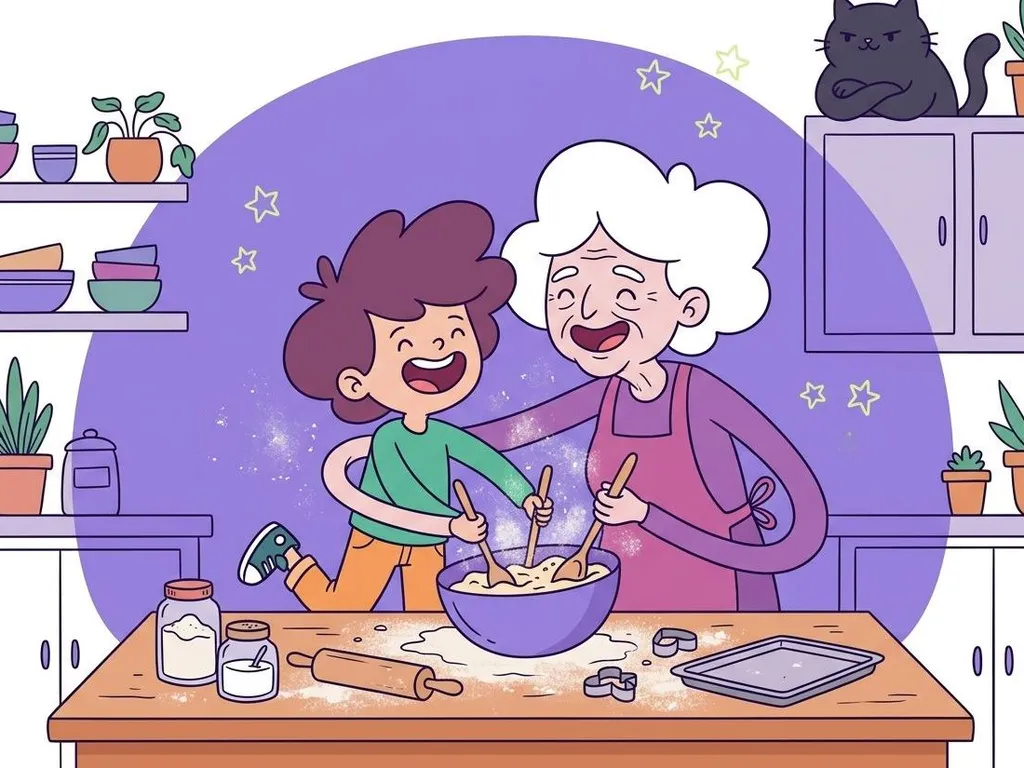
The possessive apostrophe's for kids appears in four main situations, and children meet all of them in ordinary reading within the first two or three years of school.
- People and their belongings — "Grandma's kitchen", "my cousin's football", "the teacher's chair"
- Animals and their body parts or spaces — "the rabbit's ears", "the horse's stable"
- Places and their features — "the park's gate", "the school's library"
- Time expressions — "a week's notice", "today's lesson" (less obvious, but entirely correct)
Ownership does not have to be physical. "My sister's idea" and "the baby's cry" both use the apostrophe correctly, even though nobody is handing over an object. The apostrophe marks any close connection between an owner and the thing described — a feeling, a sound, a quality, a place.
A quick check that works well at home: ask your child to rewrite the phrase using "belongs to". "The dog's ball" becomes "the ball that belongs to the dog." If that sentence makes sense, the apostrophe is in the right position. It holds up every time.
Three Patterns to Know — Singular, Plural, and Irregular Forms
When children first study possessive apostrophe s for kids, our tutors separate the work into three clear patterns. Most children only need the first one. The other two become relevant around school age, when plural noun forms are secure.
Irregular plurals — children, women, men, teeth — catch many learners off guard, because they do not end in s already. "The children's playground" is correct; "the childrens' playground" is not, because "childrens" does not exist as a word. Knowing which plurals are irregular is a vocabulary step as much as a grammar one, and it is worth building that list gradually rather than all at once.
Practice Activities That Make the Rule Stick
Recognition in reading and production in writing are two separate skills. A child might spot the apostrophe correctly on a page but still omit it in a sentence they write themselves. Short, varied activities once or twice a week address both without turning into a chore.
For reading practice, pick any two pages from a storybook and ask your child to circle every possessive phrase they find, then read each one aloud as a "belongs to" sentence. For writing practice, start with picture prompts — a drawn cat next to a fish, a boy with a bicycle — and ask for one-phrase labels. Removing word-choice decisions lets the child focus entirely on where the apostrophe goes.
Exercise 1 — Write the Possessive Phrase
Rewrite each "belongs to" phrase as a short possessive phrase. The first one is done for you.
- the scarf that belongs to Ella → Ella's scarf
- the bone that belongs to the dog → ___
- the bedroom that belongs to my brother → ___
- the wheel that belongs to the bike → ___
- the books that belong to the children → ___
Answers: the dog's bone | my brother's bedroom | the bike's wheel | the children's books
Exercise 2 — Find the Mistake
Three of these sentences contain an apostrophe error. Write the correct version for each one you find.
- The teacher's desk is by the window.
- My sister's' coat is on the peg.
- The womens' football team won the match.
- Lucas's pencil case is blue.
- The dogs' bowl needs washing. (There is only one dog.)
Mistakes: 2 → my sister's coat | 3 → the women's football team | 5 → the dog's bowl
Common Errors to Watch for — And How to Address Them
The patterns for possessive apostrophe s for kids are reliable, but three errors show up again and again in children's written work. The most widespread is the stray apostrophe on plain plurals. A child who has just learned that "s words need apostrophes" will write "apple's" when they mean more than one apple, or "two cat's" when they mean two cats. The fix is one direct question: "Is there an owner here?" If the answer is no, the apostrophe does not belong.
The second error is placing the apostrophe after the s for a single owner, so "the dog's bone" becomes "the dogs' bone" on paper. That shift changes the meaning entirely — suddenly there are several dogs. Children who make this error usually know the correct form in speech; they lose track during the physical act of writing. Slowing down and writing the owner word first, then adding the apostrophe-s, corrects it.
A third pitfall worth naming directly is "it's" versus "its". "It's" is always a contraction meaning "it is". "Its" — no apostrophe — is the possessive form, used like "his" or "her". English does not use an apostrophe with possessive pronouns, which makes "its" the one reliable exception to an otherwise consistent rule. Naming that exception clearly, rather than hoping children notice on their own, prevents much confusion later.
When a word has several meanings or pronunciations, Cambridge Dictionary is a useful check before turning it into child-friendly examples.
- Try five family-name sentences to practice possessive apostrophe s for kids.
- Use one picture book page and find three possessive noun examples.
- Practice correcting four missing-apostrophe sentences with your child today.
- Compare singular and plural owners using two toys and clear labels.
- Review one written paragraph together, circling every ownership word.
Frequently Asked Questions
At What Age Should Children Learn This Rule?
Most children can recognise possessive apostrophe s for kids in their reading from around age 5 or 6, once they can read simple words fluently. Writing it accurately in their own sentences tends to come between ages 7 and 8, when spelling and fine-motor control are steadier. A bilingual child who reads a lot of English at home may be ready earlier; a child just starting structured English lessons may need a few extra months. There is no single fixed target.
Does the Rule Work the Same Way in American and British English?
Yes, the core rule is identical in both varieties. The only minor difference involves names ending in s: American style most commonly prefers "James's bike", while some British guides accept "James' bike" as an alternative. For any child learning English up to age 15, this difference is insignificant — both forms are understood and accepted in classrooms across the English-speaking world.
How Do I Explain the Difference Between "It's" and "Its" to a Child?
Use a substitution test. Ask your child to swap "it's" for "it is" and check whether the sentence still makes sense. "It's raining" → "It is raining" — correct. "The cat washed it's paws" → "The cat washed it is paws" — that makes no sense, so the apostrophe should not be there. One test, one clear answer, no memorisation required.
My Child Keeps Placing the Apostrophe in the Wrong Spot. What Helps Most?
Ask them to say the long form first — "the bowl that belongs to the cat" — and only then write the short form: "the cat's bowl". Building the habit of identifying the owner word before picking up the pen keeps the apostrophe anchored to the right place. Four or five phrases done this way on alternate days tends to correct the error within two to three weeks, without the need for repeated marking of the same mistake.
Should I Correct Every Apostrophe Error in My Child's Writing at Home?
At school-age kids, focus on recognition in reading rather than correction in writing — errors at this stage are part of normal development, not fixed habits. From age 8, gentle correction paired with a brief explanation ("Who is the owner here?") is more effective than just marking the word wrong. Giving a child a strategy — the "belongs to" swap, the owner-first approach — means they can check their own work, which builds lasting accuracy rather than reliance on someone else catching the error.
Start your child's English journey today — book a trial lesson with LearnLink.
Stay updated on our latest tips and resources by following us on Instagram LearnLink.