Prepositions “Behind,” “On,” and “By” for Kids
Three checks distinguish these place words: behind means at the back, on means touching a surface, and by means nearby. To teach prepositions behind on by for kids, move one toy around a box while saying each sentence. Repeat three times, then give spoken placement instructions. Movement gives each phrase a visible meaning.
📥 Prepositions Behind, on, and by for Kids
Practice place words with clear examples, short phrases, and independent exercises.
Leave your email — we'll send the PDF to your inbox.No spam — the PDF plus one short reminder. Unsubscribe anytime.
What Children Need to Understand First
A preposition gives the listener a reference point. In “The bag is behind the chair,” the chair shows where to find the bag. “The bag is behind” feels unfinished. Put a teddy behind a book, a pencil on it, and a cup by it. Ask your child to point before naming each position.
Teach meaning before grammar terms. Show the position, say the phrase, let the child move the object, then request a full sentence. Older children can name the preposition and explain how another choice changes the scene.
When teaching prepositions behind on by for kids, keep the reference object still while the other object moves. The contrast becomes visible for every learner, including multilingual children whose languages describe space differently. Teach complete chunks: “behind the chair,” “on the desk,” and “by the window.”
How “Behind” Shows a Position at the Back
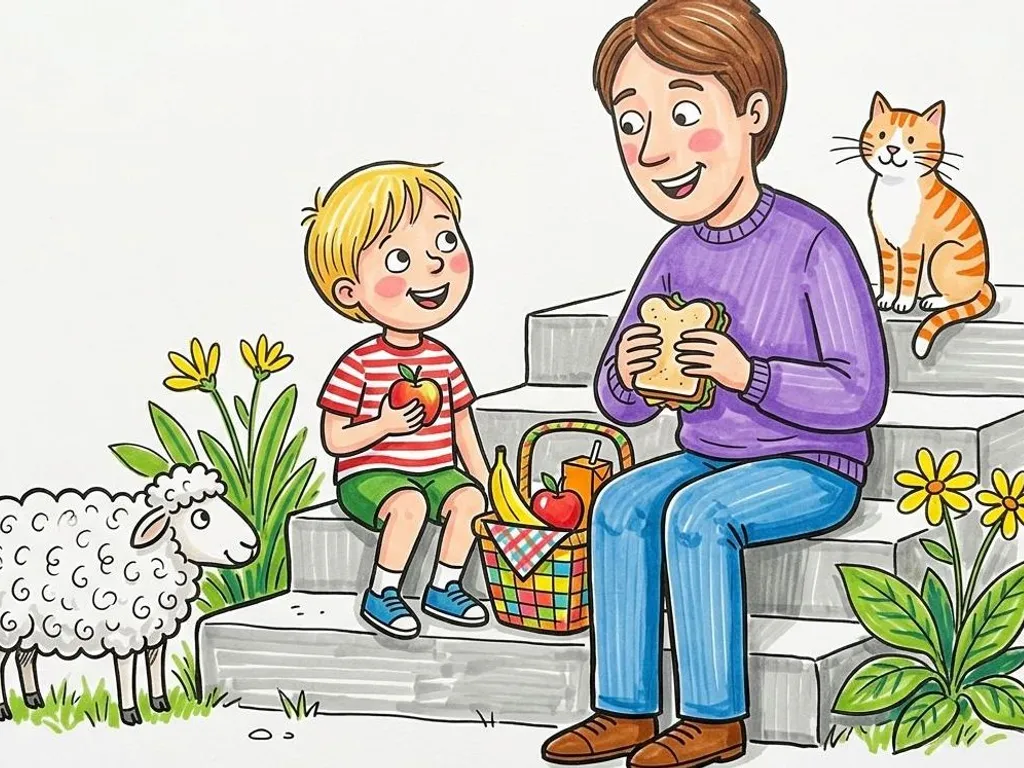
Behind means at the back or on the far side. “The rabbit is behind the plant” places the plant nearer the viewer, perhaps hiding part of the rabbit. Compare: “The child waits behind the gate,” “The ball rolled behind the sofa,” and “Our coats hang behind the door.” The objects need not touch.
Viewpoint matters when an object lacks a fixed front. A toy bus has a front, so a figure remains behind it as the observer moves. A tree does not; speakers use their viewpoint or direction of travel. Ask, “Behind from whose view?” when a picture allows different answers.
Practice with prepositions behind on by for kids should establish physical meaning before abstract uses. Older learners may meet “behind schedule” or “behind with homework,” where behind means late or less advanced. These are words with multiple meanings, not descriptions of physical space.
How “On” Shows Contact with a Surface
On means touching or being supported by a surface. A book is on a desk, a sticker on a bottle, and a picture on a wall. The surface need not be horizontal. Contact explains why a poster can be on a wall without being above it.
English uses on with clothing and body parts: “The hat is on her head,” “There is paint on his hand,” and “She wears a ring on her finger.” Teach wider uses—“on the screen,” “on the bus,” or “on Monday”—as separate groups so the place rule stays distinct.
Examples for prepositions behind on by for kids work well in daily routines: “Put your shoes on the mat,” “Write your name on the paper,” or “Leave the spoon on the plate.” Ask the child to check for contact. An object merely near a surface is not on it.
How “By” Shows Nearness

By means near, close to, or beside when describing place. “The backpack is by the bed” places the objects close together without contact. A child may stand by a friend, wait by the door, or leave a water bottle by a school bag.
By and next to overlap, but differ in precision. Next to suggests a position directly at one side: “The pharmacy is next to the bank.” By means nearby: “Wait by the entrance.” Distance depends on context. A bicycle by a house may be several steps away; a cup by a plate may be centimetres away.
In early work on prepositions behind on by for kids, teach only the place meaning of by. Later, introduce agent and method: “The picture was drawn by my sister” and “We travelled by train.” Separating these uses prevents children from applying one physical rule to every sentence with by.
Sentence Patterns and a Side-by-Side Comparison
The pattern is: person or thing + form of be + preposition + reference object. Compare: “The ball is behind the box,” “The ball is on the box,” and “The ball is by the box.” Use is for one person or thing and are for several: “The shoes are by the door.”
Practise three question forms: “Is the ball behind the box?”, “Where are the shoes?”, and “What is on the table?” Prepositions precede object pronouns: “Stand behind me,” “Sit by us,” and “Put the book by her.” Older children should choose me, us, her, him, or them, moving from fixed phrases to flexible speech.
Next, change the verb: “The dog sleeps by the bed,” “The picture hangs on the wall,” and “The child hides behind the curtain.” Varied verbs build more natural speaking practice than sentences with is alone. Ask the child to draw each sentence; the picture reveals whether the imagined position matches the words.
Common Mistakes and Helpful Corrections
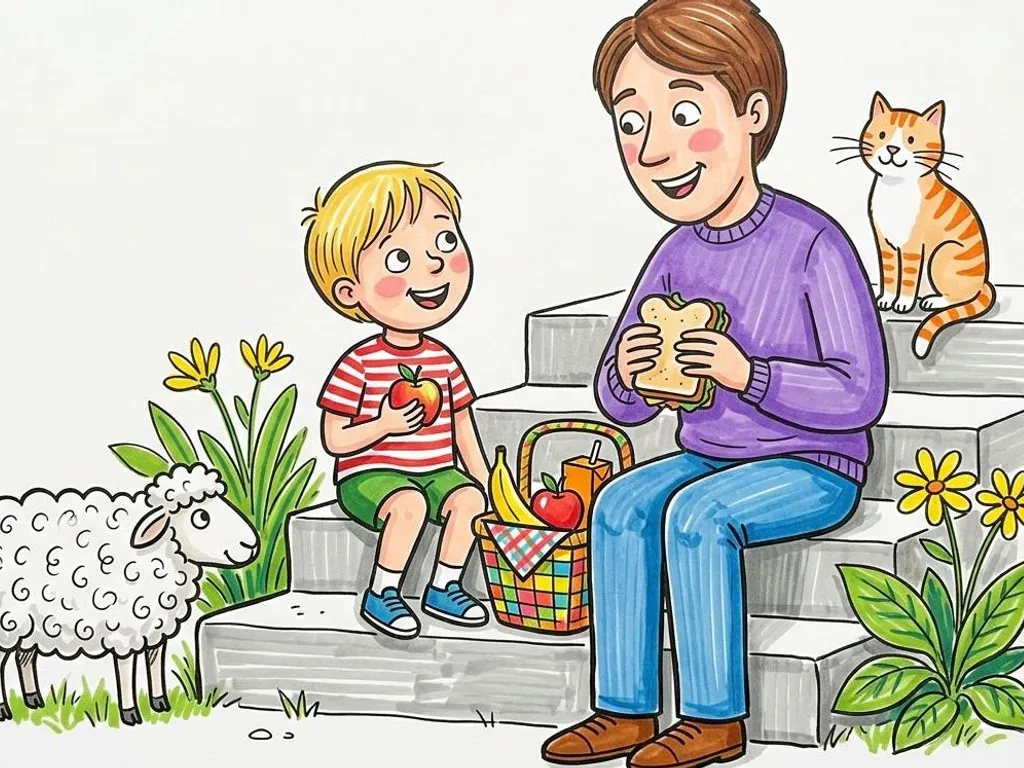
Children may use on for every visible location. “The shoes are on the door” means they touch, hang from, or rest on it. Shoes on the floor beside it are by the door. Check the physical relationship: surface contact means on; closeness without contact means by.
Another error treats behind as a synonym for near. “The child is behind the teacher” places the teacher in front. At the teacher’s side, use by or next to. Children may omit an article: “The book is on table.” Model “on the table” and invite one calm repetition. During conversation, a correct reply maintains fluency.
For multilingual learners, avoid matching each home-language preposition to one English word. Show the scene and compare complete phrases. This helps when reviewing prepositions behind on by for kids: one object demonstrates all three meanings without lengthy translation. LearnLink tutors adapt tasks to each learner’s age, confidence, and English level instead of turning every error into a rule.
Practice with Objects, Pictures, and Speech
Use a five-minute routine: one listening direction, three spoken sentences, and one independent sentence. Younger children can move a toy around familiar classroom objects. Older children can read a room plan, examine a photograph, or follow written directions.
Activities for prepositions behind on by for kids should prove understanding, not test guessing. Ask the child to move an object, explain a choice, or sketch the sentence. If two answers fit, compare the scenes they describe. “The bag is on the chair” and “The bag is behind the chair” may both fit different scenes.
Choose the Place Word
Complete each sentence with behind, on, or by.
1. The poster is ___ the wall.
2. The dog is hiding ___ the sofa.
3. Please leave your bag ___ the door.
4. The apple is ___ the plate.
5. The child is waiting ___ a parent.
6. The garden is ___ the house.
Answers: 1. on; 2. behind; 3. by; 4. on; 5. by; 6. behind.
Move, Say, and Ask
Place a toy animal behind a book. Your child says, “The animal is behind the book.” Move it on the book, then by the book. Swap roles: the child instructs while you move the toy. Finish with three questions: “Where is the animal?”, “Is it on the book?”, and “What is behind the book?” Encourage full answers.
Find and Fix the Meaning
Replace the incorrect preposition.
1. The cup is behind the table, but it is touching the tabletop.
2. The bicycle is on the garage, but it is standing near the garage door.
3. The bag is by the chair, but the chair hides it from view.
4. The painting is by the wall, but it is attached to the wall.
Suggested answers: 1. The cup is on the table. 2. The bicycle is by the garage. 3. The bag is behind the chair. 4. The painting is on the wall.
For the rule wording, Wikipedia — English Grammar is a useful reference while the practice examples here stay adapted for children.
Frequently Asked Questions
At What Age Can a Child Learn “Behind,” “On,” and “By”?
Children can follow position words before explaining grammar rules. Begin with one-step directions: “Put the bear on the chair” or “Stand by the door.” A 5-year-old may respond through movement and short speech. Older children can compare meanings, describe pictures, write directions, and identify non-place uses such as “by bus” or “on Friday.”
What Is the Difference Between “By” and “Next To”?
Both mean close to something. Next to places one thing directly at another’s side; by allows a looser nearby position. “The lamp is next to the bed” describes a side-by-side arrangement. “Leave your suitcase by the bed” means put it nearby. Use objects to show that by specifies no exact distance.
Why Does My Child Confuse “On” and “By”?
Your child may understand that both describe place without noticing contact. Use one test: if the object touches or is supported by the named surface, choose on. If it is close, choose by. A coat hanging from a door can be on it; shoes on the floor nearby are by it. Move the objects and say both sentences.
How Can We Practise These Words in a Multilingual Home?
Use objects, gestures, and complete English phrases before translation. For prepositions behind on by for kids, place one toy in three positions and repeat each full sentence. Your child can compare the phrase with another language. Focus on the spatial relationship instead of expecting an exact translation for every English word.
Should Every Preposition Mistake Be Corrected?
Correct mistakes that change the location without interrupting conversation. If your child says, “The bag is on the door” while pointing beside it, reply, “Yes, the bag is by the door.” Request repetition during focused practice, not after every story slip. A model, visual check, and second attempt provide enough support.
A short one-to-one lesson can show what level and pace fit your child — book a free English lesson.
Stay updated on our latest tips and resources by following us on Instagram LearnLink.