When and While: A Practical Guide for Kids
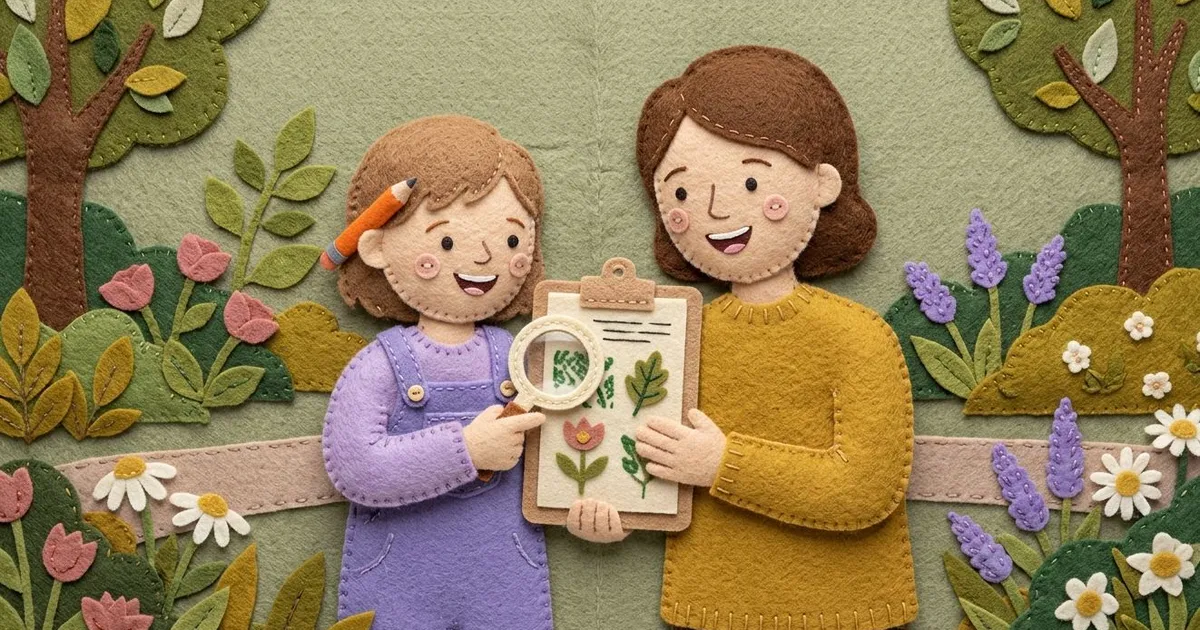
When introduces the time of an event, while while shows two actions happening during the same period. When and While: A Practical Guide for Kids explains the difference through familiar situations, patterns, and short exercises. Children use both words to describe games, tell stories, or recount school events. They must decide whether an event marks one moment or continues alongside another action. With that distinction, children can choose the right connector without memorising separate rules.
📥 When and While Practice Pack
Choose connectors, build sentences, fix mistakes, and track your learning
Leave your email — we'll send the PDF to your inbox.No spam — the PDF plus one short reminder. Unsubscribe anytime.
What Children Need to Understand First
When and while connect events through time. In “I smiled when the dog came in,” the dog’s arrival marks the time. In “I read while my sister painted,” both activities continue for a period. The connector shows how the events fit together.
Ask: “Did one event mark a moment, or did two actions continue together?” A moment often calls for when; two actions in progress often call for while. When and While: A Practical Guide for Kids begins with this contrast before introducing verb forms and punctuation.
These patterns are guidelines, not rigid laws. When can introduce a longer period: “We played outside when we lived in Rome.” Children should understand the sentence’s meaning before choosing the pattern that expresses it.
How the Two Connectors Work
Use when to identify an event’s time. It suits an action that begins, ends, or interrupts another: “The lights went out when we were eating.” It works for routines and repeated events too: “When we visit our grandparents, we make lunch together.”
Use while to stress duration or overlap. “The lights went out while we were eating” places the power cut within the longer activity of eating. “While Amir was drawing, Elena was building a tower” shows two continuing actions. Neither must interrupt the other.
The table summarises the central contrast in When and While: A Practical Guide for Kids.
Useful Sentence Patterns
For a completed event interrupting an action in progress, English often pairs the past simple and when with the past continuous: “I was brushing my teeth when the phone rang.” The brushing began before the ringing.
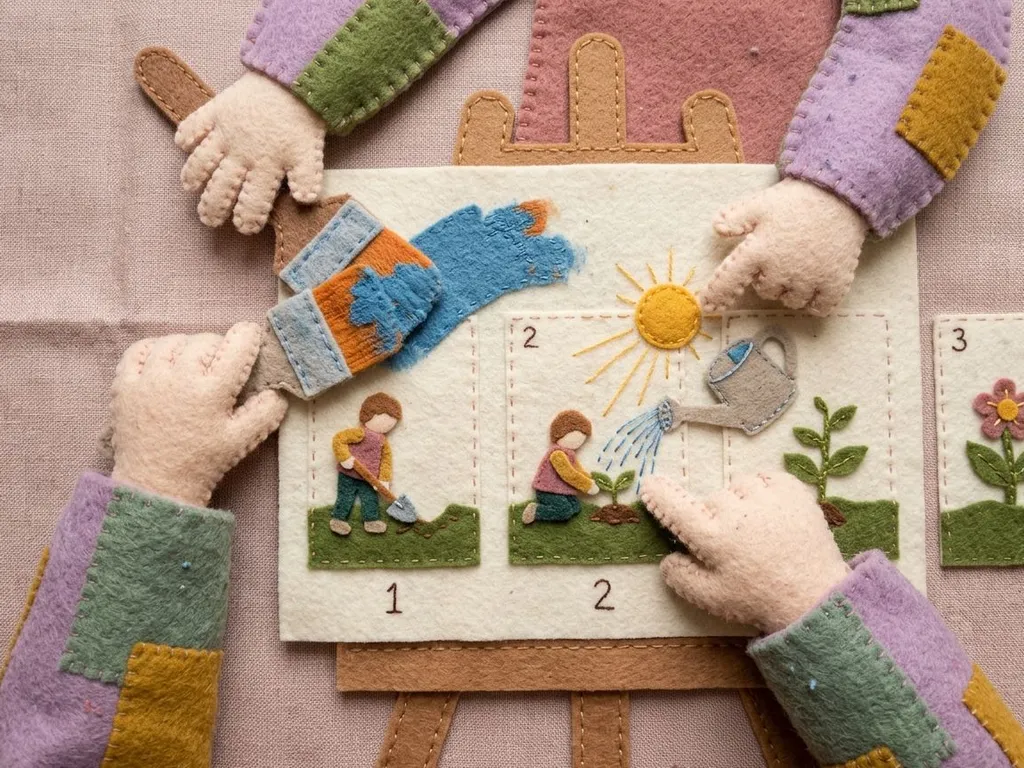
For two actions continuing together, children can pair while with the past continuous: “While we were walking, it was snowing.” A shorter event may occur during a continuing action: “Mina found a shell while she was walking along the beach.”
When and While: A Practical Guide for Kids includes one future-time pattern. After when, English uses the present simple for the future: “When the lesson ends, we will have a snack.” We do not say, “When the lesson will end.” The word will belongs in the other clause.
Clause Order and Punctuation
A time clause can come first or second. Both “When the bell rang, the children went inside” and “The children went inside when the bell rang” are correct. Moving the clause shifts the focus slightly without changing the time relationship.
When the time clause comes first, add a comma: “While Leo was practising, his brother listened.” When the other clause comes first, omit the comma: “His brother listened while Leo was practising.” This gives young writers a quick punctuation check.
Each clause needs a subject and suitable verb. “While was eating, the door opened” is incomplete because the listener cannot identify who was eating. “While we were eating, the door opened” supplies the subject.
Common Mistakes and How to Fix Them
A common mistake is using while for a brief event: “While the glass broke, I jumped.” The breaking marks a point in the story, so write “When the glass broke, I jumped.” For an event with duration, while works: “While the glass was falling, I reached for it.”
Another mistake is putting every verb in the past continuous. “I was seeing the bird while I was walking” sounds unnatural because see describes perception, not a deliberate continuing action. Write “I saw the bird while I was walking.” When and While: A Practical Guide for Kids teaches children to choose verb forms by meaning instead of copying one pattern.
Children may repeat subjects awkwardly or join too many ideas: “While I was eating while my brother was talking while Mum was cooking.” Split the chain or select one relationship: “While Mum was cooking, my brother talked to me. I ate my dinner.” Accurate writing matters more than numerous connectors.
Ways to Practise at Different Ages
For children, demonstrate visible actions. One person claps while another jumps. Stop one action with a bell and say, “We were jumping when the bell rang.” Movement shows the difference between an ongoing action and a moment.
Children can pair picture cards. One might show a child doing homework; another might show rain starting. Ask for two versions: “I was doing my homework when it started to rain” and “It started to rain while I was doing my homework.” Discuss how both describe the same scene from different angles.
Older learners can write a six-sentence account of a journey, match, celebration, or school day. Require two sentences with when, two with while, and correct commas. LearnLink tutors can adapt tasks to each child’s age, language background, and confidence instead of assigning one exercise to every learner.
Practice Exercises
These activities turn the rules in When and While: A Practical Guide for Kids into choices children can explain. Ask your child why each connector fits; the explanation shows deeper understanding than a correct guess.
Choose When or While
1. I was tying my shoes ___ the bus arrived.
2. We talked ___ we were waiting for lunch.
3. ___ the film ended, everyone stood up.
4. My cousin drew a map ___ I packed the bag.
5. The cat hid ___ it heard the vacuum cleaner.
Answers: 1. when; 2. while; 3. when; 4. while; 5. when.
Complete and Compare the Sentences
Finish each sentence with your own idea.
1. I was getting ready when _____.
2. While my family was eating, _____.
3. When the weekend begins, _____.
4. I learned a new word while _____.
Now move the time clause in two sentences. Add a comma if the time clause comes first. For example: “I found my key while I was packing” becomes “While I was packing, I found my key.”
Check meaning before spelling or punctuation. Ask which event continued and which marked a moment. Then check verb forms and commas. This order keeps correction focused and helps a child understand the sentence instead of swapping a word.
When a word has several meanings or pronunciations, Cambridge Dictionary is a useful check before turning it into child-friendly examples.
Frequently Asked Questions
What Is the Simplest Difference Between When and While?
When often marks a moment or identifies an event’s time. While highlights an activity continuing during another activity. Across LearnLink lessons, our tutors help children build confident, everyday English step by step. When and While: A Practical Guide for Kids teaches this core rule, though context can make either word possible.
Can When and While Appear at the Beginning of a Sentence?
Yes. A child can write “When the rain stopped, we went outside” or “While the rain was falling, we played a board game.” A comma follows the opening clause. The clauses can come later: “We went outside when the rain stopped” and “We played a board game while the rain was falling.” These versions need no comma.
Why Do We Often Use the Past Continuous After While?
The past continuous presents an action in progress, and while stresses duration. The forms pair naturally: “While I was reading, my sister was drawing.” The pairing is not compulsory. “I found a coin while I walked home” is grammatical, though “while I was walking home” emphasises the continuing walk.
Should a Young Child Learn All the Tense Rules at Once?
No. Begin with meaning and physical examples: one action continues as another happens. Once the child can describe that relationship, introduce the past simple and past continuous labels. Younger learners can use spoken sentences and pictures; older learners can compare clauses, edit punctuation, and justify verb forms.
Can Multilingual Children Confuse These Words with One Word in Another Language?
Yes. Another language may divide time relationships differently or use one connector where English uses two. This normal cross-language pattern does not mean the child is behind. Use paired examples, timelines, and acted scenes. Ask what continued and what happened at a particular moment, then connect that meaning to the English word.
A short one-to-one lesson can show what level and pace fit your child — book a trial English lesson.
Stay updated on our latest tips and resources by following us on Instagram LearnLink.