Action Words in English for Kids

Start with 10 to 15 action verbs your child can act out, then build sentences. Action words are verbs that show what a person, animal, or thing does, and action words in english for kids should begin with verbs such as run, jump, eat, draw, read, open, close, and help. Young learners grasp verbs faster when they move, see, point, and answer in short sentences. A 5-year-old may act out “jump” and “clap,” while a 12-year-old can use “compare,” “explain,” and “choose” in school tasks. Connect each word with meaning, movement, and daily speech.
📥 Action Words Starter Cards
A printable verb practice pack for children to say, act, and remember everyday action words.
Leave your email — we'll send the PDF to your inbox.No spam — the PDF plus one short reminder. Unsubscribe anytime.
Core Action Words to Start With
For younger children, start with body verbs: run, walk, sit, stand, jump, clap, dance, sleep, wake up, eat, drink, look, listen, touch, and stop. The learner can perform each action at once. Say the word, show it, then let your child copy it.
For school-age children, add classroom and thinking verbs: read, write, draw, count, spell, choose, answer, ask, check, compare, explain, remember, and fix. These words support online lessons, homework, and games. Link action words in english for kids to real tasks, so the child hears the verb and uses it with purpose.
Useful Verb Groups for Home and Lessons
Grouping verbs helps memory. Food verbs: eat, drink, cook, cut, mix, taste, and share. Play verbs: throw, catch, kick, build, hide, find, win, and lose. Home routine verbs: wash, brush, open, close, clean, carry, put, take, and wait.
Older children can learn verbs by school purpose. “Describe,” “compare,” and “explain” fit science and reading. “Plan,” “try,” “check,” and “change” fit projects. This makes action words in english for kids feel like tools for real communication, not a list.
Examples in Context
Children need verbs inside sentences. “Run” names an action, but “The dog runs fast” gives the learner a pattern. Try repeatable lines: “I draw a cat,” “She opens the box,” “They play football,” “We read a story,” and “He helps his sister.” Change one part at a time, so the verb stays visible inside the sentence.
For children who speak two or more languages, avoid translating every verb first. Use a toy, picture, or action when possible. If the child knows the idea in another language, English can attach to the same meaning through use: “Pick up the pencil,” “Put it on the table,” “Now give it to me.”
Two-Minute Action Chain
Choose five verbs: stand, clap, turn, touch, sit. Say them in a chain: “Stand up. Clap twice. Turn around. Touch the chair. Sit down.” Then let your child give the commands. For older children, add adverbs: “Walk slowly,” “speak clearly,” “write carefully.”
Activities by Age
Preschool learners need movement first. Across LearnLink lessons, our tutors help children build confident, everyday English step by step. Use soft toys too: “The bear sleeps,” “The car stops,” “The doll dances.” Model the full sentence back gently.
Early school-age kids can sort verbs into groups and make short stories. Give six action cards and ask, “What happens first?” A child might build: “The girl wakes up. She eats breakfast. She runs to school. She reads a book.” This bridges single verbs and grammar.
Older school-age learners need wider verbs and precise meaning. Teach pairs such as look/watch, say/tell, make/do, bring/take, and learn/study. Ask them to use action words in english for kids in subject-linked sentences: “Compare the two animals,” “Explain your answer,” or “Plan a weekend trip.”
Practice Ideas That Do Not Feel Like a Test
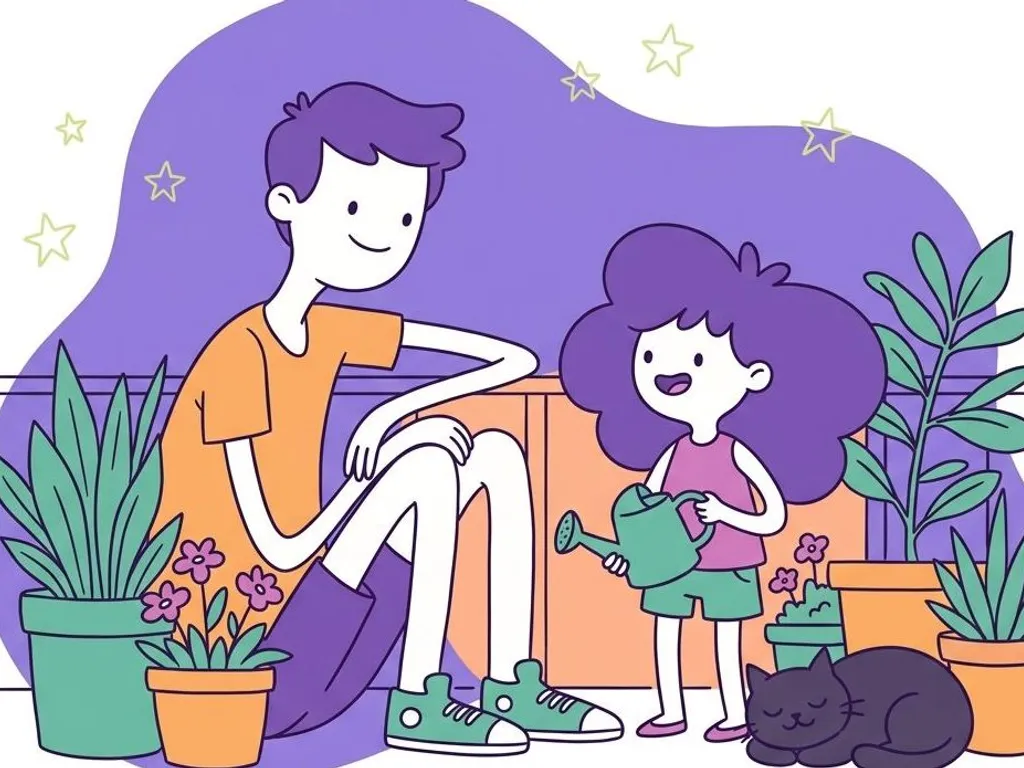
Use everyday moments. At breakfast, ask, “What do we do with juice?” The answer may be “drink.” During cleanup, use “pick up,” “put away,” “close,” and “carry.” On a walk, name actions you see: “The bird flies,” “The baby cries,” “The man waits,” “The bus stops.”
Pictures work well. Choose one busy picture and ask your child to find five actions. If the answer is a noun, prompt with: “Yes, a boy. What does the boy do?” For online practice, a short session with LearnLink tutors can turn these verbs into spoken answers, not only recognition.
Picture Verb Hunt
Open a book or a family photo. Across LearnLink lessons, our tutors help children build confident, everyday English step by step. Older children can add time words: yesterday, now, tomorrow, after school, or every Sunday.
Common Mistakes and How to Fix Them
One mistake is teaching too many verbs at once. Ten well-used verbs beat fifty words a learner cannot use. Choose a weekly set, then return to it in games, reading, and family talk. Repetition works when the task changes.
Another mistake is leaving verbs as commands only. “Jump!” helps, but children need statements and questions: “I jump,” “Can you jump?” “The frog jumps.” This shows how action words in english for kids work in real grammar.
Learners may confuse close verbs, especially make/do, look/watch, and bring/take. Teach pairs with contrasts: “Look at the picture” means turn your eyes to it; “watch the video” means look for a period of time. Short contrasts work better than long rules.
- Try five action words during breakfast with children ages four to six.
- Practice one verb page from a picture book before bedtime tonight.
- Use gestures for jump, clap, run, draw, and point together.
- Ask your child to act out three new verbs after reading.
- Repeat each action word in two short sentences during playtime.
When a word has several meanings or pronunciations, Cambridge Dictionary is a useful check before turning it into child-friendly examples.
Frequently Asked Questions
How Many Action Words Should a Child Learn First?
Start with 10 to 15 action words your child can use in daily life. Good first verbs include eat, drink, run, jump, sit, stand, open, close, read, write, play, help, look, listen, and stop. When your child can understand and use them in short sentences, add another small group of action words in english for kids.
Should Action Words Be Taught with Translation?
Translation can help when a learner is stuck, but it should not be the only method. For action words, movement, pictures, toys, and real objects often work better. Say “open,” open a box, and let your child repeat the action. This builds a direct link between the English word and the meaning.
What Is the Best Way to Practise Verbs with a Quiet Learner?
Begin with low-pressure choices. Ask your child to point, act, or choose between two verbs before asking for a full sentence. For example, “Is the animal sleeping or running?” Then model the answer: “It is sleeping.” Quiet learners often speak more when the task feels like play, not performance.
How Can Older Children Use Action Words in Better Sentences?
Older children should move from simple verbs to precise verbs and fuller sentence frames. Instead of “I do homework,” they can say “I check my answers” or “I explain my idea.” Practising action words in english for kids through school topics helps them speak about reading, science, projects, and daily plans with more control.
- Start with 10 to 15 verbs your child can act, point to, and say in one short sentence.
- Try one verb group per week, such as movement, food, routine, learning, or thinking.
- Practice the same verbs in commands, statements, and questions so grammar grows naturally.
- Use real tasks, pictures, and short games; LearnLink supports English learning for ages 4-15 and has worked with 4,000+ families.
Start your child's English journey today — Try a trial lesson with LearnLink.
Data current as of July 2026.
Stay updated on our latest tips and resources by following us on Instagram LearnLink.