Adjective Activities for Kids
Adjective activities for kids need five to ten minutes and six to eight words per session. Children identify a quality, choose the correct word, then use it in a sentence: a soft blanket, the soup is hot. Younger learners start with concrete adjectives such as big, red, and wet. More experienced learners compare objects, explore adjective order, and choose precise words such as enormous or reliable. This guide presents a teaching sequence, age-based examples, games, and exercises.
📥 Adjective Activities for Kids
Notice, choose, compare, and use describing words
Leave your email — we'll send the PDF to your inbox.No spam — the PDF plus one short reminder. Unsubscribe anytime.
What Adjectives Do in a Sentence
An adjective answers questions about a person, place, animal, or thing: What kind? Which one? How many? In three noisy parrots, three gives the number and noisy describes the parrots. Begin adjective activities for kids with familiar nouns. Learning both spoon and shiny at once can hide the grammar behind new vocabulary.
English adjectives often come before a noun or after a linking verb such as be, seem, look, feel, or smell. They do not change for singular and plural nouns: a small cup and two small cups. This helps children whose other languages change adjective endings.
A Simple Home Routine
Follow a short three-step cycle: notice, choose, and say. Point to an object and model one phrase: “a rough towel.” Offer a choice: “Is it rough or smooth?” Then request a sentence: “The towel is rough.” This routine makes adjective activities for kids manageable for first-time online learners and busy families.
Practise for five to ten minutes, then reuse the words during daily routines. At breakfast, compare a full glass with an empty one. While dressing, find a striped shirt or warm socks. On a walk, notice a narrow path, tall building, or quiet street. Children who speak multiple languages may compare equivalent words, but the final phrase should follow English word order.
Keep six to eight adjectives active. Revisit them across a few days before adding more. A child who uses soft in “a soft toy,” “The pillow feels soft,” and “This scarf is softer” understands more than one who recites twenty isolated words.
A big ball rolled away.
I found a small shell.
The blanket feels soft.
This chair is hard.
The soup is hot.
My drink is cold.
That train is fast.
The turtle is slow.
Examples by Age and Stage
School-age kids learn through visible opposites and movement: big/small, fast/slow, happy/sad, and clean/dirty. Let the child hold two objects, point, sort, or act out each word. Accept short answers before expanding them: “Blue” becomes “It is blue.” Avoid correcting every sound while the child builds a full sentence.
School-age kids can group adjectives by colour, size, shape, texture, feeling, and opinion. They can compare two or three items: long, longer, longest. When an adjective expresses an opinion, ask for evidence: “Why is this game exciting?” The answer moves practice beyond naming words.
School-age kids can replace vague words such as nice, good, and bad with exact language. They can edit descriptions, discuss tone, and test adjective order in phrases such as a beautiful old wooden box. The same adjective activities for kids suit different ages when the speaking demand changes, not the materials.
Practical Games with Household Objects
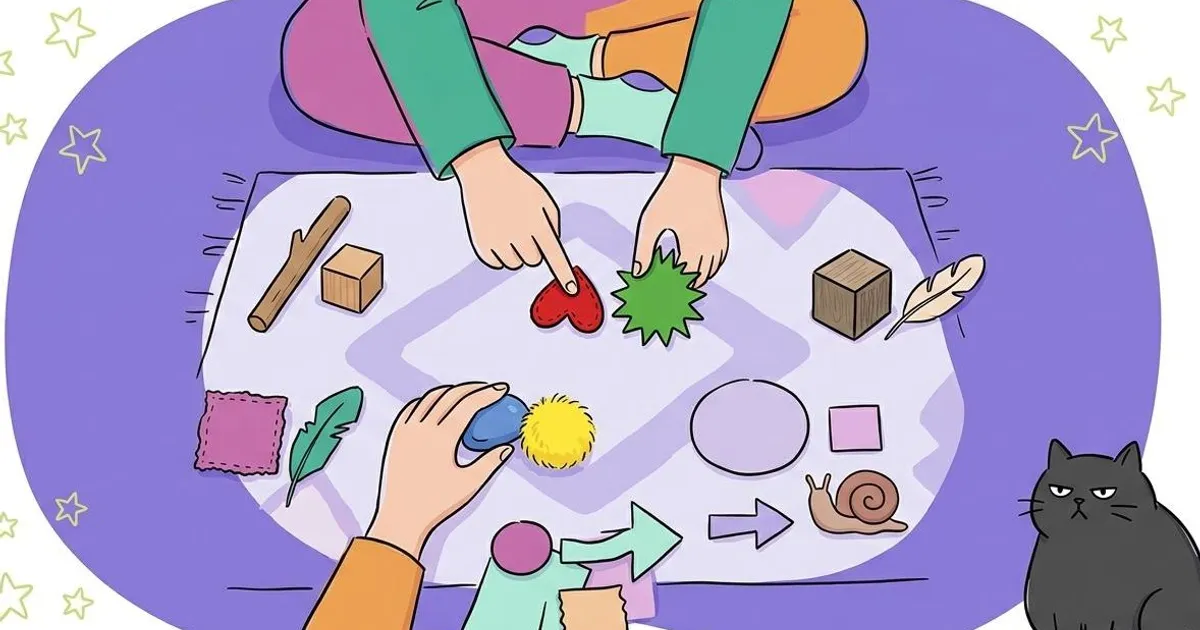
Start with a mystery bag. Place familiar objects inside and let the child feel one without looking. Request two or three clues: “It is hard, small, and round.” Other players guess the noun. This is one of the easiest adjective activities for kids because touch gives each word direct meaning.
For an adjective hunt, name a quality instead of an object: “Find something smooth.” The child brings or points to an item and says a full sentence. Older children can find multiple answers and rank them: “The mirror is smoother than the table.” Set safe boundaries for searching and handling objects.
Picture sorting works well in multilingual homes. Sort family-safe photos, packaging, or drawings under labels such as bright, dark, round, and square. Across LearnLink lessons, tutors can extend this task with follow-up questions; families can follow the same pattern with paper cards.
Choose the Precise Adjective
Use heavy, sour, quiet, bright once each.
1. A lemon tastes ____.
2. The library is ____.
3. This full suitcase is ____.
4. The lamp is ____.
Answers: 1. sour; 2. quiet; 3. heavy; 4. bright.
Building Stronger Spoken and Written Descriptions
Good adjective activities for kids progress from single words to complete sentences. Start with “a green bag.” Add a verb: “The green bag is hanging by the door.” Then add a reason or contrast: “I chose the green bag because it is lighter.” The adjective keeps its meaning as the sentence grows.
Teach precision through substitution. Write “We saw a nice bird.” Ask which word helps a listener picture it: tiny, colourful, injured, or unusual. Extra adjectives do not guarantee stronger writing. One exact word often beats a row of weak choices.
Expand Each Sentence
Add one suitable adjective, then say where it belongs.
1. We found a ____ shell.
2. The water feels ____.
3. They carried three ____ boxes.
Possible answers: 1. smooth; 2. cold; 3. heavy. Other answers are correct if the meaning and word order fit.
Common Mistakes and Calm Corrections
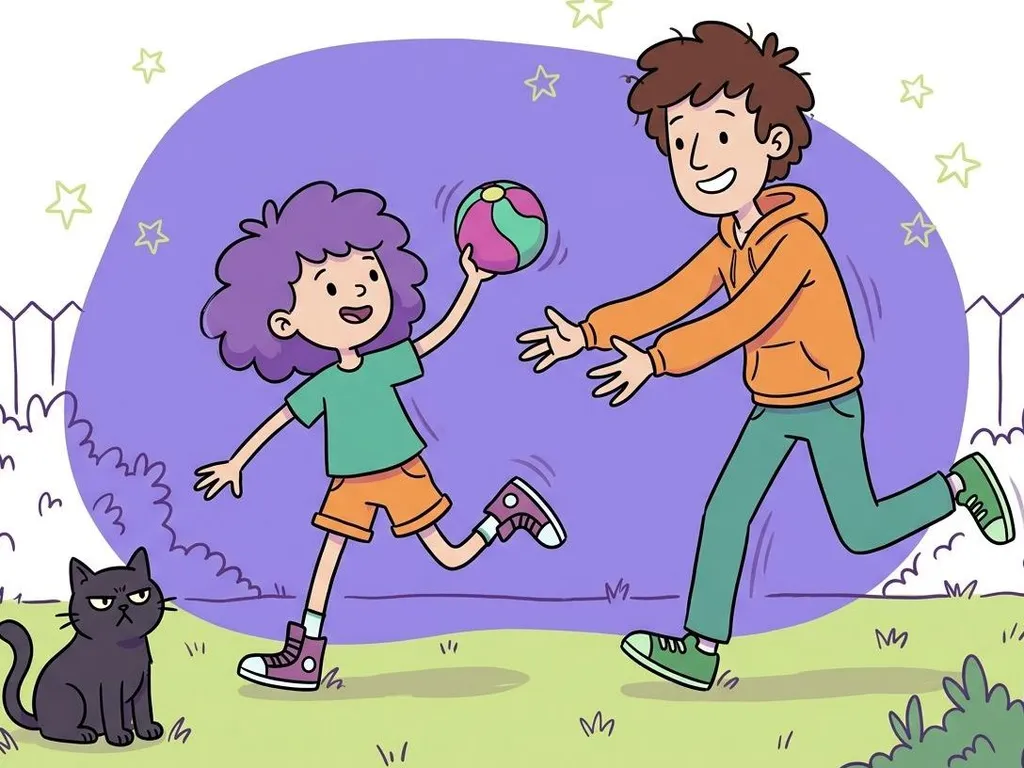
Children may say “the red big ball” because adjective order differs across languages. Model “the big red ball” and ask the child to repeat the whole unit. For beginners, size comes before colour. Older learners can follow a broader pattern: opinion, size, age, shape, colour, origin, material, purpose, then noun.
Another error adds a plural ending to the adjective: “two smalls dogs.” Contrast it with “one small dog, two small dogs.” Children may use an adverb after a linking verb: “The soup smells badly,” when the smell is unpleasant. For that meaning, model “The soup smells bad.” Include these contrasts in adjective activities for kids after securing the basic pattern.
Correct one target at a time. If the lesson focuses on adjective position, address word order and leave a minor pronunciation slip for later. An effective correction repeats the child’s meaning correctly: “Yes, it is a large blue kite.” The exchange continues without making every answer a test.
- Try correcting one adjective gently during play with children ages five to seven.
- Practice three adjective contrasts using a favorite picture book after dinner.
- Use Adjective activities for kids to model kind, specific feedback today.
- Praise each correct description before calmly repeating the improved sentence together.
- Ask your child to self-correct two examples without pressure or interruption.
For the rule wording, Wikipedia — English Grammar is a useful reference while the practice examples here stay adapted for children.
Frequently Asked Questions
How Often Should Children Practise Adjectives?
Use adjective activities for kids three or four times a week for five to ten minutes. Short, repeated practice is easier to remember than one long worksheet. Reuse words at meals, during play, and while reading. Add new adjectives after your child understands and uses the current set in more than one sentence pattern.
Which Adjectives Should a Beginner Learn First?
Begin with words children can see, touch, or act out: big, small, hot, cold, soft, hard, fast, slow, happy, sad, clean, and dirty. Opposite pairs reveal meaning without translation. Add colours and shapes when the related nouns and concepts are familiar.
Should Children Memorise Adjective Order?
Young beginners need not memorise a long rule. Teach chunks such as a big red bus and a small wooden box. Children can study adjective order when editing longer descriptions. Natural examples and repeated reading remain important because everyday English does not follow one formula in every case.
What If My Child Mixes English with Another Language?
Mixing languages is normal for multilingual learners. Acknowledge the idea, provide the missing English word, and invite the child to repeat the full phrase. For example: “Yes, a rough stone. The stone feels rough.” Treat knowledge from another language as a bridge to the English pattern.
How Can I Tell Whether My Child Understands Adjectives?
Ask the child to follow “Bring me the small blue cup,” describe an unseen object, and compare two familiar items. These tasks test understanding, speaking, and flexible use. A copied definition is insufficient. Check meaning and placement in a new sentence, not perfect spelling on the first attempt.
- Start with six to eight concrete adjectives and practise for five to ten minutes.
- Use familiar objects so the child can see, touch, compare, and describe each quality.
- Practise each word before a noun, after a linking verb, and in a comparison.
- Correct one target at a time, then reuse the word during play, meals, or reading.
If your child needs steady speaking practice, start small — choose a trial lesson.
Stay updated on our latest tips and resources by following us on Instagram LearnLink.