Adjective Practice Sheet for Kids: 3 Tasks
An adjective practice sheet for kids gives children guided practice describing nouns — small, bright, kind, careful, noisy, brave. A strong sheet trains adjective-spotting, word choice, correct placement, and real use in speech or writing — not just circling. Parents care because adjectives make English clearer: "I saw a dog" becomes "I saw a sleepy brown dog."
What Adjectives Do in English
Adjectives describe nouns — showing size, color, number, shape, age, feeling, taste, sound, or opinion. In "three red apples," three and red both describe apples; in "the lesson was fun," fun describes the lesson.
Young children start with visible, touchable words: big, small, blue, soft, hot. Older children handle sharper ones: gentle, confident, narrow, ancient, useful. A strong adjective practice sheet for kids should match age and skill level, not recycle baby-level words.
The small cat slept.
She carried a bright bag.
He told a kind story.
The careful driver stopped.
The noisy drum echoed.
A brave firefighter helped.
The gentle dog waited.
We visited an ancient castle.
Where Adjectives Go in a Sentence

English adjectives usually come before nouns — a green bag, a quiet room, a funny story — or follow linking verbs: The bag is green. The room feels quiet. The story sounds funny.
This matters for children whose home language uses another order. A child may say "the bag green" or "the room quiet" — correct calmly: "The bag is green" or "It is a green bag."
How to Create an Effective Practice Sheet
A useful adjective practice sheet for kids needs three tasks: spotting adjectives, choosing adjectives, and writing with adjectives. Spotting builds grammar awareness; choosing builds meaning; writing anchors the word in a real sentence.
For younger kids, use pictures and short phrases; for school-age kids, full sentences; for older kids, add tone, precision, and comparison — "tired" differs from "exhausted," and "good" is weaker than "thoughtful," "clear," or "fair."
Practice Sheet Section 1: Spot the Adjective

Start with sentences where nouns are easy to find. Ask, "Which word tells us more about the thing or person?" — better than requesting a grammar label first.
After spotting, ask what detail each adjective gives — color, size, feeling, number, or opinion. This step builds grammar and vocabulary together.
Practice: Find the Adjective
Underline the adjective in each sentence: 1. The small cat slept. 2. We opened the heavy door. 3. My sister has a purple notebook. 4. The soup is hot. 5. He told a kind story. Then say which noun each adjective describes.
Practice Sheet Section 2: Choose the Best Word
Children often default to nice, big, or good — functional but too broad. A stronger adjective practice sheet for kids gives choices and asks children to match word and meaning.
"A loud library" sounds odd unless describing a problem; "a quiet library" fits. Adjectives aren't decorations — they must match nouns and situations.
Practice: Pick the Better Adjective
Choose the adjective that fits best: 1. a soft / sharp pillow 2. a noisy / silent drum 3. a brave / round firefighter 4. a cold / square winter morning 5. a careful / blue driver. After each answer, explain why the other word is weaker or strange.
Practice Sheet Section 3: Make Sentences Richer
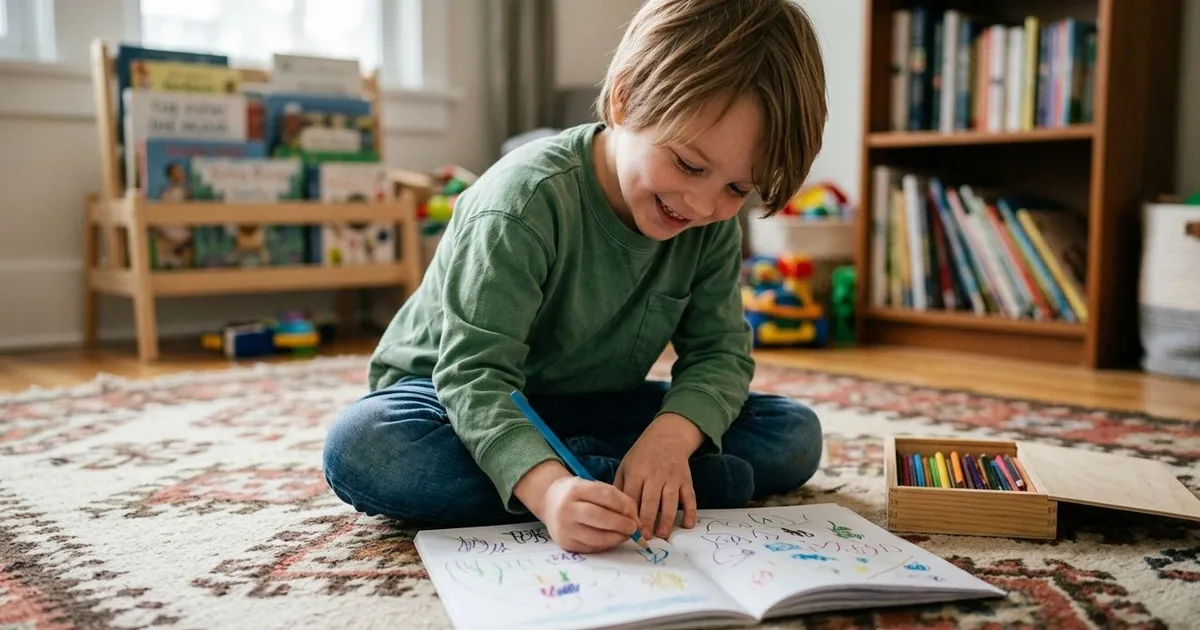
Once children can choose adjectives, ask them to improve plain sentences. "The child found a shell" becomes "The curious child found a smooth white shell." The aim isn't longer sentences — it's reader-helping detail.
LearnLink tutors guide children to speak first, then write. A child says "It is a big house," then adds one clearer detail: "It is a big wooden house." In online lessons with LearnLink tutors, that correction stays gentle and immediate.
Practice: Add Two Adjectives
Rewrite each sentence with two adjectives: 1. I saw a bird. 2. She packed a bag. 3. They entered a room. 4. We ate a cake. 5. He drew a robot. Keep the sentence clear. Do not add details that fight with each other, such as "a tiny huge robot."
Common Mistakes Children Make
One frequent mistake: using an adjective as a noun — "I like the blue" instead of "I like the blue one" or "I like the blue shirt." English needs a noun or support word like one.
Another mistake: adding plural endings to adjectives. English says "three red balloons," not "three reds balloons" — the noun pluralizes, the adjective stays unchanged. That difference helps multilingual children whose home languages inflect adjectives.
Children often overuse one adjective for every feeling. If everything is happy, sad, or bad, sort words by strength: upset, worried, lonely, angry, disappointed. A well-planned adjective practice sheet for kids can include word banks so children see stronger choices.
How Parents Can Use the Sheet at Home
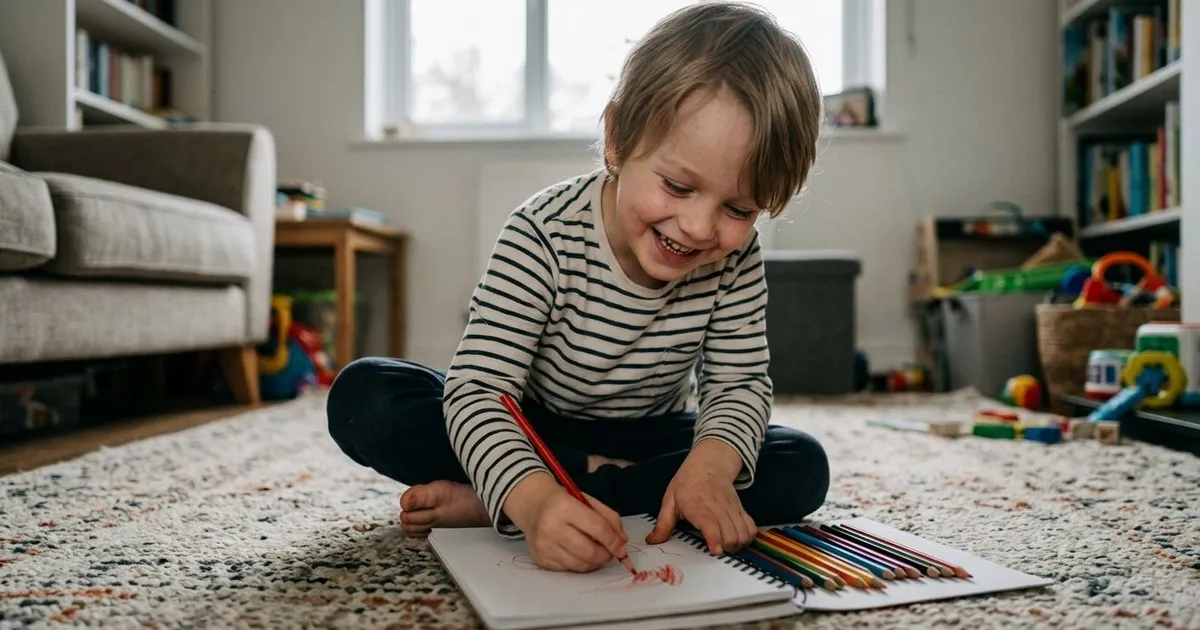
Keep practice short — ten focused minutes beats a long grammar session. For a 5-year-old, ask for one adjective about a toy; for an 8-year-old, a full sentence; for a 13-year-old, ask how the adjective changes sentence tone.
Use real objects. A cup can be empty, full, clean, chipped, heavy, light, warm, or plastic; a picture can be bright, dark, crowded, peaceful, funny, or strange. Real things connect grammar with meaning.
When you print an adjective practice sheet for kids, leave space for the child's own examples. Real progress shows when children use adjectives naturally in speech, stories, messages, and schoolwork — not just in correct answers on a page.
For rule wording, Wikipedia — English Grammar is a useful reference; examples here remain adapted for children.
Frequently Asked Questions
What Age Should Children Learn Adjectives?
Children start using simple adjectives around preschool — big, small, hot, cold, happy, sad. Formal grammar can wait; for school-age kids, focus on naming and describing. Across the 4–15 age range, children can build confidence with sentence patterns, word order, and increasingly precise adjective choices.
How Many Adjectives Should My Child Learn at Once?
For younger children, 5–8 adjectives per session is enough; older children can handle 10–15 if grouped by theme — feelings, weather, size, or personality. A good adjective practice sheet for kids should give variety without becoming a memory test.
Should Children Memorize Adjective Order?
Older learners can study adjective order, but young children learn it best through repeated examples — "a small red ball" sounds more natural than "a red small ball" after enough reading and speaking. Keep correction light: repeat the sentence in natural English and let your child try again.
What Is the Best Way to Correct Adjective Mistakes?
Correct the sentence, not the child. If your child says "three reds cars," reply "Yes, three red cars," then ask them to repeat it once. That keeps the mood calm and gives the right model. For writing, circle the noun and adjective so your child can see what changes and what stays.
Start your child's English journey today — Try a trial lesson with LearnLink.
Stay updated on our latest tips and resources by following us on Instagram LearnLink.