Cinema and Theater Vocabulary for Kids
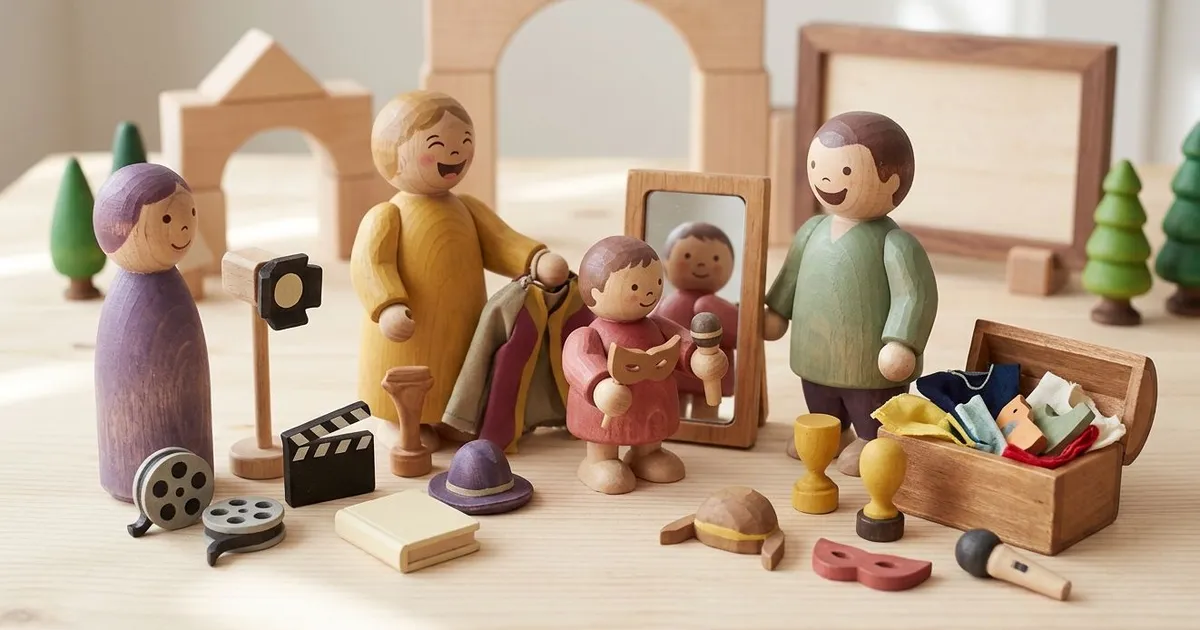
Cinema and Theater Vocabulary in English: Words and Activities for Kids begins with words such as movie, actor, stage, screen, ticket, and audience. Children need familiar situations and short phrases they can reuse, not a long glossary. This guide groups words by place and purpose, then practises them through play, conversation, and review. Younger children can point, sort, and act. Older learners can describe scenes, compare performances, and give brief opinions.
📥 Cinema and Theater Vocabulary
Words, comparisons, useful sentences, and home practice
Leave your email — we'll send the PDF to your inbox.No spam — the PDF plus one short reminder. Unsubscribe anytime.
Core Vocabulary for Films and Live Performances
Begin with nouns children can see in a picture or during a visit. Teach each noun inside a phrase: a cinema ticket, a large screen, or a theatre stage. The child gains a ready-made speaking pattern.
- Cinema words: film, movie, cinema, screen, trailer, scene, character, director, camera, animation, subtitles, and popcorn.
- Theater words: play, stage, curtain, actor, costume, scenery, script, rehearsal, interval, musical, and applause.
- Shared words: ticket, seat, row, audience, entrance, exit, show, cast, story, and performance.
The actor wears a costume.
The dancers are on stage.
The picture fills the screen.
I bought a ticket.
The audience clapped loudly.
The curtain opens slowly.
We practise at rehearsal.
The subtitles show the words.
Add verbs after the nouns become familiar. Children can watch a movie, act in a play, buy a ticket, and applaud a performance. These combinations help children form complete sentences.
Cinema and Theater Vocabulary in English: Words and Activities for Kids suits different ages. A five-year-old may learn six concrete nouns; a teenager can add plot, review, performance, and special effects.
Cinema and Theater Compared
A cinema shows a recorded production on a screen. A theater presents a live play, musical, dance performance, or stage event. Some words fit one setting; others fit both. The contrast helps children choose precise terms instead of calling every show a movie.
Usage varies by country. Movie theater appears in North American English; cinema appears widely in British and international English. Theater and theatre are both correct. Teach children to recognise both and use the spelling required by their school or programme.
Useful Sentences in Context
Connect each new word to a choice or action. Cinema and Theater Vocabulary in English: Words and Activities for Kids becomes memorable when children ask for tickets, find seats, or describe events on stage.
- “Which movie would you like to watch?”
- “The trailer was funny, but the story was sad.”
- “Our seats are in the third row.”
- “The curtain opens at the start of the play.”
- “She wears a bright costume on stage.”
- “The audience clapped at the end.”
- “My favourite character is the young detective.”
- “The subtitles helped me follow the story.”
Model one sentence, then change one part. From “The actor wears a red costume,” move to “The actor wears a blue costume” and “The dancer wears a silver costume.” Stable grammar lets the child focus on vocabulary. Older learners can add a reason: “The costume is silver because the character comes from the moon.”
Activities for Different Ages
School-age kids: use picture sorting and mime. Place pictures under cinema and theater. A screen belongs with cinema; a curtain with theater. Say a word for the child to act out: clap, open an imaginary curtain, sell a ticket, or record a scene.
School-age kids: create a ticket desk with paper tickets, seat numbers, and a programme. One person asks, “Can I have two tickets, please?” Another replies, “Yes. Your seats are in row four.” Switch roles after several turns. The exchange practises polite questions, numbers, and place words.
School-age kids: plan a short screen or stage scene. Learners choose the cast, setting, costumes, and central event, then present the plan in English. Cinema and Theater Vocabulary in English: Words and Activities for Kids supports comparisons: “A recorded story can use special effects, but a live play depends on scenery, lighting, and actors on stage.”
Simple Practice at Home
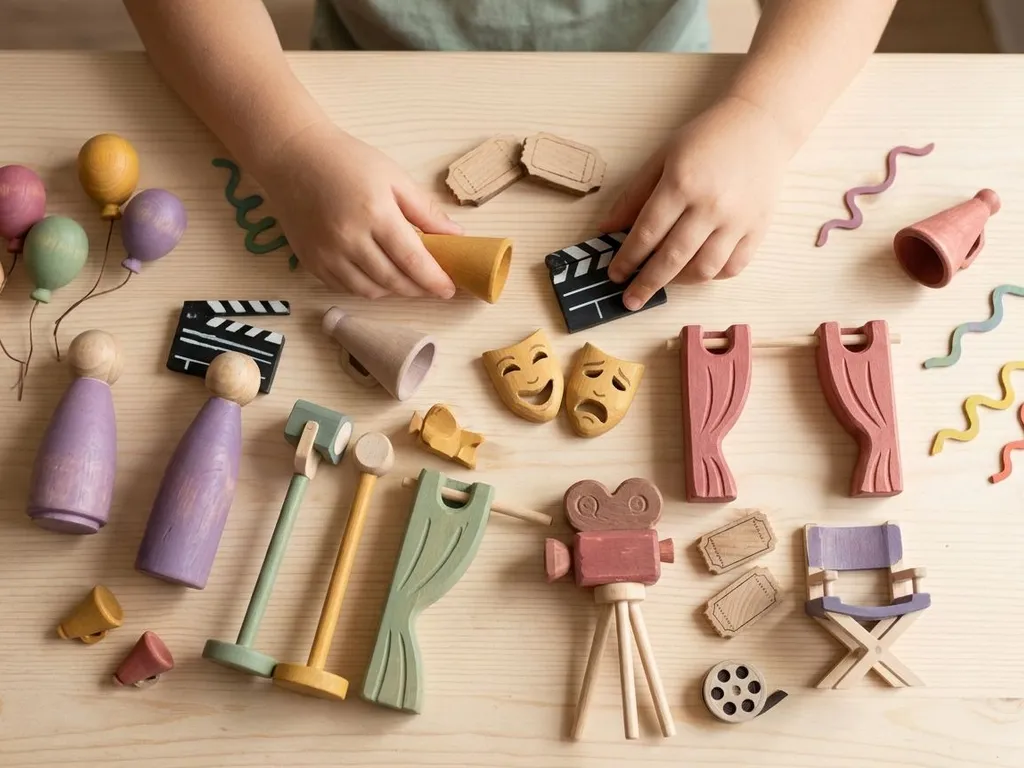
Use a before-during-after routine around a family movie or performance. Beforehand, predict the characters and setting. During the show, notice one costume, sound, or scene. Afterwards, name a favourite character and explain one event. Pause for language only when the interruption will not spoil the experience.
Three-clue Guessing Game
Choose a word without naming it. Give three clues: where people find it, what it looks like, and how they use it. For screen, say, “It is in a cinema. It is large. We watch a movie on it.” The other player guesses and chooses the next word.
For review, write words on paper slips and place them face down. The child takes one, explains it, and uses it in a sentence. Keep Cinema and Theater Vocabulary in English: Words and Activities for Kids in rotation by mixing known words with two or three new ones per session.
Common Mistakes and Clear Corrections
Errors often come from word-by-word translation. Correct the entire phrase, then ask the child to repeat it in a meaningful sentence. During a speaking game, a short model works better than a long grammar explanation.
Separate character from actor. The actor is the person performing; the character belongs to the story. A child can say, “The actor plays a brave character.” In animation, artists draw or generate the character, and a voice actor may speak the lines.
- Try correcting three cinema words with children aged six to eight today.
- Practice theater vocabulary by pausing one picture book after every two pages.
- Use gentle recasts instead of interrupting children when they mispronounce actor names.
- Compare cinema and theater meanings using four labeled cards and simple examples.
- Repeat one corrected sentence twice, then invite your child to say it independently.
When a word has several meanings or pronunciations, Cambridge Dictionary is a useful check before turning it into child-friendly examples.
Frequently Asked Questions
Which Spelling Should My Child Learn: Theater or Theatre?
Both spellings are correct. Theater is standard in American English; theatre appears in British English and international schools. Choose one for the child’s writing to maintain consistency. Show the other form so the child recognises it in books, websites, programmes, and signs.
How Many Cinema and Theater Words Should a Child Learn at Once?
Start with words the child can use in one short activity. Six to eight words suit younger learners’ first session. Add words after the child can point to, explain, or use most of the first set. Cinema and Theater Vocabulary in English: Words and Activities for Kids should grow through repeated use, not one long memorisation task.
Can We Practise These Words Without Visiting a Cinema or Theater?
Yes. Use a movie poster, family-friendly trailer, picture book, or handmade ticket desk. Children can draw a stage, label a screen, design a costume, or act out buying a ticket. For a home performance, one toy becomes the actor, a box the stage, and family members the audience.
What Should I Do If My Multilingual Child Mixes Similar Words?
Mixing shows that the child is comparing languages. Give a calm English model and connect the word to a picture, action, or object. If the child uses the equivalent of scene in another language, respond, “Yes, that was a funny scene.” Do not interrupt the story or demand a restart.
Use these takeaways in the next practice session:
- Start with six words the child can see or act out.
- Practice each word in one complete sentence.
- Try a short role-play, then review two new words.
Want to see how these ideas work in a real lesson — try a LearnLink trial lesson.
Stay updated on our latest tips and resources by following us on Instagram LearnLink.