English Movies for Kids
Ten English movies for kids give families low-pressure exposure to natural speech, songs, jokes, questions, and daily phrases in context. Choose by age, attention span, and language confidence, not popularity alone. A preschooler may need short scenes, repeat viewing, and English subtitles; an older child can manage richer plots, faster dialogue, and new accents. Across LearnLink lessons, we treat films as support, not homework: movies give children language to notice, repeat, and bring into conversation.
How to Choose a Film That Helps English, Not Just Screen Time
The strongest English movies for kids have distinct voices, visual clues, and child-friendly stories with new words inside clear action. That mix helps first-time online learners, bilingual children, and shy speakers.
For preschoolers, choose gentle plots with repeated phrases and expressive characters. For early school years, add films with school, family, friendship, and problem-solving language. For older children, choose richer stories that invite opinion: Was the character fair? What changed? What would you do?
Ten Films and Cartoons to Watch in English
This English movies for kids list covers ages, accents, story types, and language difficulty. None needs a worksheet. Aim for shared viewing, brief talk, and steady exposure to real English.
Use English subtitles when they support listening. Turn them off when your child starts reading every line instead. One familiar film watched twice in English can teach more than three new films watched once. Strong English movies for kids reward repetition.
1. Toy Story — Everyday Friendship Language
Toy Story works as a first choice because action carries meaning. Children hear greetings, warnings, pride, jealousy, apology, and teamwork in short lines. Early elementary learners can repeat “Come on,” “Wait,” and “Are you okay?” Older children can discuss loyalty, change, and how friends handle mistakes.
2. Finding Nemo — Clear Emotions and Family Talk
Watch on: YouTube (search «Finding Nemo»)
Finding Nemo suits children who grasp stories through feeling before every word. The father-child bond gives worry, comfort, rules, and courage useful language. Among English movies for kids, it gives parents an easy pause question: “Was he scared, angry, or brave?”
3. Paddington — Polite British English and Warm Humour
Paddington gives children careful, polite speech without stiffness. It teaches phrases such as “Excuse me,” “Thank you,” “I’m sorry,” and “May I?” The humour stays visual enough for younger viewers, while older children can notice tone when adults sound kind, impatient, or suspicious.
4. The Peanuts Movie — School-age Feelings in Simple Scenes
Watch on: YouTube (search «The Peanuts Movie»)
The Peanuts Movie helps children name feelings in English. English stays close to school, friendship, trying again, and uncertainty. For school-age kids, it supports phrases like “I can try,” “I made a mistake,” and “That was hard.”
5. Winnie the Pooh — Slow Pace and Gentle Repetition
Watch on: YouTube (search «Winnie the Pooh»)
Winnie the Pooh suits preschool and early elementary learners because the pace stays calm and the story world stays small. Children hear questions, object names, and repeated patterns. Among English movies for kids, this title helps children tired by fast speech.
6. The Lion King — Songs, Big Feelings, and Story Order
Watch on: YouTube (search «The Lion King»)
The Lion King gives children memory hooks through music and repeated story moments. Younger viewers may focus on songs and animal names. Older children can speak about duty, fear, loss, and choice. That makes it one of the English movies for kids that grows with a child over several years.
7. Mary Poppins — Songs and Clear Family Routines
Watch on: YouTube (search «Mary Poppins»)
Mary Poppins is longer and old-fashioned in style, so it suits patient viewers or two-part family movie time. The songs support pronunciation and rhythm, while home routines give words for tidying, going out, listening, and behaving well. Parents can choose one song for younger children.
8. Matilda — School Words and Brave Self-expression
Matilda suits older elementary children because some scenes feel intense. English covers school, books, unfair rules, and standing up for oneself. It can lead to parent-child talk: “Was that rule fair?” “Who helped?” “What should an adult do?”
9. The Muppet Movie — Jokes, Songs, and Expressive Voices
Watch on: YouTube (search «The Muppet Movie»)
The Muppet Movie helps children hear different voices and speech styles in a playful setting. Some jokes may pass younger learners by, but songs and character goals keep the film accessible. For confident children, it trains listening to tone, not only words.
10. The Secret Garden — Richer Language for Older Children
Watch on: YouTube (search «The Secret Garden»)
The Secret Garden suits children who can follow quieter scenes and complex feelings. English includes nature, family, health, loneliness, and friendship. It is one of the English movies for kids that helps school-age kids move from naming objects to explaining motives and character change.
How to Make Movie Time Useful Without Turning It into School
Keep the task small. Before watching, give one listening job: find three feeling words, notice how a character says sorry, or listen for one repeated phrase. After watching, ask one sentence-level question, not a test.
Across LearnLink lessons, tutors may use short clips, images, or story talk to build speaking confidence. At home, the same idea works when a child feels safe to guess. If a word is missed, give the meaning and move on.
For English movies for kids, repeat viewing is a strength. Children learn from known stories because the brain has more room for sound, rhythm, and phrases. A child who watches one scene twice may catch language missed the first time.
When Subtitles, Dubbing, and Pauses Help
English subtitles can connect sound and spelling, especially from age 8 upward. For younger children, subtitles may distract from listening. Try five minutes with subtitles and five minutes without, then see which choice keeps your child with the story.
If your child is new to English, watching first in the home language and later in English is fine. Familiarity lowers stress. This is one reason English movies for kids work for multilingual families: the story can be shared across languages while English grows step by step.
Frequently Asked Questions
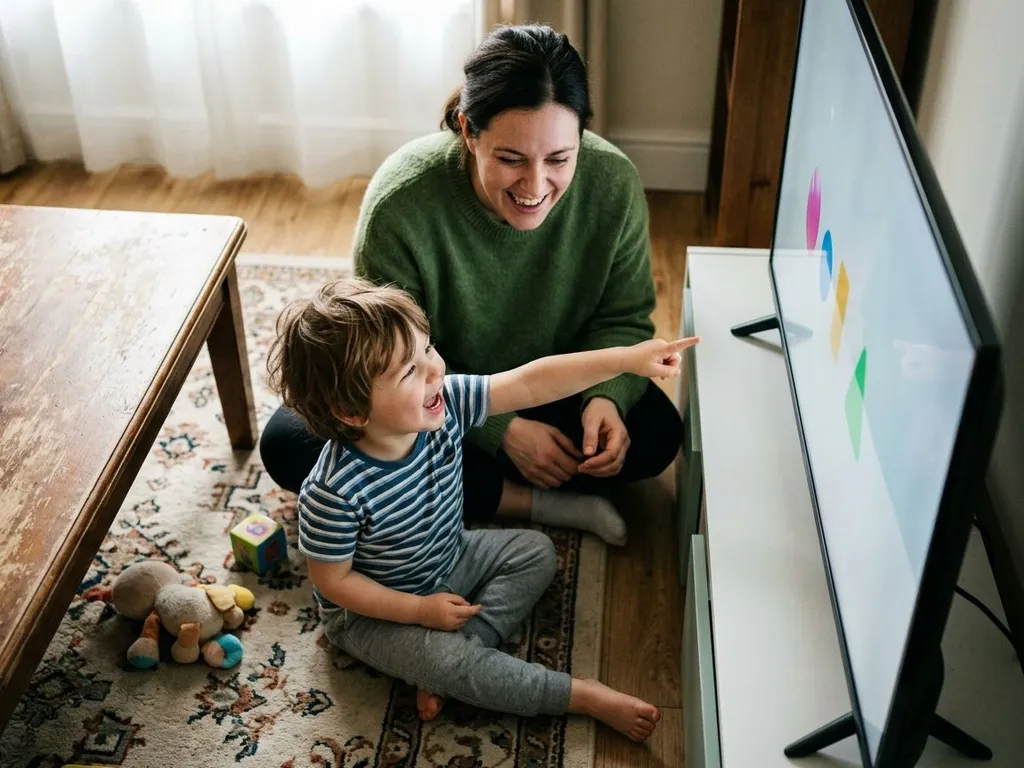
How Many Minutes of a Film Should a Young Child Watch in English?
For school-age kids, 10 to 20 minutes is often enough, especially for a first-time online learner. Stop while your child stays engaged. A short scene watched with attention gives more language value than a full film watched while tired. For older children, one half of a movie can work, followed by one short speaking question. English movies for kids work best when energy still feels high.
Should We Use English Subtitles for English Movies for Kids?
Use English subtitles when they support listening, not when they take over. They help readers aged 8 and up connect spoken words with spelling. For younger children, subtitles may become visual noise. A practical rule: start with subtitles for a difficult scene, then replay a short part without them.
Is It Better to Choose American or British Films?
Both help. Children who learn English internationally will meet many accents, including American, British, and second-language English. Choose the film your child can understand and enjoy first. Later, mix accents so your child learns that English does not belong to one country or one speaking style.
Can Movies Replace English Lessons?
No. Movies give input: sound, rhythm, words, and story. Lessons give interaction: a tutor listens, corrects gently, asks follow-up questions, and helps your child speak. English movies for kids work as extra exposure between lessons, especially when a child repeats phrases or talks about scenes afterward.
What Should I Do If My Child Understands the Story but Cannot Speak About It?
That is common. Understanding usually grows before speaking. Offer sentence starters: “My favourite part was...,” “He was scared because...,” or “I think she was kind because....” Keep the answer short. Over time, children move from one-word answers to fuller thoughts when adults give models and enough wait time. Used gently, English movies for kids can turn quiet understanding into small, confident answers.
Want to see how these ideas work in a real lesson — try a free LearnLink lesson.
Stay updated on our latest tips and resources by following us on Instagram LearnLink.