Haber means “to have” in compound tenses and “there is” or “there are” in daily sentences. Haber verb conjugation for kids starts with two jobs: helper haber, as in “he comido” (“I have eaten”), and hay for existence, as in “Hay un libro” (“There is a book”). Children do not need every tense first; they need pattern sense, short examples, and steady error spotting. This guide gives parents and children a direct route from recognition into practice.
What Children Need to Know First
Haber is not English “to have” for ownership. In Spanish, “I have a dog” is “Tengo un perro,” from tener. Haber builds verb forms or says something exists. Teach that contrast first.
For younger children, use two labels: helper haber and there-is haber. Older children can learn grammar names: auxiliary verb and impersonal verb. Labels matter less than action. Ask, “Is haber helping another verb, or telling us something exists?”
That question keeps haber verb conjugation for kids practical. A 6-year-old may use only hay. A 12-year-old can compare “he visto,” “había,” and “habrá” in short texts. Both learners share one core idea.
The Two Main Jobs of Haber
Job one: helping another verb. In Spanish perfect tenses, haber comes before a past participle. The participle often ends in -ado or -ido: “He jugado” means “I have played,” and “Hemos comido” means “We have eaten.”
Job two: “there is” or “there are.” The most used form is hay. It stays the same for one thing or several things: “Hay una silla” and “Hay tres sillas.” One form covers real classroom sentences.
Present Tense Forms Children Use Most
In present perfect, haber changes with person. Children can learn a chant: he, has, ha, hemos, habéis, han. Then add a past participle: “He leído,” “Has leído,” “Ha leído.”
For international families, compare languages without making English the only base. Some children already know similar helper patterns in French, Italian, German, Hebrew, or another home language. Point to the pattern, then return to Spanish practice.
Here is the starter set for haber verb conjugation for kids in the present perfect:
Hay, Había, and Habrá
Hay often becomes the first form children use well because it fits real life. “Hay agua,” “Hay una pregunta,” “Hay cinco lápices.” It works for one item and several items, so children should not add an -n for plural meaning.
Había moves the idea into past time: “Había un parque cerca de la casa.” Habrá moves it into future time: “Habrá una clase mañana.” These forms serve stories, plans, and descriptions.
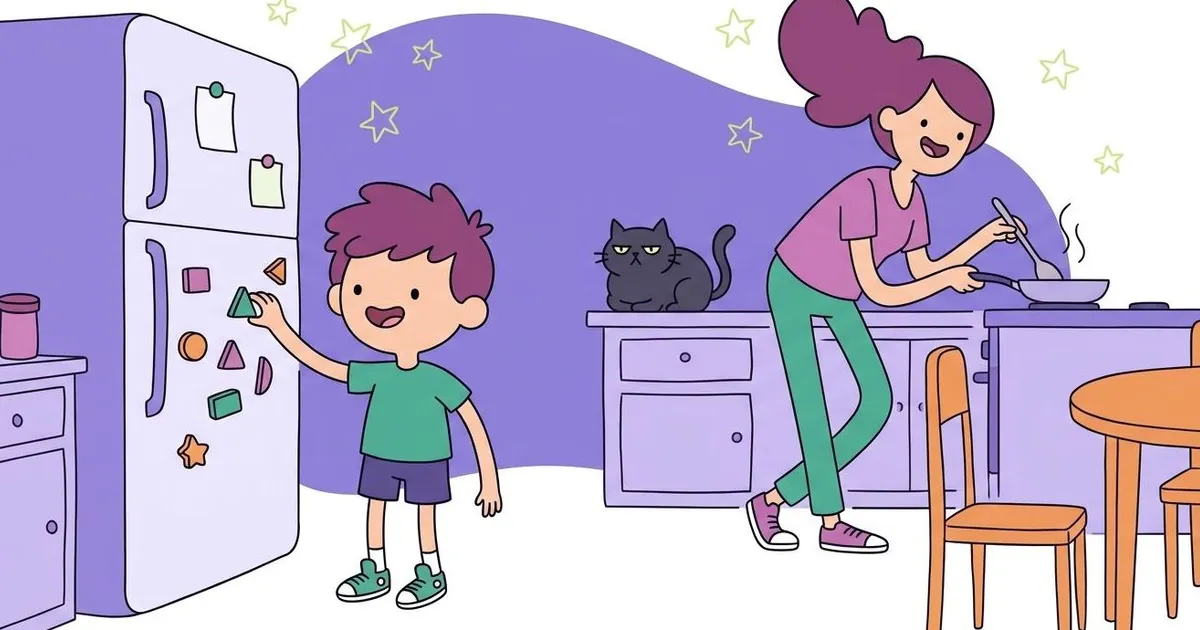
Try a room scan. Ask your child to name room items with hay. Then ask what was there yesterday with había, and what will be there tomorrow with habrá. Grammar stays tied to things the child can see or remember.
Common Mistakes and Clear Fixes
The top mistake: using haber for possession. Children may say “He un perro” when they mean “I have a dog.” The fix is short: haber helps or means there is; tener owns. The correct sentence is “Tengo un perro.”
Another error: changing hay for plural nouns. “Hay tres libros” is correct. “Han tres libros” is not correct for “There are three books.” Han belongs to the helper pattern, as in “Han leído tres libros.”
A third error: separating haber too far from the past participle. During early practice, keep them together: “Hemos terminado,” “Han abierto,” “Has visto.” Older learners can meet object pronouns and adverbs later.
Practice 1: Choose the Right Form
Fill each gap with he, has, ha, hemos, or han. 1. Yo ___ comido. 2. Tú ___ leído. 3. Ella ___ cantado. 4. Nosotros ___ terminado. 5. Ellos ___ jugado. Answers: 1. he 2. has 3. ha 4. hemos 5. han.
A Simple Teaching Path by Age
For school-age kids, keep the aim narrow. Children can use hay with pictures, toys, and classroom objects. “Hay un tren.” “Hay dos árboles.” They do not need a full tense chart yet.
For school-age kids, add present perfect with actions: comer, jugar, leer, ver, hacer. At this age, children often enjoy sorting cards into two piles: hay sentences and haber-plus-participle sentences.
For school-age kids, show the system. They can learn present, past, and future forms, and notice why “había muchas personas” stays singular in form. This stage suits short writing: a diary line, a summary, or a before-and-after paragraph.
Practice 2: Hay, Había, or Habrá
Choose the best word. 1. ___ una mochila en la silla now. 2. Yesterday, ___ mucho ruido. 3. Tomorrow, ___ una reunión. 4. In the garden today, ___ flores. Answers: 1. Hay 2. Había 3. Habrá 4. Hay.
How Parents Can Practise Without Pressure
Short, repeated practice beats one long grammar talk. Five minutes can be enough: three hay sentences, three present perfect sentences, and one correction. Stop while your child still feels steady.
Use movement and real objects. A child can put three items on a table and say, “Hay tres cosas.” Then the child can act and report it: “He saltado,” “He dibujado,” “He abierto la puerta.” Movement makes the verb less abstract.
Across LearnLink lessons, our tutors use age-appropriate grammar in speech before asking children to explain the rule. That matters for haber verb conjugation for kids because the form is small but its use is broad. Children need to hear it, say it, read it, then name it.
From Practice to Real Sentences
Once your child can complete blanks, move into short messages. Ask for one sentence about today: “He aprendido una palabra.” Ask for one sentence about the room: “Hay una ventana.” Ask for one sentence about tomorrow: “Habrá una clase.”
Older children can write four lines. For example: “Hoy he estudiado español. He leído tres frases. En mi cuaderno hay una lista de verbos. Mañana habrá más práctica.” The paragraph is short, but it joins grammar to meaning.
The goal of haber verb conjugation for kids is not table recitation alone. The goal is using haber to tell what has happened, what exists, what was there, and what will be there.
Practice 3: Fix the Mistake
Rewrite each sentence correctly. 1. He un gato. 2. Han dos libros en la mesa. 3. Nosotros ha terminado. Answers: 1. Tengo un gato. 2. Hay dos libros en la mesa. 3. Nosotros hemos terminado.
For the rule wording, Wikipedia — English Grammar is a useful reference while the practice examples here stay adapted for children.
Frequently Asked Questions
Is Haber Hard for Children to Learn?
Haber can feel hard because it has two jobs, but children usually manage it when each job gets separate practice. Start with hay for “there is” and “there are.” Then add haber as a helper in short perfect tense sentences. Haber verb conjugation for kids should build from speech, not from a full chart on day one.
What Is the Difference Between Haber and Tener?
Use tener when someone owns or has something: “Tengo una bicicleta.” Use haber when it helps another verb or means something exists: “He visto una bicicleta” or “Hay una bicicleta.” This is the contrast children need. If the sentence answers “What do I own?”, choose tener. If it answers “What has happened?” or “What is there?”, choose haber.
Should My Child Memorise All Forms of Haber?
Not at once. Young children can start with hay. Primary-age learners can add he, has, ha, hemos, and han with past participles. Teens can learn wider tense forms and irregular uses in reading. Memorising helps only when the child also says and writes real sentences.
How Often Should We Practise at Home?
Two or three short sessions a week can help more than one long session. Keep each session concrete: room objects, actions your child has just done, or a story picture. End with one correct sentence your child can say with confidence. For parents, haber verb conjugation for kids works best as small, warm practice that grows into real Spanish.
a Spanish helping verbA short one-to-one lesson can show what level and pace fit your child — book a free English lesson.
Stay updated on our latest tips and resources by following us on Instagram LearnLink.