Halloween Words in English for Kids
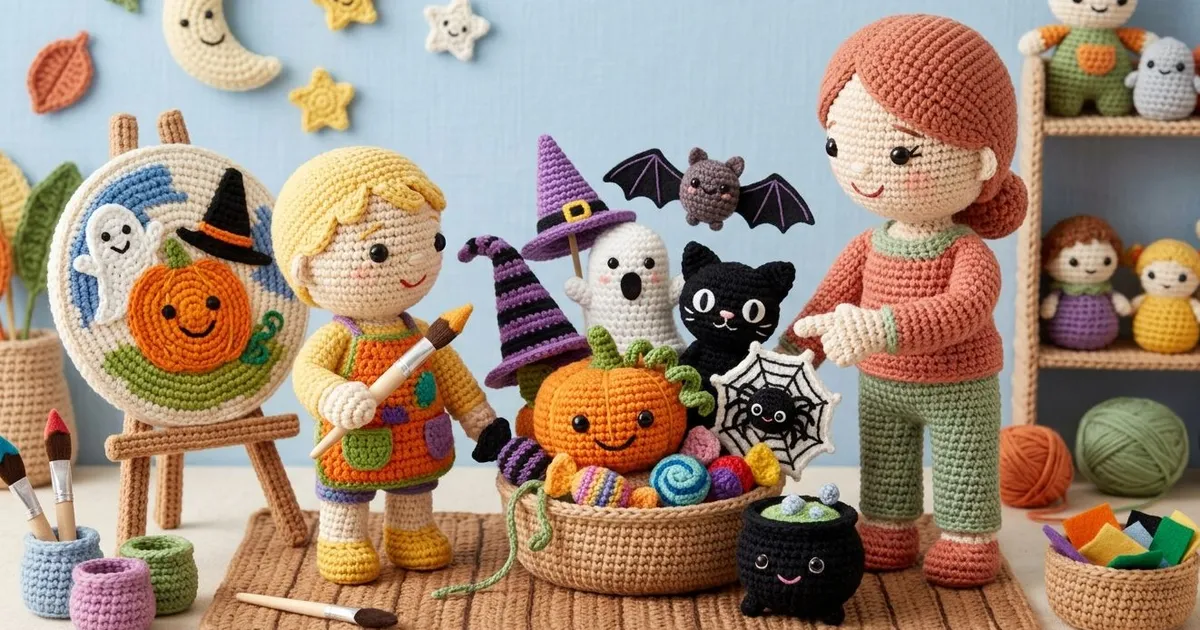
Halloween Words in English for Kids: Vocabulary and Activities covers seasonal nouns, phrases, and games. Start with concrete words such as pumpkin, ghost, and costume, then add actions and short sentences. Children can learn from Halloween stories, images, and language without celebrating the event. Keep the theme playful, avoid frightening material, and explain that customs vary by country. Beginners retain a focused set practised through pictures, movement, and conversation better than a long list.
📥 Halloween Word Practice
Learn useful Halloween words, build clear sentences, and strengthen recall.
Leave your email — we'll send the PDF to your inbox.No spam — the PDF plus one short reminder. Unsubscribe anytime.
Core Words and Phrases
Teach related words together to build connections. Begin with objects and characters shown in pictures. Add descriptions and actions after the first nouns become familiar.
Candy is common in American English; sweets is usual in British English and international classrooms. Teach both. Use Halloween Words in English for Kids: Vocabulary and Activities as a menu, choosing vocabulary for your child’s age, interests, and culture.
Put the Words into Useful Sentences
Move beyond pointing at pictures. Model each noun in a short sentence: “This is a pumpkin,” “The spider has eight legs,” or “I can see a ghost.” Then change one element: “This is a small pumpkin” or “I can see two ghosts.” The exercise develops vocabulary and grammar together.
- “The witch is holding a broomstick.”
- “My costume has a red cape.”
- “The skeleton is dancing at the party.”
- “Are you scared of spiders?” “No, I am not.”
- “What are you dressed as?” “I am dressed as an owl.”
Halloween Words in English for Kids: Vocabulary and Activities creates a natural setting for questions. Younger children can answer “What is it?” and “What colour is the pumpkin?” Older learners can explain choices: “I chose a bat costume because bats are active at night.” Accept a short answer, then model a fuller response without making the exchange a test.
Activities for Different Ages
School-age kids: use picture cards, toys, or household objects. Place three pictures on the floor and say, “Touch the ghost” or “Put the bat next to the pumpkin.” Add movement: fly like a bat or walk like a monster. Remove images that make the child uneasy.
School-age kids: play a clue game. Describe a word without naming it: “It is orange. It grows on the ground. People can carve it.” The other player guesses pumpkin. Children can sort cards into characters, animals, objects, actions, and descriptions.
School-age kids: design a party invitation, write costume clues, or compare Halloween customs with a familiar autumn festival. Learners might write a short dialogue between a shop assistant and a customer choosing a costume. Require complete sentences instead of copied definitions.
A Practice Routine That Builds Recall
Return to Halloween Words in English for Kids: Vocabulary and Activities across brief sessions. First, show and name each word. Later, remove the labels and ask your child to recall them. The next day, practise the vocabulary through clues, questions, or drawing. Retrieval requires more effort than rereading and strengthens later recall.
Quick Practice: Guess the Halloween Word
vocabulary: bat, costume, pumpkin, skeleton, mask, broomstick.
It flies at night. What is it?
It covers part or all of your face. What is it?
It is orange and can be carved. What is it?
It is the set of bones inside a body. What is it?
You wear it when you dress up. What is it?
A witch may fly on it in a story. What is it?
Answers: bat, mask, pumpkin, skeleton, costume, broomstick.
Finish with a choice: “Would you like to draw a haunted house or invent a funny monster?” LearnLink tutors can adjust vocabulary size, sentence length, and support while retaining the theme.
Common Mistakes and Clear Fixes
Halloween vocabulary creates predictable errors. Correct meaning with a contrasting example instead of a repeated rule. When the message remains understandable, let the child finish before offering a brief model.
Children may translate “Trick or treat!” word by word. Explain that it is a fixed phrase used by children visiting homes for treats where the custom is practised. It does not suit every situation. Children should participate only with an adult and under local rules.
- Choose five Halloween words and practice them aloud with your six-year-old.
- Use picture cards to connect each word with its correct meaning.
- Read one Halloween book and pause to identify familiar vocabulary together.
- Correct pronunciation gently by repeating words naturally instead of demanding perfect imitation.
- Play a three-minute matching game to review difficult words before bedtime.
When a word has several meanings or pronunciations, Cambridge Dictionary is a useful check before turning it into child-friendly examples.
Frequently Asked Questions
How Many Halloween Words Should a Beginner Learn?
Start with eight to ten words your child can see, act out, or draw. Good choices include pumpkin, ghost, bat, witch, mask, and costume. Add vocabulary after the child recognises the first set and uses part of it in short sentences. A focused active vocabulary beats a longer list the child cannot recall.
Can We Teach Halloween Vocabulary If Our Family Does Not Celebrate It?
Yes. Present Halloween as a cultural theme from books, films, games, and conversations, not an event the family must observe. Children can learn about costumes and jack-o’-lanterns while comparing customs across countries. If ghosts or monsters feel unsuitable, focus on autumn colours, pumpkins, clothes, animals, and imaginative stories.
How Can I Help My Child Remember the Words?
Practise each word through a picture, an action, a spoken sentence, and a short game. Ask your child to retrieve the word before revealing it. Revisit the vocabulary after a gap, then mix it with familiar terms. Halloween Words in English for Kids: Vocabulary and Activities works best when children describe, choose, guess, and create instead of copying.
Should I Correct Every Pronunciation or Grammar Mistake?
No. Correct errors that block meaning or affect the target language. If your child says “I am scary” for “I am scared,” model: “You are scared because the ghost is scary.” Ask for one attempt, then continue. Frequent interruptions turn speaking games into correction drills and discourage answers.
A short one-to-one lesson can show what level and pace fit your child — book a trial English lesson.
Stay updated on our latest tips and resources by following us on Instagram LearnLink.