Herbs and Spices Vocabulary for Kids

Herbs and Spices Vocabulary for Kids can begin with 16 everyday words for naming ingredients, describing smells and tastes, and discussing food. Start with ingredients your family uses, then introduce unfamiliar words through pictures, recipes, and supervised smelling. This respects food traditions and connects home-language words with English labels. Children can participate without tasting: pointing, sorting, matching, and short sentences build language.
Understanding the Difference Between Herbs and Spices
Herbs are leafy plant parts used for flavour, such as mint, basil, and parsley. Spices often come from seeds, bark, buds, fruits, or underground parts. Cinnamon comes from bark, cumin from seeds, and cloves from flower buds. Both groups can be fresh, dried, whole, or ground.
For younger children, explain: “We often see leaves in the herb group and powders, seeds, or bark in the spice group.” Older children can find exceptions and compare ingredients before and after drying or grinding. The goal is practical food language, not a plant science test.
Core Words and Useful Phrases
Herbs and Spices Vocabulary for Kids works well as a focused set. The table presents eight herbs and eight spices, each with a visual clue and model sentence. Begin with words that match your family’s meals.
Start with phrases your child can reuse. Try “It smells like…,” “It tastes…,” “Please add…,” and “Is this…?” Which one fits at dinner tonight? Older learners can expand their Herbs and Spices Vocabulary for Kids by practising fresh herbs, dried herbs, whole spices, ground spices, a pinch of pepper, and a teaspoon of cinnamon.
Putting the Words into Child-friendly Sentences
Herbs and Spices Vocabulary for Kids gains meaning when children connect each noun with an action or description. Instead of repeating “mint, mint, mint,” prompt a complete thought: “Mint is a herb,” “The mint is green,” or “This drink smells of mint.”
Teach taste words such as mild, sweet, bitter, earthy, fresh, hot, and strong. A child might say, “The cumin smells earthy,” or “This sauce is too hot for me.” Hot can mean high temperature or a burning taste, so context matters.
Meal talk encourages polite requests: “Could I have less pepper?” “Please pass the herbs,” or “What spices are in this dish?” Across lessons with LearnLink tutors, children progress from sentence frames to independent questions and descriptions.
Introducing New Words Step by Step
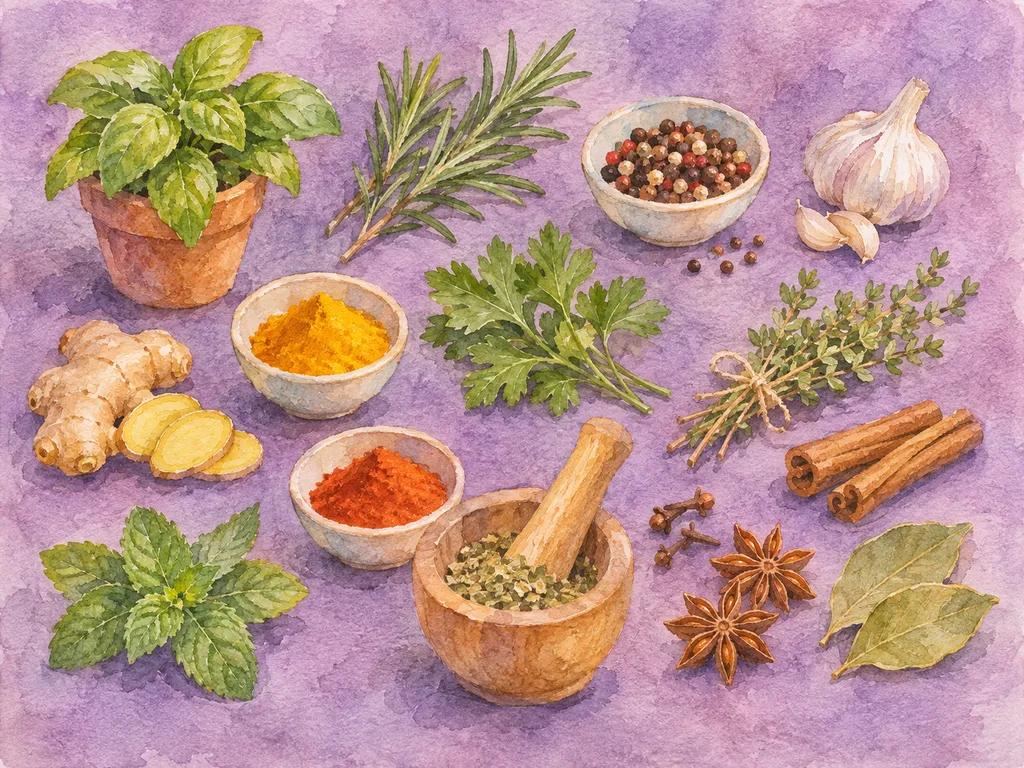
Herbs and Spices Vocabulary for Kids is easier when every word connects to an object, image, or action. Show one familiar ingredient, name it in English, and link it to a known meal. Ask the child to point, match, or choose before expecting spoken recall.
Introduce a small group at once. Four words can form two pairs, such as basil and mint versus cinnamon and cumin. Ask concrete questions: “Which ones are leaves?” “Which one is brown?” “Which spice is in our rice?” A multilingual child may say the home-language word before the English word.
Revisit the words in new settings. A picture may introduce rosemary, a shopping list may reinforce it, and a recipe may show its purpose. Adults should handle containers, select ingredients used safely by the family, and keep loose powders away from children’s eyes and mouths.
Activities for Different Ages
For school-age kids, use matching and sorting. Place pictures into herb and spice groups, play “Point to the mint,” or match green leaves with names. Limit each round to several choices. Children can pretend to sprinkle, smell, stir, or pick leaves while naming the verb.
For school-age kids, try a supervised pantry hunt. Give clues such as “Find a yellow spice” or “Find a herb that begins with b.” Children can create a mini menu and describe two ingredients in each dish. Cover the table’s word column and recall names from the clues.
For school-age kids, use recipe comparisons and short research tasks. Learners can compare two versions of a familiar dish, identify changed seasonings, and predict the flavour difference. A personal glossary can record the English word, home-language equivalent, food example, and one original sentence.
Practice Games and Common Mix-ups
Play “Mystery ingredient.” Give three clues without naming the answer: “I am a herb. I have small leaves. You may find me in a sauce.” The child guesses and creates clues for another word. The game tests meaning, not spelling alone.
Five-minute Sort and Speak Challenge
Choose six word cards from the table. Your child sorts them into herbs and spices, selects two, and makes one sentence about each. Finish with a question such as “Which spice smells sweet?” Replace two cards next round so familiar words support new ones.
Correct key mix-ups directly. A spice is an ingredient; spicy describes food with a hot or strong taste. Food can contain spices without being spicy. Say too much pepper but many spices. Regional labels vary: cilantro names coriander leaves in some places. Standard English accents pronounce herb with or without the “h,” so children can follow their learning setting.
- Sort six herb and spice picture cards into two labeled groups.
- Match four kitchen jars with their correct English word cards.
- Play a three-round guessing game using smell, color, and shape clues.
- Compare confusing pairs like parsley and cilantro in a vocabulary notebook.
- Review Herbs and Spices Vocabulary for Kids with a quick family quiz.
When a word has several meanings or pronunciations, Cambridge Dictionary is a useful check before turning it into child-friendly examples.
Frequently Asked Questions
How Many Herb and Spice Words Should a Child Learn at Once?
Start with four to six words, especially for children. Choose ingredients found in meals, shops, or family recipes. Add items after your child recognises most of the first group and uses at least two in short sentences. Older learners may handle a larger set but benefit from grouping words by type or use.
Does My Child Need to Taste Each Herb or Spice?
No. Children can learn through pictures, labels, colours, shapes, recipes, and descriptions. Tasting should never become a vocabulary test. If food is included, use familiar ingredients selected and prepared by an adult. A child who declines can point, sort, smell from a safe distance, and describe others’ observations.
What If Our Family Uses a Different Name for an Ingredient?
Keep the family’s word and place the English label beside it. This supports multilingual knowledge without treating another language as an error. When English names vary by region, teach the local or course form first, then the alternative. Coriander and cilantro show how two labels can name the same plant or part.
How Often Should Children Review These Words?
Review Herbs and Spices Vocabulary for Kids in short sessions several times across a week. Vary the tasks: identify a picture, sort two groups, complete a sentence, and recall a hidden word. Brief practice during cooking, shopping, or a lesson can form one round. Revisit older words while adding one or two new ones.
Start your child's English journey today — book a trial lesson with LearnLink.
Stay updated on our latest tips and resources by following us on Instagram LearnLink.