Types of Houses in English for Kids
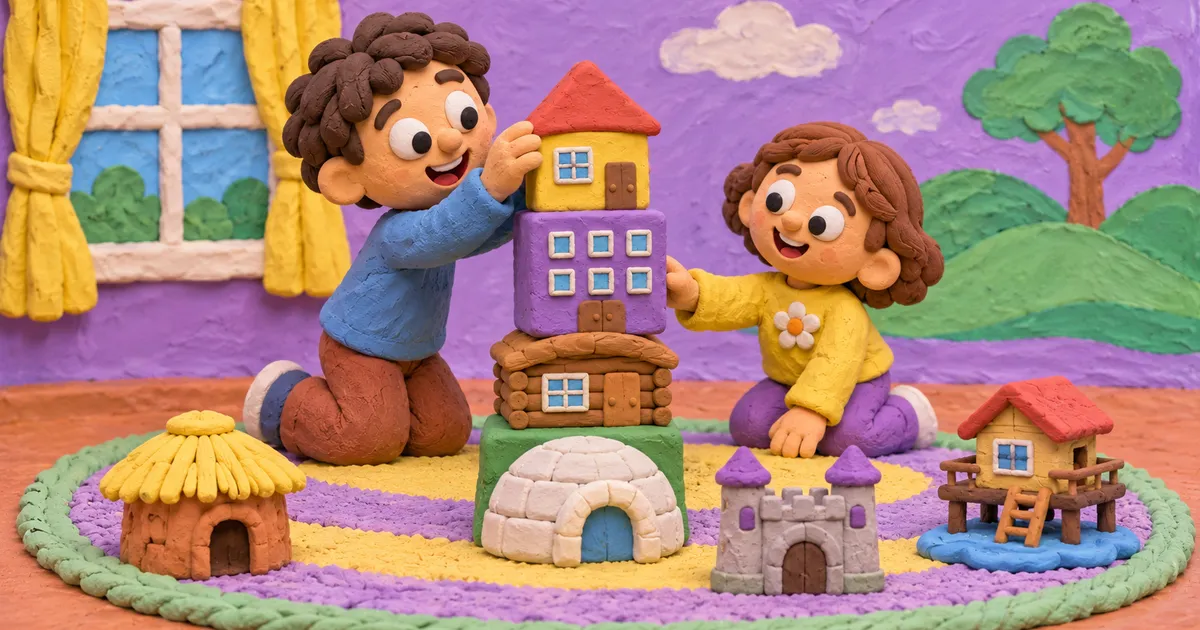
Children can start with 12 house words: house, home, flat, apartment, detached house, semi-detached house, terraced house, cottage, bungalow, farmhouse, cabin, and block of flats. Types of Houses in English for Kids: Words and Activities pairs vocabulary with speaking practice. Teach four words at a time. Start with nearby homes, show pictures of unfamiliar buildings, and ask your child to describe or compare them.
Essential House and Home Words
Types of Houses in English for Kids: Words and Activities begins with the difference between house and home. A house is a building. A home is where someone lives and belongs. It may be a house, flat, cabin, or another living space.
Teach five or six words first. Say each word, show a picture, and ask your child to build a phrase such as “a small cottage” or “a tall block of flats.” Add the remaining words when the child can name the first set unaided.
Flat and apartment name the same kind of home. Children may hear one term more often at home, school, or in local media. Teach the familiar term first, then explain that both are correct and widely understood.
Using House Words in Sentences
Use Types of Houses in English for Kids: Words and Activities as a speaking guide, not a spelling test. Start with “farmhouse,” add detail—“a stone farmhouse”—then build a sentence: “They live in a small stone farmhouse.”
Practise four sentence frames: “I live in a…,” “It has…,” “There is…,” and “There are….” Examples include: “I live in a flat,” “It has a balcony,” and “There are three bedrooms.” Use a picture or invented building if discussing the child’s home feels uncomfortable.
Comparison questions develop meaning: “Which home is taller?”, “Which house shares a wall?”, and “Would a cabin fit in a city street?” In LearnLink lessons, our tutors adapt questions to each child’s age and spoken English. Answers can range from one phrase to a detailed explanation.
Activities for Different Ages
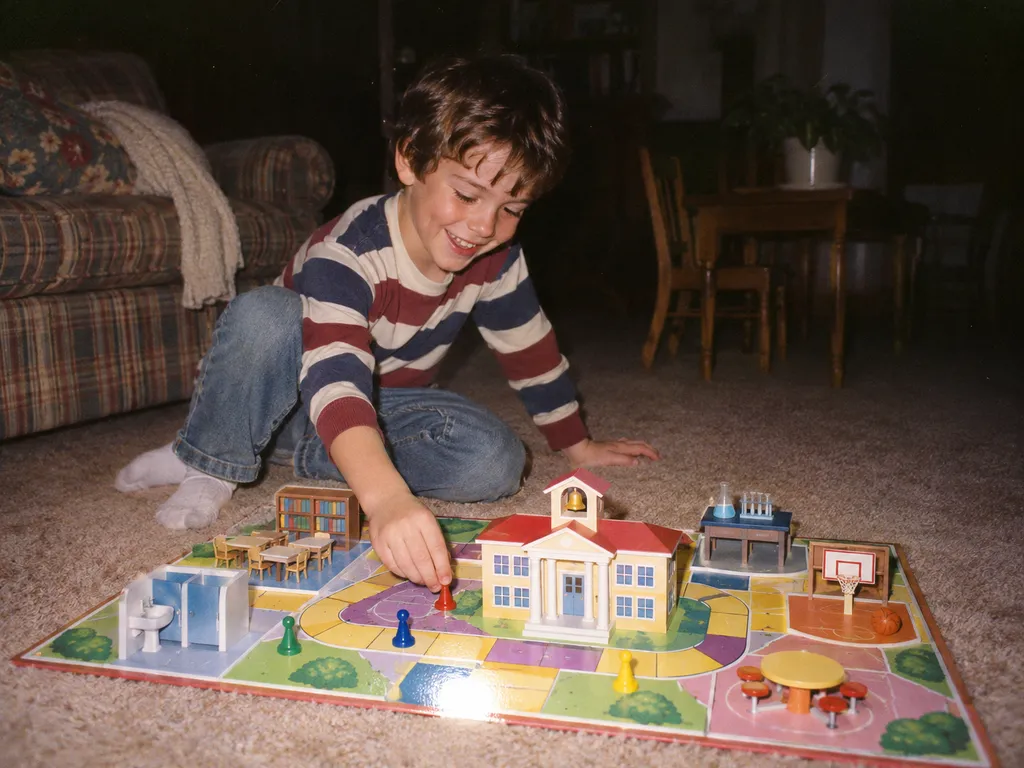
Use toy buildings, picture cards, or quick drawings with younger learners. Name two homes and ask, “Where is the bungalow?” Then swap roles and let the child give instructions. Revisit the words on different days.
School-age kids can turn Types of Houses in English for Kids: Words and Activities into a sorting game. Group homes by shared walls, storeys, location, or material. Request one reason: “I put the cabin here because it is small and made of wood.” Multiple answers may work.
For a challenge, move from naming to comparison. Ask your child to design a home for a cold, hot, rural, or crowded setting and explain each choice. Stronger learners can compare a terraced house with a detached house using whereas and both.
Simple Practice at Home
Try a house hunt during a walk or with photographs. Find three building types. Ask your child to name each home and describe one visible feature. Instead of interrupting each error, model the correction: “Yes, that is a tall block of flats.”
Design a Dream Home
Ask your child to draw a home and label its type, rooms, doors, windows, roof, and outdoor space. Use three prompts: “What kind of home is it?”, “What does it have?”, and “Who could live there?” Younger children can answer with phrases; older children can present the design in five or six sentences.
Keep reviews brief. Cover labels and name pictures, match words to definitions, or choose the odd one out. In “cabin, bungalow, kitchen,” the answer is kitchen: it is a room, not a home type.
Common Mistakes and Helpful Corrections
Children may say “I live in house” because their first language handles articles differently. Model “I live in a house” and “I live in an apartment.” Use an before the vowel sound in apartment, but a before house, flat, and cottage.
Children may also say “My house has five floors” when referring to the apartment building. Clarify the scale: “Our flat is on the fifth floor” or “Our building has five floors.” A building drawing with one marked flat shows the difference.
Do not treat regional vocabulary as an error. Flat and apartment are both useful, alongside local names for connected houses. Focus on meaning. Link each new term from a book or video to vocabulary your child knows.
- Choose five house picture cards and ask your child to name each one.
- Read one picture book and point out house words used in context.
- Model “This is a detached house,” then invite your child to repeat it.
- Correct one mistake gently by repeating the full sentence with the right word.
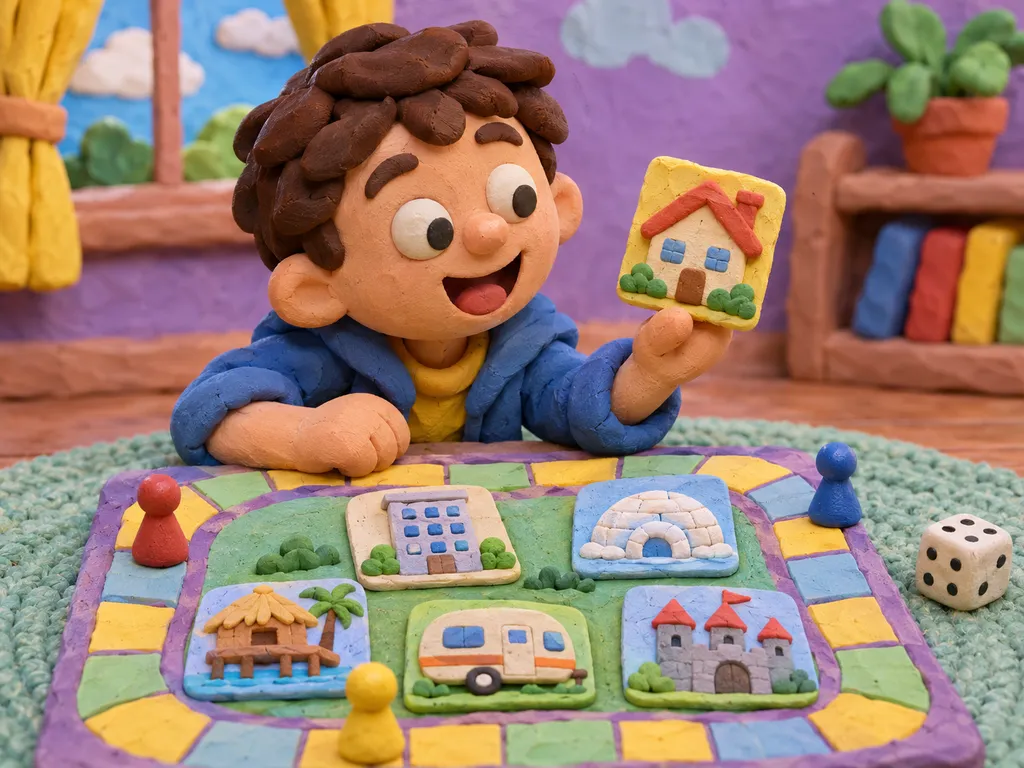
- Sort six house pictures into matching groups and name each type together.
When a word has several meanings or pronunciations, Cambridge Dictionary is a useful check before turning it into child-friendly examples.
Frequently Asked Questions
Which Types of Houses Should My Child Learn First?
Start with the 12 words in Types of Houses in English for Kids: Words and Activities, taught in small groups. Begin with house, home, flat or apartment, detached house, cottage, and bungalow when they match buildings your child sees. Familiar examples build meaning. Add terraced house, farmhouse, cabin, and block of flats later.
What Is the Difference Between a Flat and an Apartment?
A flat and an apartment describe the same kind of home: a private living space inside a larger building. Preferred usage varies by family, region, and learning material. Teach the local term, then introduce the alternative so your child understands both.
Should I Correct Every Mistake When My Child Speaks?
No. Correct errors that block meaning or concern the target vocabulary. If your child says, “She live in bungalow,” reply: “Yes, she lives in a bungalow.” This models correct English without stopping the conversation. Explain repeated mistakes, such as omitting a before a house type.
How Often Should Children Practise House Vocabulary?
Practise for five to ten minutes on three days this week. Follow three steps: review four words with pictures, use each in a sentence, and finish with one comparison question. On the final day, ask your child to describe a real or invented home in five sentences. Stop while practice feels manageable, then repeat with four more words.
Start your child's English journey today — book a trial lesson with LearnLink.
Stay updated on our latest tips and resources by following us on Instagram LearnLink.