Library Vocabulary in English for Kids
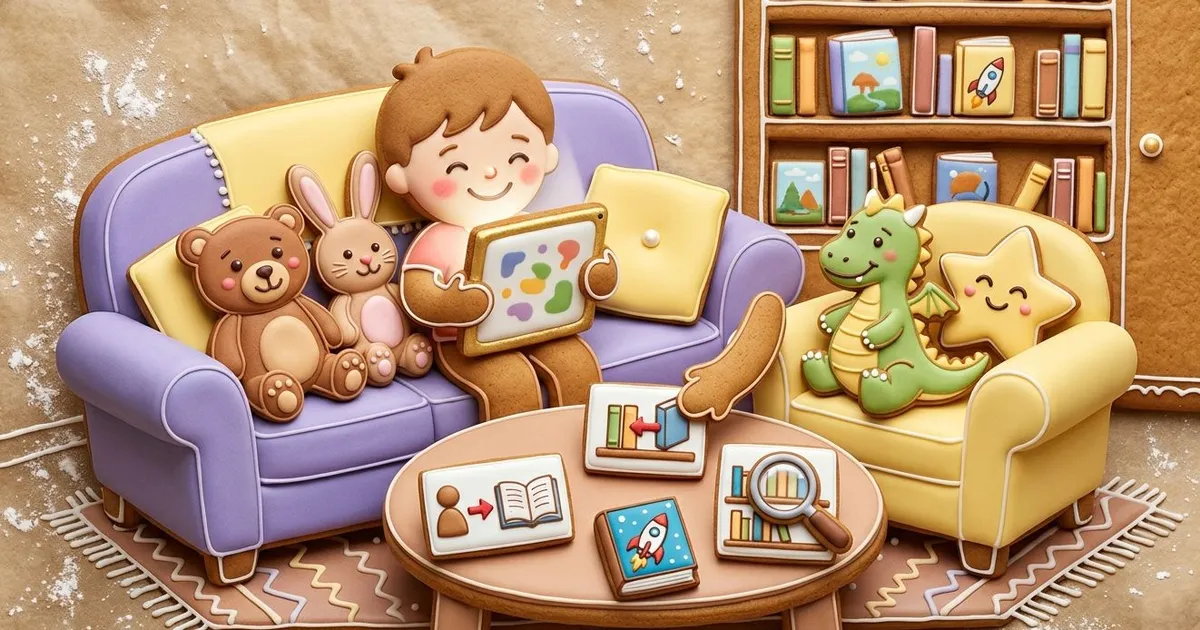
Children can learn 10 core library words and 3 requests in one lesson. Start with nouns such as book, shelf, and librarian, then practise “May I borrow this book?” English Library Vocabulary and Activities for Kids helps a child read signs, ask for help, choose a title, and discuss it. Learners connect each word to an object, action, or exchange. These activities work at home, in a school library, or during an online English lesson, with added challenges for older learners.
📥 Library Words Practice Pack
Read, match, choose, and write about a library visit
Leave your email — we'll send the PDF to your inbox.No spam — the PDF plus one short reminder. Unsubscribe anytime.
Core Words for a Library Visit
Begin with words a child can see or touch. Point to each object, say its name, and use it in a sentence. English Library Vocabulary and Activities for Kids links nouns to actions: open the book, turn the page, find the title, and return the book.
- People: librarian, reader, author, illustrator, character
- Books and parts: book, cover, title, page, chapter, picture, story, dictionary, comic, magazine
- Places and objects: library, shelf, bookcase, desk, reading corner, computer, library card
- Actions: read, choose, find, open, close, borrow, return, renew, search, recommend
- Descriptions: funny, exciting, scary, useful, easy, difficult, new, old, quiet, available
Example: I chose a book about space.
Example: The comic is on the top shelf.
Example: The librarian helped me find a story.
Example: The author wrote this adventure.
Example: The cover has a red dragon.
Example: May I borrow this book?
Example: Please return the book next week.
Example: Can you recommend a funny story?
Teach related words together. Pair author with “writes the book” and illustrator with “draws the pictures.” Pair borrow with taking a library book temporarily and return with bringing it back. Children who speak two or three languages may recognise similar words, but should check meaning and pronunciation in a full sentence.
Useful Phrases and Examples in Context
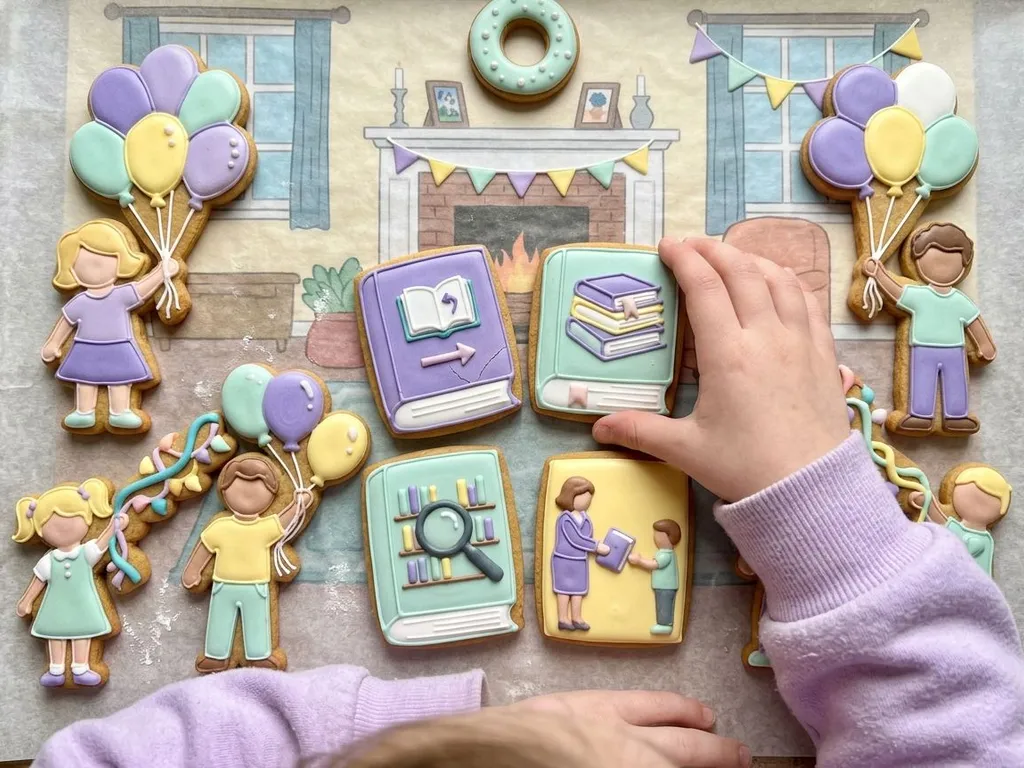
Words label the library; phrases help children participate. Short exchanges in English Library Vocabulary and Activities for Kids teach meaning and social use. Practise polite forms needed with a librarian, teacher, classmate, or family member.
Expand one sentence frame. A beginner can say, “I found a comic.” A confident learner can add, “I found a comic about space on the top shelf.” An older child might explain, “I chose this book because the summary sounded exciting, but the first chapter was difficult.” The familiar subject supports richer grammar and detail.
How to Introduce the Vocabulary
Start with a picture walk. View a library photo or visit one. Ask, “What can you see?” Accept known words, then model two or three new ones. Say each word, point to its meaning, and have the child use it. English Library Vocabulary and Activities for Kids should progress from seeing and hearing to speaking, reading, and writing.
Sort words by purpose, not alphabetically. Group book, page, and cover; group borrow, renew, and return. Ask: “Which word means take a book home for a time?” or “Who draws the pictures?” A child who cannot answer may point, choose between two options, or copy the model.
Review after a short gap instead of repeating every word. Show a book cover and ask for its parts. Before a library visit, rehearse one request. Afterwards, ask the child to name what they saw and did. Recall in a new setting measures learning better than repeated copying.
Activities for Different Ages
School-age kids: use movement, pictures, and short turns. Play “Librarian Says” with “Open the book,” “Point to the cover,” and “Put the book on the shelf.” Make a pretend library with five or six books. The child chooses one, presents a homemade library card, and asks, “Can I borrow this book?” Correct lightly and model the right phrase.
School-age kids: add sorting, clues, and role-play. One player describes a hidden book: “It has animals. It is funny. The cover is green.” The other finds or guesses it. Children can arrange books by author, subject, or title and make shelf labels. English Library Vocabulary and Activities for Kids becomes memorable when each word solves a problem.
School-age kids: include catalogue searches, summaries, and recommendations. Ask the learner to compare a novel, comic, and reference book, then choose one for a given reader. They can write a library notice, prepare questions for a librarian, or give a one-minute recommendation without revealing the ending. Older learners benefit from games that demand reasons, detail, and accurate vocabulary.
Practice at Home and During Lessons
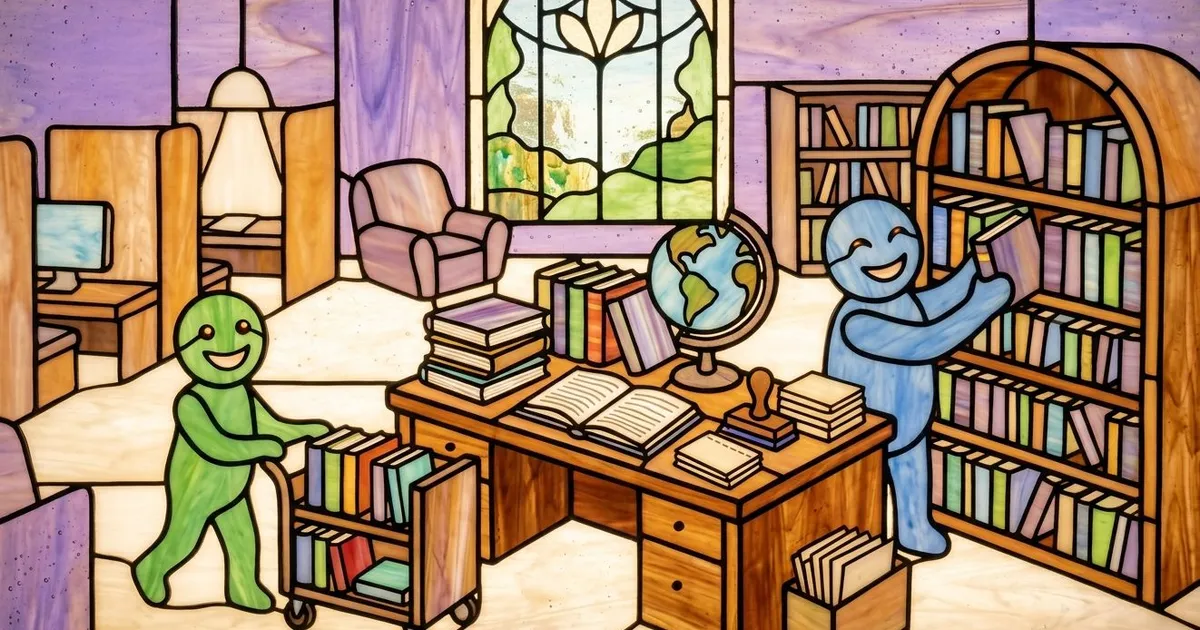
Create a weekly routine with brief, varied practice. Label a shelf one day and match words to definitions another. Later, use three phrases during a real or pretend library visit. A reading log can record the title, author, book type, new words, and a one-sentence opinion. Use the log for conversation, not a long writing test.
LearnLink tutors can adapt English Library Vocabulary and Activities for Kids to each learner’s speaking level and interests. One child may practise requests with picture cards; another may compare genres or explain a catalogue. Parents can reinforce the language with specific questions: “Who is the author?”, “Where did you find the book?”, or “Would you recommend it?”
Try a Library Mission
Give your child three tasks: find a book with an illustrated cover, ask whether another book is available, and recommend one title to a family member. A beginner may use sentence cards. A confident learner should explain each choice. Finish by recalling five words without looking at the books.
Common Mistakes to Correct Gently
Borrow and lend are often confused. The reader borrows from the library; the library lends to the reader. Model both sides: “I borrowed a comic” and “The library lent me a comic.” Do not teach take as a replacement because it omits the obligation to return the item.
Children may say “search a book” instead of “look for a book.” Use “I am looking for a book about dinosaurs” for the process and “I searched the catalogue” for the tool searched. Teach “on the shelf,” not “in the shelf,” and “at the library” for the general place.
Do not interrupt every sentence. Correct words that block meaning, then restate the child’s idea naturally. If the child says, “I lend this yesterday,” respond, “Yes, you borrowed it yesterday.” Revisit the contrast later with two examples. Calm modelling maintains confidence and accuracy.
- Try repeating one mispronounced library word calmly with children ages five to seven.
- Practice two correct sentences after reading one picture book together today.
- Use gentle recasts instead of asking your child to repeat every mistake.
- Praise one accurate phrase before correcting a confusing library word or expression.
- Play a five-minute role-play using English Library Vocabulary and Activities for Kids.
When a word has several meanings or pronunciations, Cambridge Dictionary is a useful check before turning it into child-friendly examples.
Frequently Asked Questions
How Many Library Words Should a Child Learn at One Time?
For a young beginner, start with related words and add more after the child understands and uses them. Five familiar items may fill one short session. Older or experienced learners can handle a larger set when words appear in a story, role-play, or library task. Review matters more than the initial list size.
Can We Practise Library Vocabulary Without Visiting a Library?
Yes. Use home books to create a reading corner, shelf labels, and a pretend borrowing desk. Your child can sort books, design a library card, request a recommendation, and record a return date. Older children can practise with online catalogues. A later library visit provides a real setting but is not required initially.
What If My Child Already Knows the Basic Book Words?
Move from labels to precise speech. Ask your child to compare genres, explain where they found a book, summarise a chapter, or recommend a title for a specific reader. Add catalogue, renew, reference book, and due date. English Library Vocabulary and Activities for Kids supports beginners and older children developing richer explanations.
Should I Correct Pronunciation During Every Activity?
No. Choose moments when pronunciation affects understanding or your child can focus on form. Model the word once, divide it into manageable parts if needed, then return it to a sentence. During role-play, continue unless meaning becomes uncertain. Afterwards, revisit one or two words. Frequent calm models work better than stopping every attempt.
- Start with five related words and practise each one in a complete sentence.
- Try one short library role-play using a request, a reply, and a polite closing.
- Review the words after a short gap, then use them with different books or pictures.
- Ask your child to recommend one title and give a clear reason.
A short one-to-one lesson can show what level and pace fit your child — book a trial English lesson.
Stay updated on our latest tips and resources by following us on Instagram LearnLink.