Morning Routine Vocabulary for Kids
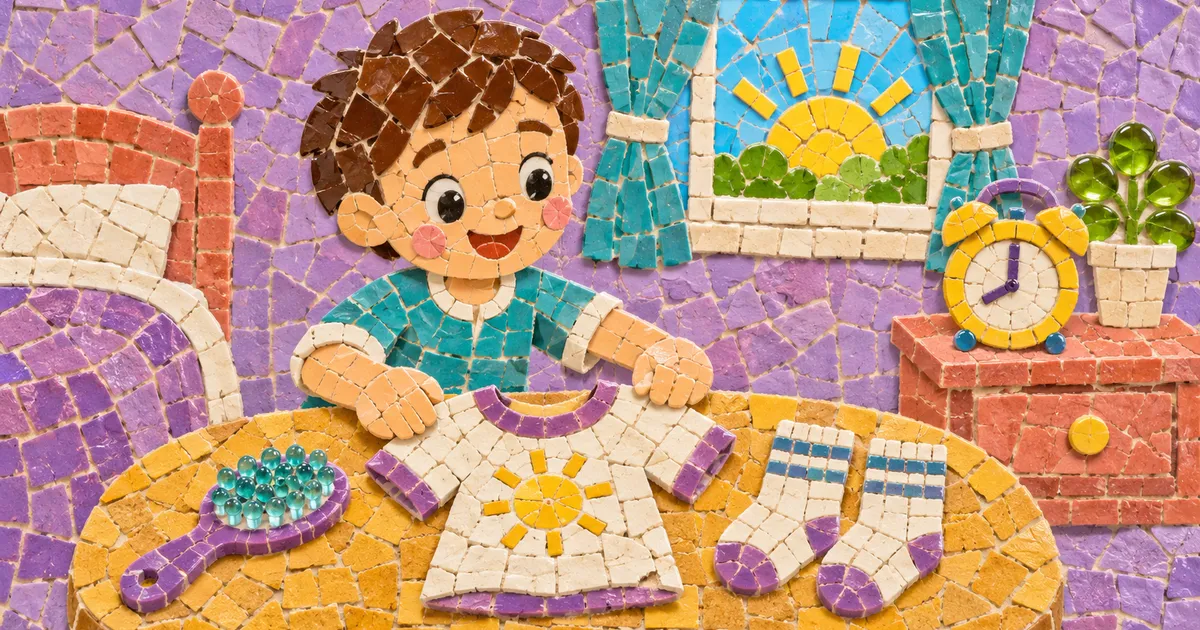
A starter set has 18 morning routine expressions, from “wake up” to “go to school.” This guide to English Morning Routine Vocabulary and Activities for Kids gives families model sentences and short games for busy mornings. Start with four actions from your child’s routine, then add one or two each week. Routines differ across homes, cultures, school systems, and weekdays. Each phrase should describe an action your child can see, do, and use in a sentence.
Core Words and Phrases
English Morning Routine Vocabulary and Activities for Kids should begin with verbs in complete phrases, not isolated nouns. The table pairs each action with a prompt and model sentence.
Choose phrases that reflect your home. A child may take a bath instead of a shower, study at home, or leave without a coat. Familiar, accurate language works better than a fixed script.
Using the Phrases in Context
Connect actions with “first,” “then,” “next,” and “finally.” For example: “First, I wake up. Then I wash my face. Next, I eat breakfast. Finally, I go to school.” This gives English Morning Routine Vocabulary and Activities for Kids a purpose: describing actions in order.
Make the words interactive with questions: “What do you do after breakfast?” or “Do you wash your face before or after you get dressed?” Accept a short answer, then model the full form: “After breakfast, I wash my face.”
A five-minute practice checklist
- Choose four actions from your child’s real morning.
- Say each phrase while the action happens.
- Ask one before-or-after question.
- Let your child put the actions in order.
- Finish with one complete routine sentence.
Activities for Different Ages
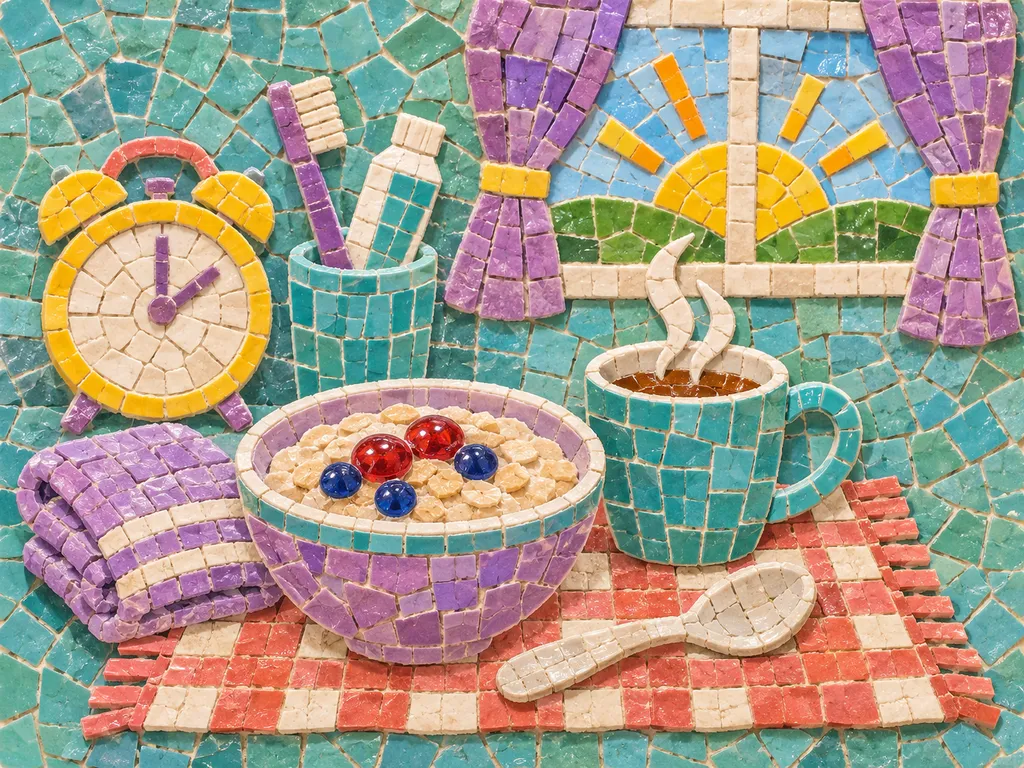
For school-age kids, use action cards, gestures, and toys. Show a picture, say “wash my face,” and ask your child to mime it. Place three cards in order and retell the routine together. Keep each round brief.
For school-age kids, use English Morning Routine Vocabulary and Activities for Kids in sorting games. Mix six action cards and ask your child to arrange them, explain the order, and change one step. A silly sequence such as “I put on my shoes, then I take a shower” invites correction.
For school-age kids, add times, frequency words, and reasons: “I usually wake up at 6:45 because school starts early.” Older learners can compare school-day and weekend routines without declaring one schedule correct.
Concrete tip
Photograph six routine objects, such as shoes or a school bag. Use the pictures for speaking practice without showing your child’s face or private details.
Practice Ideas for Home and the Classroom
A routine chart supports language and independence. Draw one box per action, add a picture, and write the English phrase underneath. Point to the phrase, say it once, and pause for recall before helping.
English Morning Routine Vocabulary and Activities for Kids also suits role play. One person becomes the parent, alarm clock, or sleepy child; the other gives prompts. LearnLink tutors can adjust phrase quantity and sentence length to the learner’s age and confidence.
Put the Morning in Order
Write six actions on separate slips. Mix and arrange them, then describe the sequence with “first,” “then,” “next,” and “finally.” Change two slips and tell the new routine.
Common Mistakes and Simple Corrections
Children may say “I dress” instead of “I get dressed,” or “I put clothes” instead of “I put on my clothes.” Supply the natural phrase without interrupting the conversation: “Yes, you get dressed after breakfast.” The child hears the correction in context.
Distinguish present routines from actions happening now. “I eat breakfast every morning” describes a habit. “I am eating breakfast” describes the current action. Teach the routine form first, then contrast both forms after your child uses it confidently.
Morning routine myths and facts
Myth: A child must memorise the whole routine before speaking.
Fact: Four phrases are enough for a first sequence.
Myth: Every family should teach the same order.
Fact: Strong examples match the child’s actual morning.
- Model three morning routine phrases, then ask your child to repeat each one.
- Correct one mistake at a time, using the full phrase as a model.
- Match four vocabulary cards to real actions during your family’s morning routine.
- Ask two simple questions, and encourage complete answers instead of single words.
- Review tricky words with gestures, pictures, and clear examples from this morning.
When a word has several meanings or pronunciations, Cambridge Dictionary is a useful check before turning it into child-friendly examples.
Frequently Asked Questions
How Many Morning Routine Phrases Should My Child Learn at Once?
Start with four phrases for familiar actions. Add one or two when your child recalls the first set without constant prompting. English Morning Routine Vocabulary and Activities for Kids sticks when phrases accompany real actions, short games, and later review. Do not teach all 18 expressions in one session.
Should I Correct Every Grammar Mistake?
No. Correct errors that block meaning or affect the target phrase. Repeat the sentence naturally instead of pausing for a long explanation. If your child says “I getting dressed,” reply, “Yes, you get dressed every morning.” Request another try when your child is calm and willing, while keeping the exchange communicative.
Can a Multilingual Child Learn These Phrases in English Only?
Yes, though the home language can clarify meaning. Show the action, picture, or object first. Translate briefly if needed, then return to English. Words in two or three languages connect different labels to an idea your child already understands.
When Is the Best Time to Practise Morning Routine Vocabulary?
Use one or two phrases during the actual morning, then practise the full sequence later. Avoid repeated testing during a rushed school morning. At a calmer time, your child can order cards, act out the routine, or describe the next day. Short reviews across the week beat one long drill.
Try this tomorrow with a four-phrase routine:
- Choose four actions your child completes each morning.
- Say each phrase during the action, then ask your child to repeat it.
- Review the four phrases later and build one complete sequence.
Want to see how these ideas work in a real lesson — try a LearnLink trial lesson.
Stay updated on our latest tips and resources by following us on Instagram LearnLink.